


ストロンギロイデス(フィリフォルメ):TCM 脾-肺経路
Understanding Strongyloides (filiforme)
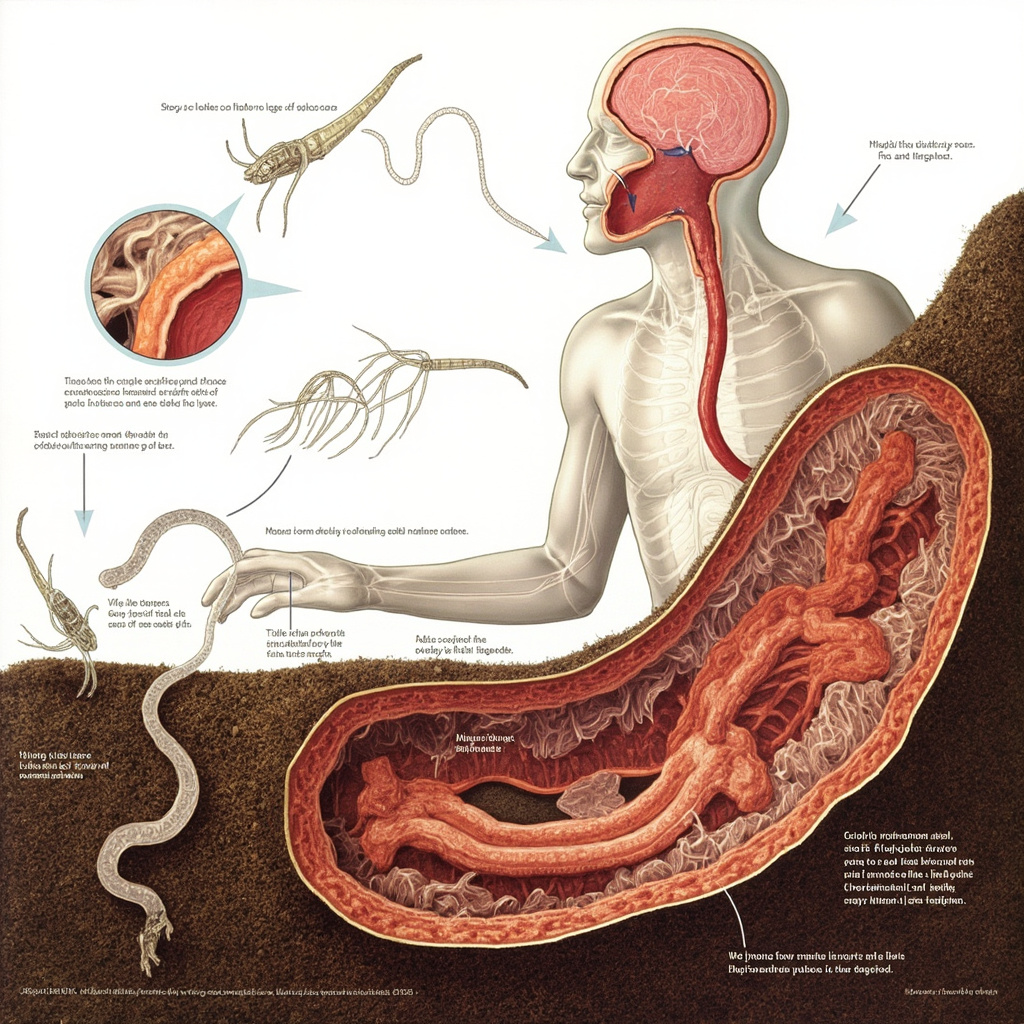
Strongyloides (filiforme), often called threadworm, is a small parasite that enters the body through the skin from contaminated soil. It travels via the bloodstream to the lungs, then to the intestines. There, it can live for years, sometimes causing no issues, but often leading to discomfort. In Traditional Chinese Medicine (TCM), we see it as an invader that brings dampness and disrupts the smooth flow of qi, the vital energy. For more details, see the glossary: /energy_mind/1528-strongyloides-filiforme.
This organism mainly affects the small intestine and lungs, creating blockages in energy pathways known as meridians. Biomarkers in electrical activity scans reveal its presence through shifts in energy levels, agitation, and connections to other body systems.
The Parasite's Path and Physical Effects
The journey starts when tiny larvae pierce the skin, often on the feet from walking barefoot in warm, moist areas. They migrate to the lungs, irritating airways and causing cough or wheezing. Swallowed into the gut, they embed in the intestinal walls, producing more larvae.
Common signs include:
- Abdominal pain and bloating
- Diarrhea alternating with constipation
- Nausea and loss of appetite
- Weight loss over time
- Itchy rashes, especially around the entry point or a fast-moving line called larva currens
In weaker systems, it can spread widely, leading to severe infections. Eosinophils, white blood cells, often rise as the body fights back. TCM links these to damp-heat accumulating in the spleen and stomach, impairing digestion and nutrient absorption.
TCM View: Spleen and Lung Disharmony
In TCM, the spleen governs digestion and transformation of food into qi and blood. When dampness from parasites invades, it weakens spleen qi, causing poor appetite and loose stools. The lungs control qi descent and protect against invaders; here, the migration stirs phlegm and blocks lung qi.
This ties to the five elements: Earth (spleen) nourishes metal (lungs). Imbalance creates a cycle of deficiency. Parasites thrive in damp environments, like Gu syndrome-an ancient TCM pattern for lingering toxins and worms disrupting gut harmony.
Biomarkers show low energy in intestinal structures, high agitation in lung pathways, and weak links between spleen and lungs. Yin-yang shifts toward excess yang heat from inflammation.
Emotional Layers: Fear, Anxiety, and Vulnerability
Parasites like Strongyloides stir deeper feelings. The discomfort and uncertainty evoke fear (kidney emotion) and anxiety (linked to lung qi deficiency). Worry over health burdens the spleen, amplifying unease.
TCM teaches emotions affect organs: Lung grief from blocked breath, spleen overthinking from poor digestion. Chronic low energy fosters vulnerability, stress, and distress. Addressing the parasite calms these, restoring emotional flow.
Strongyloides as a Resource for Insight
When balanced, this marker offers wisdom. It highlights gastrointestinal resilience, teaching management of dampness for steady digestion. Emotionally, it guides release of health fears, promoting inner security.
In scans, harmonious biomarkers signal strong spleen-lung axis, supporting vitality and calm.
Restoring Harmony: TCM Paths
TCM restores flow through:
- Herbs: Clear damp-heat with formulas like those with Omphalia for parasites, or spleen tonics strengthening digestion. Gentian or rhubarb variants expel invaders.
- Acupuncture: Points on spleen, stomach, and lung meridians (e.g., SP6, ST36, LU7) boost qi, drain dampness.
- Diet: Warm, dry foods-ginger, rice-avoid cold, raw items feeding dampness.
- Qi Gong: Breath work clears lung stagnation, nourishes spleen.
Modern insights blend with biomarkers for precise targeting: resonate spleen for nourishment, lungs for defense. Frequencies align structures, easing agitation.
Personal guides use words like "Draw on your spleen's steady strength to transform food into calm energy" or focus priorities on lung clearance.
Healing takes patience; chronic cases need sustained care. Consult pros for tailored plans.
Balance brings clear breath, solid digestion, and quiet mind-true harmony.
- 1. ncbi.nlm.nih.gov
- 2. archbronconeumol.org
- 3. mgcmc.com.au
- 4. yosan.edu
- 5. researchgate.net
- 6. my.clevelandclinic.org
- 7. giejournal.org
- 8. ufhealth.org
- 9. en.wikipedia.org
- 10. pmc.ncbi.nlm.nih.gov
- 11. wcvm.usask.ca
- 12. who.int
- 13. journals.plos.org
- 14. msdmanuals.com
- 15. morningtonchinesemedicine.com.au
- 16. pubmed.ncbi.nlm.nih.gov
- 17. infectiousdiseaseadvisor.com
- 18. mdpi.com
- 19. cdc.gov
- 20. pmc.ncbi.nlm.nih.gov
- 21. cdc.gov
- 22. thehealingorder.com
- 23. utsouthwestern.edu
- 24. pmc.ncbi.nlm.nih.gov
- 25. classicalchinesemedicine.org
- 26. cdc.gov
- 27. cdn.who.int
- 28. sciencedirect.com
- 29. pmc.ncbi.nlm.nih.gov
- 30. gwern.net
- 31. pubmed.ncbi.nlm.nih.gov
- 32. emedicine.medscape.com
- 33. caringsunshine.com
- 34. frontiersin.org
- 35. merckmanuals.com
- 36. facebook.com
- 37. meandqi.com
- 38. patents.google.com
- 39. jsczz.cn
- 40. ndl.ethernet.edu.et
- 41. journals.plos.org
- 42. patents.google.com
- 43. ivdresearch.com
- 44. emperorsacupuncture.com.au
- 45. sciencedirect.com
- 46. pmc.ncbi.nlm.nih.gov
関連投稿
用語集
- エネルギーと心の構造 > 集中コヒーレンス; フォーカス
- エネルギーと心の構造 > 停滞
- エネルギーと心の構造 > ストロングロイデス(糸状虫)
- 身体ゾーン > 肺
- エネルギーと心の構造 > 臓器
- エネルギーと心の構造 > ST36
- 中医学レシピ > 咳の緩和:胸の圧迫感のためのシンプルなTCMレシピ
- 中医学レシピ > 食欲不振:消化を和らげるためのTCMレシピ
- 中医学レシピ > 腸の調和:消化を助けるためのTCMレシピ
- 中医学レシピ > 肌の健康:にきびと湿疹の治療法
- 中医学レシピ > 脾臓の健康:消化、食欲、エネルギーを高める
- 中医学レシピ > 肺のサポート:呼吸器の健康のためのTCMレシピ
- 中医学レシピ > 消化の緩和:腹痛と吐き気のための治療法
- エネルギーと心の構造 > 活力
- エネルギーと心の構造 > 毒素
- エネルギーと心の構造 > 消化
- エネルギーと心の構造 > ストレス
- 刺激 > ストロンギロイデス
- 刺激 > 痛み
- バイノーラルビート > 炎症緩和:バイノーラルビートでより早く回復する
- 刺激 > 虫
- 刺激 > 寄生虫
- 刺激 > 調和
- 刺激 > 血液