


Trachea: TCM Breath Expression Ally
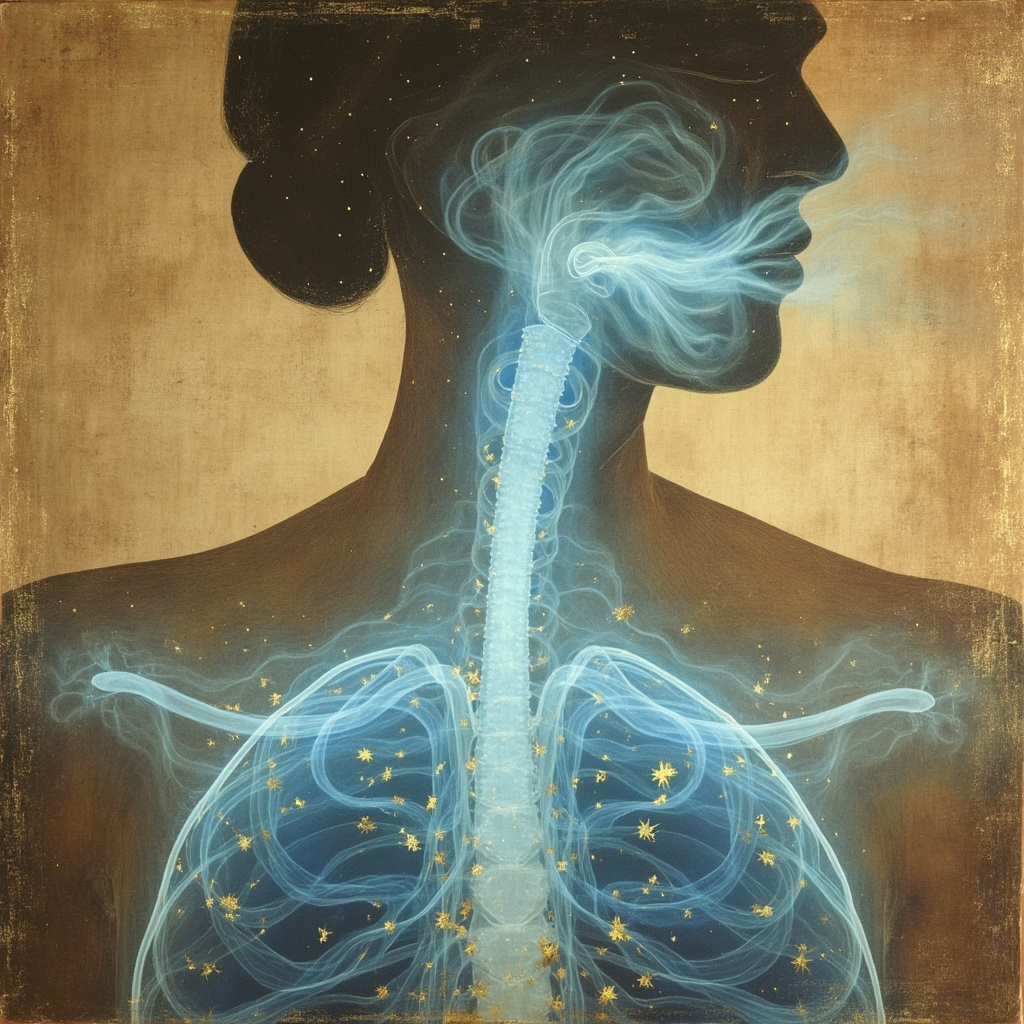
:### Understanding the Trachea
The trachea, or windpipe, is a strong tube running from your voice box down into your chest. It carries air to and from the lungs, making every breath possible. Picture it as the main highway for oxygen, lined with tiny hairs that trap dust and germs to keep your airways clean.
When working well, the trachea ensures smooth airflow. You breathe easily, speak clearly, and feel energized. For more details, see the trachea glossary.
Trachea in Traditional Chinese Medicine
In Traditional Chinese Medicine (TCM), the trachea belongs to the Lung system, the first to receive qi-your vital life energy-through breath. The Lungs govern the metal element, which stands for clarity, boundaries, and letting go.
Healthy trachea qi supports:
- Pure respiration: Inhaling fresh qi and exhaling stale energy.
- Voice and communication: A clear trachea aids strong, true expression.
- Defensive qi: Protecting against outside invaders like colds.
Imbalances here can show as tight chest, cough, or hoarse voice, often tied to deeper patterns.
Signs of Trachea Imbalance
If the trachea is out of harmony, you might notice:
- Persistent coughing or wheezing.
- Shortness of breath, especially during stress.
- Throat tightness when speaking up.
In TCM terms, this could stem from:
- External wind-cold: Sudden chills or infections blocking qi flow.
- Dryness: From dry air or overwork, irritating the airways.
- Qi stagnation: Held emotions causing constriction.
These physical signs often mirror emotional states, as TCM sees body and mind as one.
Emotional Ties to the Trachea
The trachea connects to fear, grief, and courage in expression. Fear of judgment might tighten your throat, making it hard to speak your truth. Unresolved sadness can weaken breath, leaving you feeling vulnerable.
TCM teaches that:
- Grief over loss depletes Lung qi, narrowing the trachea.
- Fear of criticism contracts the chest, hindering voice.
- Balanced trachea fosters courage to communicate openly.
Healing involves gentle practices to release these emotions, restoring fluid qi movement.
Trachea as a Supportive Resource
A strong trachea aids the whole body by delivering oxygen for energy. It nourishes the Heart with fresh qi for joy, supports Kidneys for vitality, and clears the mind for focus.
As a resource, it:
- Boosts oxygen to organs, fighting fatigue.
- Eases emotional stress through better expression.
- Strengthens immunity by guarding entry points.
In sessions, calling on the trachea helps other areas find harmony.
Restoring Trachea Harmony with TCM
TCM offers simple ways to support trachea balance:
Breath Practices:
- Deep belly breathing: Inhale for 4 counts, hold 4, exhale 6. This moves qi downward.
- Lion's breath: Open mouth wide, stick tongue out, exhale forcefully to clear stagnation.
Diet Tips:
- Warm soups with ginger and pear to moisten dryness.
- Avoid cold drinks that contract qi.
Lifestyle:
- Hum or chant softly to vibrate the trachea.
- Walk in fresh air to tonify Lung qi.
Acupoints (for pros):
- LU1 (Zhongfu): Opens chest for breath.
- CV22 (Tiantu): Clears throat stagnation.
These align with biomarker insights, showing trachea energy, agitation, and links to emotions or organs.
Integrating Trachea Awareness
Tune into your trachea daily. Notice breath flow during talks or stress. A free trachea supports not just lungs, but your voice in the world.
By honoring this ally, you invite deeper harmony-body breathing easy, heart expressing freely, energy flowing true. Start with one breath today.
Articles connexes
Glossaire
- Structures d'énergie et d'esprit > oxygène
- Structures d'énergie et d'esprit > Cohérence ciblée ; concentration
- Structures d'énergie et d'esprit > Tristesse
- Structures d'énergie et d'esprit > Vérité
- Structures d'énergie et d'esprit > Lâcher prise
- Structures d'énergie et d'esprit > Stagnation
- Structures d'énergie et d'esprit > Immunité
- Zones corporelles > poumons
- Zones corporelles > bouche
- Zones corporelles > gorge
- Zones corporelles > langue
- Zones corporelles > trachée
- Zones corporelles > poitrine
- Structures d'énergie et d'esprit > Organes
- Recettes de MTC > Soulagement de la toux : Une recette simple de MTC pour la tension thoracique
- Recettes de MTC > Santé cardiaque : Remèdes contre l'anxiété et les palpitations
- Recettes de MTC > Soutien pulmonaire : Une recette TCM pour la santé respiratoire
- Recettes de MTC > Boostez votre énergie : Une recette de TCM pour soulager la fatigue
- Structures d'énergie et d'esprit > vitalité
- Structures d'énergie et d'esprit > mouvement
- Structures d'énergie et d'esprit > Stress
- Stimuli > Gingembre
- Stimuli > Lune - Passage Nasal, Respiration, Goût
- Stimuli > Sida
- Stimuli > Harmonie
Voir aussi...
- Structures d'énergie et d'esprit > HRV
- Structures d'énergie et d'esprit > Zones corporelles > substantia nigra
- Structures d'énergie et d'esprit > Recettes de MTC > Soulagement des maux de tête de tension : une approche naturelle pour soulager le stress
- Testimonials > 61% de réduction des nausées et 58% des maux de tête grâce à la thérapie sonore
- Battements binauraux > Stimuli > Sacral, zinc etc.