


Lung Tissue: Yoga for Breath & Grief Release
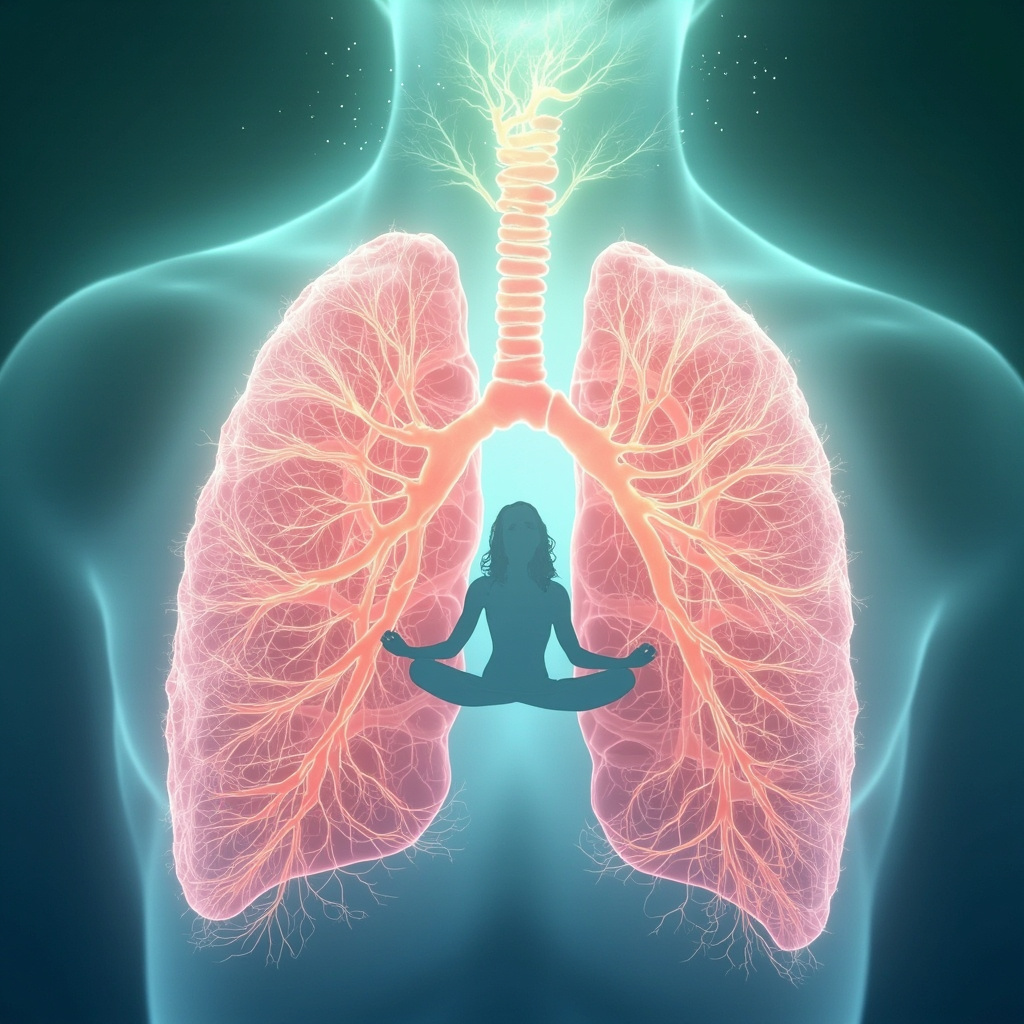
Understanding Lung Tissue
Lung tissue (glossary) fills the chest cavity inside your lungs. It acts like a busy marketplace where fresh oxygen from the air you breathe enters your bloodstream, and carbon dioxide-a waste gas-leaves to be exhaled. This exchange keeps every cell in your body energized and functioning well.
When healthy, lung tissue ensures deep, effortless breaths and steady vitality. It supports clear thinking, strong immunity, and emotional calm by delivering oxygen efficiently.
Signs of Imbalance in Lung Tissue
If lung tissue struggles, you might notice:
- Shortness of breath or feeling winded easily
- Tiredness from low oxygen reaching your muscles and brain
- Frequent coughs, wheezing, or chest tightness
Common conditions include asthma (airways tighten), chronic obstructive pulmonary disease (COPD, where airflow is blocked), or pulmonary fibrosis (scarring stiffens the tissue). These limit oxygen flow, draining your daily energy.
The Emotional Side of Lung Tissue
Lungs hold more than air-they store emotions too. Grief, sadness, and feelings of being trapped often settle here. Unresolved sorrow can tighten chest muscles, shallow your breath, and imprint on the delicate lung tissue itself. This creates a cycle: emotional weight restricts breathing, and poor breath fuels more stress.
As a resource, strong lung tissue offers oxygen to lift mood, release tension, and foster emotional balance. It helps other body parts by easing grief's grip, promoting joy and openness.
Recent Research on Yoga and Lung Health
A 2025 meta-analysis of 10 studies with over 1,000 patients found yoga significantly boosts key lung measures. Forced vital capacity percentage (FVC%) rose by 3%, forced expiratory volume in one second (FEV1) by 0.47 liters, and FEV1 percentage by 5.74%. These gains come from stronger breathing muscles, better lung stretch, and less airway resistance.
Yoga shines as a simple add-on for asthma, COPD, and similar issues, with sessions of 60 minutes over at least 4 weeks showing results.
Yoga Practices to Nurture Lung Tissue
Yoga restores lung tissue through gentle stretches, deep breaths, and mindful holds. Focus on chest openers to expand tissue, release grief, and improve oxygen flow.
Breathing Exercises (Pranayama)
- Deep Belly Breathing: Lie down, hand on belly. Inhale slowly through nose for 4 counts, letting belly rise. Exhale for 6 counts. Do 5-10 minutes daily to massage lung tissue and calm the nervous system.
- Alternate Nostril Breathing (Nadi Shodhana): Close right nostril, inhale left. Close left, exhale right. Inhale right, exhale left. Repeat 5 rounds. Balances energy, clears grief pathways.
Supportive Poses
- Child's Pose (Balasana): Kneel, fold forward, arms extended. Rest forehead down, breathe deeply into back and chest. Holds 2-5 minutes. Releases chest tension, eases sadness.
- Cobra Pose (Bhujangasana): Lie on belly, hands under shoulders, lift chest gently. Hold 20-30 seconds, 3 times. Opens lung tissue, boosts circulation.
- Bridge Pose (Setu Bandhasana): Lie on back, feet flat, lift hips. Arms alongside or clasped under back. Hold 30 seconds. Expands chest, strengthens breath muscles.
- Seated Twist: Sit tall, twist right, hand on left knee. Breathe into ribs. Switch sides. Detoxes emotions stored in lungs.
Practice 20-30 minutes, 3-5 times weekly. Start slow, use props like blankets for comfort. Notice how breath deepens and mood lightens.
When Lung Tissue Becomes Your Ally
Balanced lung tissue not only fuels physical recovery but also supports emotional healing. Use it as a resource in daily life: pair yoga with journaling about sorrows to fully release them.
These practices align breath, body, and heart, drawing on your innate resilience. Your lungs are ready to expand-breathe into freedom today.
- 1. compassionatefriends.org
- 2. youtube.com
- 3. facebook.com
- 4. youtube.com
- 5. matherhospital.org
- 6. youtube.com
- 7. instagram.com
- 8. 369wellnesscenter.com
- 9. youtube.com
- 10. danaleighlyons.substack.com
- 11. swanriveryoga.com
- 12. vitalityyogaflow.com
- 13. anoasisofhealing.com
- 14. dinavalerie.com
- 15. youtube.com
- 16. nm.org
- 17. pmc.ncbi.nlm.nih.gov
- 18. pmc.ncbi.nlm.nih.gov
- 19. pmc.ncbi.nlm.nih.gov
- 20. youtube.com
- 21. scienceinhealth.com
- 22. ashleyflowersyoga.com
- 23. clinicaltrials.gov
- 24. pmc.ncbi.nlm.nih.gov
- 25. music.youtube.com
- 26. airwayhealth.org
- 27. yogajournal.com
- 28. healthcare-bulletin.co.uk
- 29. higherdose.com
- 30. painfreeforlife.com
- 31. urbankandy.com
- 32. susanjreynolds.com
- 33. pmc.ncbi.nlm.nih.gov
- 34. healingpoints-acu.com
- 35. kripalu.org
- 36. naatlanta.com
- 37. open.spotify.com
- 38. sciencedirect.com
- 39. youtube.com
- 40. youtube.com
- 41. open.spotify.com
- 42. lung.org
- 43. fullcirclegc.org
- 44. instagram.com
- 45. prajnayoga.com
- 46. threads.com
- 47. respiratory-therapy.com
- 48. pmc.ncbi.nlm.nih.gov
- 49. instagram.com
- 50. instagram.com
Related posts
Glossary
- Energy and mind Structures > oxygen
- Energy and mind Structures > carbon
- Energy and mind Structures > Focused Coherence; Focus
- Energy and mind Structures > Sadness
- Energy and mind Structures > Grief
- Energy and mind Structures > Immunity
- Body zones > lungs
- Body zones > tissue
- Body zones > muscles
- Body zones > nose
- Body zones > chest
- TCM Recipes > Breathe Easy: Relief for Asthma Symptoms
- TCM Recipes > Emotional Balance: A TCM Guide to Calm Anxiety & Insomnia
- TCM Recipes > Circulation: Boost Energy and Warm Your Extremities
- TCM Recipes > Heart Health: Remedies for Anxiety and Palpitations
- TCM Recipes > Lung Support: A TCM Recipe for Respiratory Health
- Energy and mind Structures > vitality
- Energy and mind Structures > Stress
- Stimuli > Rose
- Stimuli > Moon - Nasal Passage, Breathing, Taste
- Stimuli > Fibrosis
- Binaural beats > Nervous System: A Program for Emotional Balance and Relaxation
see also...
- Energy and mind Structures > HRV
- Energy and mind Structures > Body zones > substantia nigra
- Energy and mind Structures > TCM Recipes > Skin Health: Remedies for Acne and Eczema
- Testimonials > 61% Drop in Nausea and 58% in Headaches from Sound Therapy
- Binaural beats > Stimuli > Fibrosis
- Binaural beats > Transmutation: A Sound Journey for Personal Change