


T4 Vertebra: TCM Grief Stability Ally
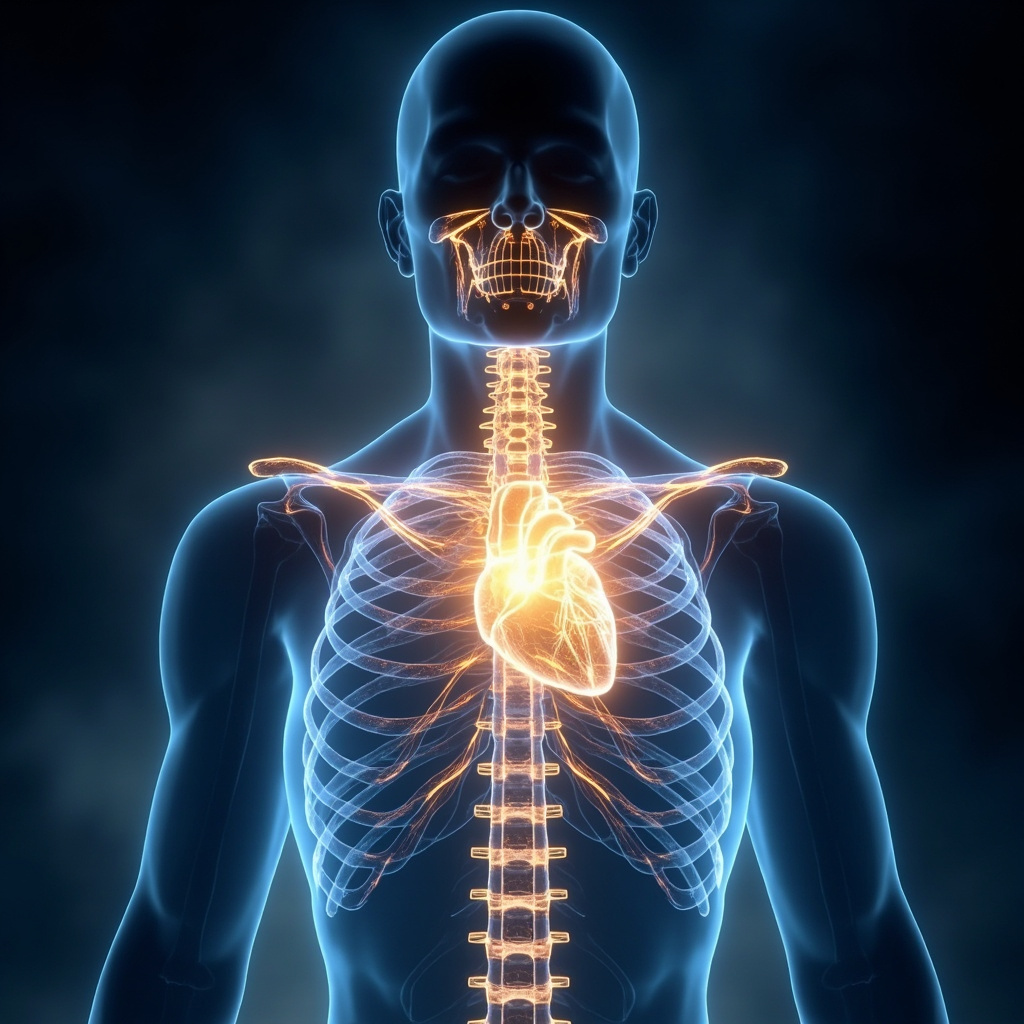
Understanding the T4 Vertebra
The T4 vertebra, fourth in the thoracic spine, sits in your upper to mid-back. It forms a key part of the rib cage structure, offering stability to your chest area. This bone shields the spinal cord while helping maintain good posture. Everyday movements rely on its strength, from breathing deeply to standing tall.
Physical Support from T4
Think of T4 as a guardian for your thoracic region. It connects ribs to the spine, aiding smooth expansion during breaths. Healthy T4 ensures proper alignment, reducing strain on nearby areas. Issues here can lead to discomfort in the back, chest, or even arms. Common signs include tightness, pain on movement, or trouble with deep inhales.
In daily life, poor posture or repetitive strain might weaken T4 function. Over time, this affects overall mobility. Supporting T4 helps the whole spine work in harmony, promoting vitality and ease.
Emotional Links in Traditional Chinese Medicine
Traditional Chinese Medicine views the body and mind as one. The thoracic spine, including T4, relates to the Lung and Heart systems. Lungs govern grief and sadness, while the Heart holds joy and deeper feelings.
Unresolved grief often settles in the upper back. You might feel heavy shoulders or a knot between the shoulder blades. Sadness can tighten this area, mirroring stuck energy or qi flow. In TCM, emotions influence organs: prolonged sorrow weakens Lung qi, impacting breath and immunity. Heart imbalances add emotional hurt, felt physically around T4.
For example, after loss or stress, people report upper back aches. This is no coincidence. TCM teaches that clearing emotional blocks restores physical ease.
Signs of T4 Imbalance
When T4 struggles, symptoms appear:
- Back pain: Sharp or dull ache in upper mid-back.
- Breathing issues: Shallow breaths or chest tightness.
- Posture problems: Hunched shoulders from weakness.
- Nerve sensations: Tingling in arms or chest.
- Emotional echoes: Persistent sadness or vulnerability.
These link to T4 syndrome, where spinal irritation causes widespread discomfort. Factors like stress, injury, or poor alignment contribute. In TCM terms, it's often qi stagnation or yin-yang disharmony in Lung-Heart meridians.
T4 as a Healing Resource
A strong T4 serves as a powerful ally. It stabilizes the thoracic spine, boosting respiratory health and heart function. Good alignment eases Lung qi flow, helping release grief. It supports emotional recovery by grounding feelings in the body.
When other areas need help-like weary lungs or a heavy heart-T4 provides structure. It aids five elements balance: Metal (Lungs) for release, Fire (Heart) for warmth. Call on T4 to anchor during inner work, fostering resilience.
Restoring Harmony with TCM Principles
TCM offers gentle ways to support T4:
- Acupressure: Press points along Bladder meridian (back shu points near T4) to move qi.
- Breath work: Deep belly breathing to nourish Lungs and ease grief.
- Movement: Gentle twists or yoga poses targeting thoracic spine.
- Herbs: Formulas like Xiao Yao San for emotional stagnation.
Assess energy flow through biomarkers linked to T4-its vitality, agitation, and connections. Balanced markers show smooth qi; imbalances guide targeted care. Meridian therapy fine-tunes this area, aligning ancient wisdom with modern insights.
In practice, a practitioner might note T4 weakness alongside Lung biomarkers. Treatment focuses on tonifying qi, dispersing blocks, and harmonizing emotions.
Everyday Steps for T4 Wellness
Build T4 strength simply:
- Posture check: Sit and stand with shoulders back.
- Warmth: Apply heat packs to relax muscles.
- Emotional release: Journal grief or meditate on breath.
- Support: Use cushions for upper back during rest.
Long-term, nurture Lung-Heart harmony. Let go of old sorrows to free your back.
For deeper insights, see the T4 glossary.
This post draws from timeless TCM, bridging body stability with emotional peace. Harmony starts at T4.
- 1. meandqi.com
- 2. sciencedirect.com
- 3. integrativepractitioner.com
- 4. wittephysicaltherapy.com
- 5. scirp.org
- 6. facebook.com
- 7. pmc.ncbi.nlm.nih.gov
- 8. facebook.com
- 9. aurelerossi.com
- 10. instagram.com
- 11. physio-pedia.com
- 12. facebook.com
- 13. instagram.com
- 14. pubmed.ncbi.nlm.nih.gov
- 15. physio-pedia.com
- 16. finepointacupuncture.com
- 17. maxhealthcare.in
- 18. linkedin.com
- 19. spinalcord.com
- 20. craftbodyscan.com
- 21. urban-wellness.ca
- 22. brooklynpaindoctors.com
- 23. healthcentral.com
- 24. facebook.com
- 25. instagram.com
- 26. harmony-within-acupuncture.com
- 27. seleneriverpress.com
- 28. elementtherapeutics.ca
- 29. precisionpt.org
- 30. berkeley-acupuncture.com
- 31. researchgate.net
- 32. texascenterforlifestylemedicine.org
- 33. verywellmind.com
- 34. facebook.com
- 35. katokamassagetherapy.com
- 36. yinovacenter.com
- 37. facebook.com
- 38. kingsparkchiropractic.com.au
Related posts
Glossary
- Energy and mind Structures > Structure
- Energy and mind Structures > Metal
- Energy and mind Structures > Fire
- Energy and mind Structures > Sadness
- Energy and mind Structures > Peace
- Energy and mind Structures > Grief
- Energy and mind Structures > Stagnation
- Energy and mind Structures > Immunity
- Energy and mind Structures > Relax
- Energy and mind Structures > Meridians
- Body zones > lungs
- Body zones > muscles
- Body zones > respiratory
- Body zones > T4
- Body zones > chest
- Energy and mind Structures > Organs
- TCM Recipes > Heart Health: Remedies for Anxiety and Palpitations
- TCM Recipes > Lung Support: A TCM Recipe for Respiratory Health
- Energy and mind Structures > vitality
- Energy and mind Structures > movement
- Energy and mind Structures > Stress
- Stimuli > Moon - Nasal Passage, Breathing, Taste
- Stimuli > AIDS
- Stimuli > Pain
- Binaural beats > Spinal Cord Support: Enhance Wellness and Emotional Balance
- Stimuli > Bladder
- Stimuli > Bone
- Stimuli > Lead
- Stimuli > Harmony
see also...
- Energy and mind Structures > HRV
- Energy and mind Structures > Body zones > substantia nigra
- Energy and mind Structures > TCM Recipes > Skin Health: Remedies for Acne and Eczema
- Testimonials > 61% Drop in Nausea and 58% in Headaches from Sound Therapy
- Binaural beats > Stimuli > Sacral, Zinc Etc
- Binaural beats > Spinal Cord Support: Enhance Wellness and Emotional Balance