


Why Stress Suffocates My Mediastinum?
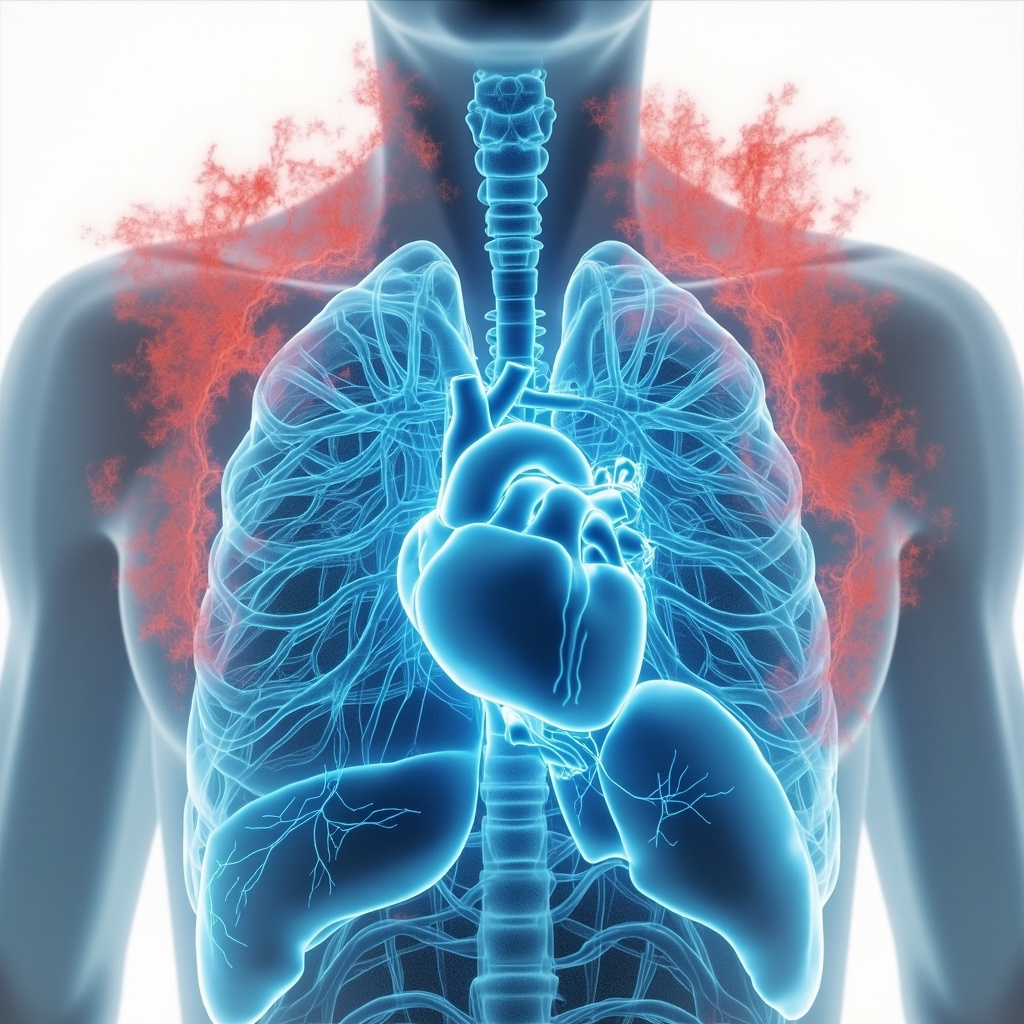
Do You Feel Trapped and Suffocated Daily?
You wake up with a heavy chest, like an invisible weight presses down. Deep breaths feel shallow, and stress from work, family, or life piles on, making you feel overwhelmed. Responsibilities crush you, leaving no room to breathe. This isn't just 'in your head'-it's a real physical sensation many ignore until it worsens.
Common signs include:
- Tightness or pressure in the center of your chest.
- Shortness of breath, even without exercise.
- A sense of being trapped, with no escape from emotions or duties.
- Fatigue that lingers, paired with anxiety spikes.
If this sounds like you, you're not alone. Millions experience this, often mistaking it for heart trouble or just 'stress.' But it points to something deeper in your body.
You've Tried Breathing Exercises and Therapy-Why No Lasting Change?
You've downloaded meditation apps, joined yoga classes, or seen a therapist. They help for a day or two, but the chest grip returns. Pills numb it temporarily, with side effects like drowsiness. Deep breathing calms the mind briefly, yet the physical squeeze persists.
These methods target symptoms, not the root. You feel validated knowing others struggle too, but frustrated because quick fixes fail. What if the issue hides in plain sight, linked to your body's core control center?
Meet the Mediastinum: Your Chest's Hidden Command Center
Picture the space between your lungs-the mediastinum. It houses your heart, windpipe (trachea), esophagus, and major blood vessels. Like a busy highway, it keeps air flowing, blood pumping, and food moving.
When balanced, everything runs smoothly: easy breaths, steady heartbeat, calm energy. But stress throws it off. Muscles tense, blood flow shifts, and nerves fire unevenly. Learn more in our glossary.
Emotional ties run deep. The mediastinum links to lungs, which in body-mind traditions reflect grief or pressure. Modern stress mimics suffocation-feeling overwhelmed signals your body it's 'trapped.' Intense worries or unresolved conflicts tighten this area, blocking freedom.
This new view positions stress not as vague, but as a disruptor of vital chest harmony.
How Stress Attacks Your Mediastinum Step by Step
Stress floods your system with cortisol and adrenaline. Heart rate jumps, breathing shallows. Heart rate variability (HRV)-a key stress marker-drops, showing poor recovery. A meta-analysis confirms HRV reveals stress impact.
In the mediastinum:
- Muscles around trachea and heart constrict, causing tightness.
- Shallow breaths reduce oxygen, worsening fatigue.
- Pressure builds, mimicking heart pain-anxiety often fools people this way.
Past tries fail because they skip this chain. Breathing apps ignore biomarker shifts; therapy misses electrical imbalances from ECG-like signals.
Studies build the case:
- Chronic stress inflames heart vessels, raising disease risk PMC review.
- Low HRV ties to anxiety chest pain and poor lung function Frontiers study.
Why Wait? Untreated Imbalance Snowballs
Ignore it, and chest tightness becomes chronic pain, insomnia, or real heart strain. Overwhelm turns to burnout; emotions stay bottled. Early action prevents escalation-your body signals now for a reason.
Surface Solutions Cost More Than You Think
Doctors run scans ($1000+), meds add up with copays. Surgery for severe cases? Life-altering. Yoga retreats run $2000, with no guarantees.
Enter Targeted Body Resonance: A Smarter Path
New tools use your body's electrical signals-like an advanced ECG-to spot imbalances. They apply precise audio frequencies to resonate organs back to harmony, plus guided words and gentle micro-currents. No drugs, non-invasive. Cheaper than one ER visit, works at home.
Curious how this fits mediastinum? Science backs frequencies calming nerves, boosting HRV-like sound therapy easing lung strain YouTube studies hint, but deeper tech amplifies it.
Restore Your Mediastinum with BioCoherence
BioCoherence scans your full-body electrical activity via a simple ECG sensor during an exploration. It computes 1500+ biomarkers, spotlighting mediastinum energy, agitation, and links. Low energy? It's a 'resource' to activate. High agitation? Priority to calm.
Three ways it balances:
- Harmonic Boosts: Custom or from Basic Programs. Frequencies make mediastinum resonate, easing tightness. Stimuli guide it toward calm breathing.
- Personal Guide: 21-day daily audio. Words invite 'Let your mediastinum open space,' paired with frequencies for inner journeys targeting overwhelm.
- Harmonizer: Wearable applies real-time micro-currents from your priorities or catalog, soothing chest physically.
Explore tutorials for sensor setup, program building.
Real people, real shifts:
"The frequencies unlocked repressed emotions... I cried unexpectedly, releasing 20 years of stress." - AB, Croatia
"Emotional state detected accurately... positive shift after weeks." - Laura K., USA
"Helps break mental loops, pivotal for mental problems." - Dr. Johnny, USA
Track progress: HRV rises, chest frees, overwhelm fades. As a psychologist, I see biomarkers like mediastinum bridge emotions and body-vital for regulation.
Start with a Basic Program on stress or respiratory. Pair with mindfulness. Your mediastinum craves balance-give it resonance today.
- 1. sbm.org
- 2. nature.com
- 3. acupunctureinmichigan.com
- 4. pubmed.ncbi.nlm.nih.gov
- 5. firststepbh.com
- 6. yalemedicine.org
- 7. phoenixmed.arizona.edu
- 8. talkiatry.com
- 9. pmc.ncbi.nlm.nih.gov
- 10. pubmed.ncbi.nlm.nih.gov
- 11. mdpi.com
- 12. mdpi.com
- 13. onlinelibrary.wiley.com
- 14. pubmed.ncbi.nlm.nih.gov
- 15. ahcspc.com
- 16. healthdirect.gov.au
- 17. gbhpsych.com
- 18. mayoclinic.org
- 19. ukhealthcare.uky.edu
- 20. healthline.com
- 21. medicalnewstoday.com
- 22. pubmed.ncbi.nlm.nih.gov
- 23. aerjournal.com
- 24. sportsmedicinejournal.com
- 25. craftbodyscan.com
- 26. adventhealth.com
- 27. youtube.com
- 28. massgeneralbrigham.org
- 29. pubmed.ncbi.nlm.nih.gov
- 30. journals.lww.com
- 31. frontiersin.org
- 32. journals.sagepub.com
- 33. heart.org
- 34. pmc.ncbi.nlm.nih.gov
- 35. my.clevelandclinic.org
- 36. weillcornell.org
- 37. music.youtube.com
- 38. youtube.com
- 39. youtube.com
- 40. sciencedirect.com
- 41. pdcenterlv.com
- 42. skgheartcenter.org
- 43. healthline.com
- 44. sagechiro.co.uk
- 45. insighttimer.com
- 46. link.springer.com
- 47. hilarispublisher.com
- 48. pubmed.ncbi.nlm.nih.gov
- 49. pubmed.ncbi.nlm.nih.gov
- 50. apexmedicalcenter.com
- 51. youtube.com
- 52. open.spotify.com
- 53. pubmed.ncbi.nlm.nih.gov
- 54. hcahoustonhealthcare.com
- 55. pubmed.ncbi.nlm.nih.gov
- 56. helpguide.org
- 57. pubmed.ncbi.nlm.nih.gov
- 58. frontiersin.org
- 59. help.heartmath.com
- 60. pmc.ncbi.nlm.nih.gov
- 61. pmc.ncbi.nlm.nih.gov
- 62. biocoherence.net
- 63. music.apple.com
- 64. youtube.com
- 65. biocoherence.net
- 66. cvhealthclinic.com
- 67. memorialhermann.org
- 68. calmclinic.com
- 69. facebook.com
- 70. pmc.ncbi.nlm.nih.gov
- 71. ubiehealth.com
Related posts
Glossary
- Energy and mind Structures > oxygen
- Energy and mind Structures > Regulation
- Energy and mind Structures > Sensation
- Energy and mind Structures > Mental
- Energy and mind Structures > Fire
- Energy and mind Structures > Grief
- Body zones > lungs
- Body zones > mediastinum
- Body zones > muscles
- Body zones > nerves
- Body zones > respiratory
- Body zones > trachea
- Body zones > chest
- Energy and mind Structures > Organs
- TCM Recipes > Heart Health: Remedies for Anxiety and Palpitations
- TCM Recipes > Lung Support: A TCM Recipe for Respiratory Health
- TCM Recipes > Boost Your Energy: A TCM Recipe for Fatigue Relief
- Energy and mind Structures > Theta; 4.31-6.97 Hz. Light sleep, meditation.
- Energy and mind Structures > Stress
- Stimuli > Cortisol
- Stimuli > Moon - Nasal Passage, Breathing, Taste
- Stimuli > Pain
- Binaural beats > Blood Vessels & Arteries: Boost Circulation & Well-Being
- Stimuli > Harmony
- Stimuli > Blood
see also...
- Energy and mind Structures > HRV
- Energy and mind Structures > Body zones > substantia nigra
- Energy and mind Structures > TCM Recipes > Tension Headache Relief: A Natural Approach to Ease Stress
- Testimonials > 61% Drop in Nausea and 58% in Headaches from Sound Therapy
- Binaural beats > Stimuli > Variolinum
- Binaural beats > Blood Vessels & Arteries: Boost Circulation & Well-Being