


Yoga per la stabilità e la sicurezza della parte centrale della schiena
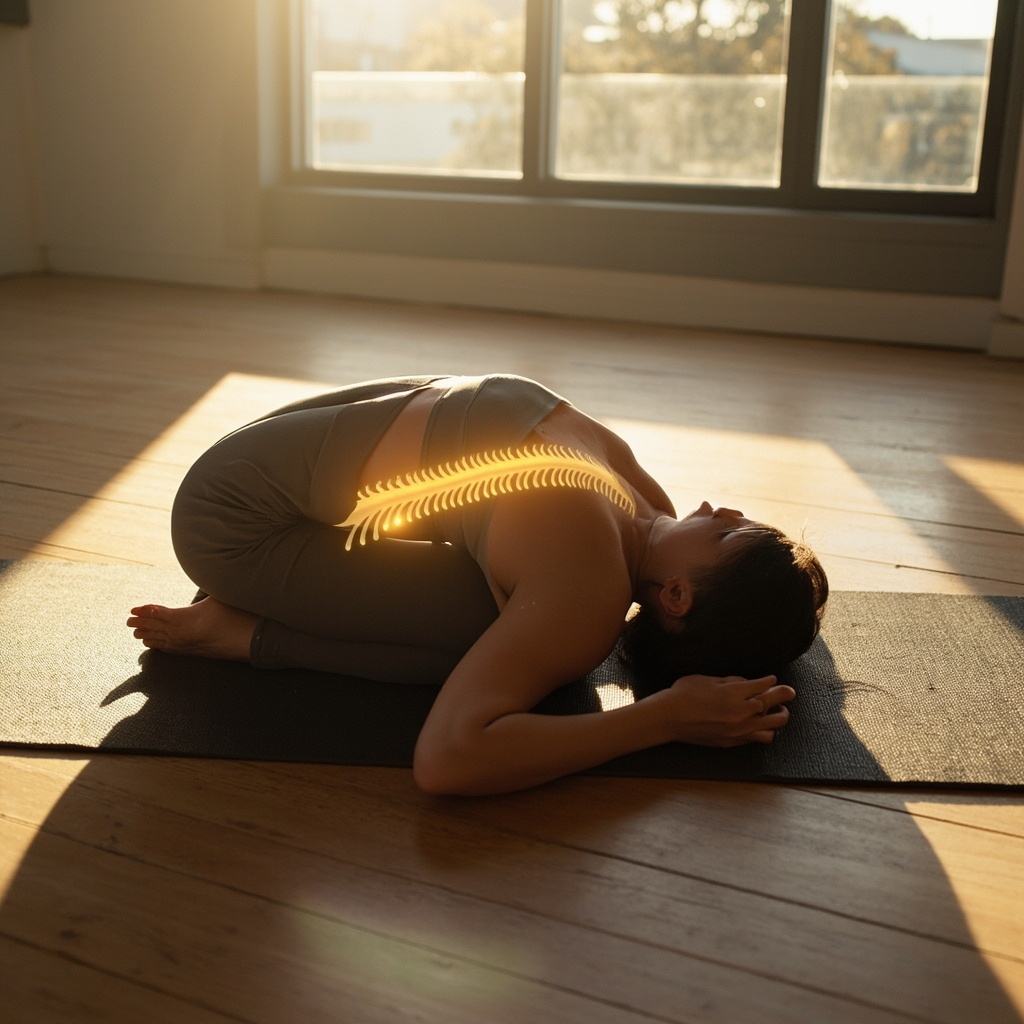
Understanding the T6 Vertebra
The T6 vertebra sits in the middle of your thoracic spine, around the mid-back area. It protects the spinal cord, holds up the rib cage, and allows smooth movement in your upper body. For more details, see the T6 glossary.
This small bone plays a big role in keeping your posture steady and your breathing free. When balanced, it supports daily activities like twisting or bending without strain.
Physical Signs of T6 Imbalance
If T6 is out of alignment, you might notice:
- Pain or tightness in the mid-back
- Stiffness when turning your torso
- Tension spreading to chest or abdomen
- Trouble with deep breaths due to rib cage limits
- Issues with organs nearby, like digestion or heart rhythm
These stem from injury, poor posture, or stress buildup. Over time, they limit mobility and affect your energy.
Emotional Connections to T6
Beyond the body, T6 ties to feelings of security and belonging. It reflects fears about family, home, or protection. Unresolved worries here can tighten the mid-back, creating a physical hold on emotional unrest.
When T6 feels strong, it fosters a sense of safety. It helps release old tensions, letting you feel grounded in relationships and your inner world.
Yoga Poses to Nurture T6
Gentle yoga targets the thoracic spine, building stability and flow. Practice these 3-5 times a week, holding each for 5-10 breaths.
Thread the Needle (Parsva Balasana)
Kneel on all fours. Slide your right arm under your left, lowering your shoulder and ear to the mat. Feel the mid-back open. Switch sides. This releases T6 tension and improves rotation.
Cat-Cow Flow (Marjaryasana-Bitilasana)
On hands and knees, alternate arching and rounding your back. Focus on the mid-spine lift and drop. Great for mobility and awareness around T6.
Locust Pose (Salabhasana)
Lie on your belly, lift your chest and legs. Press into hands for support. Strengthen back muscles supporting T6, boosting posture and power.
Puppy Pose (Uttana Shishosana)
From hands and knees, walk hands forward while sitting hips back. Mid-back stretches deeply, easing T6 stiffness.
Seated Twist (Ardha Matsyendrasana)
Sit tall, cross right leg over left, twist right. Place left elbow outside right knee. This mobilizes T6 for better torso freedom.
Start slow, use props like blocks if needed.
Breathing Techniques for T6 Harmony
Breath connects body and mind. Try these:
- Nadi Shodhana (Alternate Nostril Breathing): Close right nostril, inhale left. Close left, exhale right. Repeat 5 rounds. Balances autonomic nerves linked to T6.
- Thoracic Breath: Place hands on mid-back. Inhale to expand ribs, exhale to soften. Builds T6 awareness and reduces stress.
These calm the nervous system, easing fear-based tensions.
T6 as Your Inner Resource
A healthy T6 strengthens the whole body. It stabilizes the spine, aids organ function, and smooths nerve signals. Emotionally, it nurtures belonging, helping other areas find balance.
In practice, invite T6 support: "Feel your mid-back steady, safe, and strong."
Science Behind the Practice
Studies show yoga improves spinal mobility, reduces back pain, and boosts heart rate variability for better stress handling. Thoracic-focused poses enhance posture and emotional regulation, linking body stability to inner calm.
Regular practice restores T6 harmony, promoting resilience and ease.
Commit to these steps for mid-back strength and emotional security. Your body thanks you.
- 1. instagram.com
- 2. movementformodernlife.com
- 3. webmd.com
- 4. researchgate.net
- 5. pmc.ncbi.nlm.nih.gov
- 6. yogauonline.com
- 7. aurawellnesscenter.com
- 8. scirp.org
- 9. abundantlifechiropractor.com
- 10. berkeley-acupuncture.com
- 11. scholarworks.calstate.edu
- 12. medicalnewstoday.com
- 13. pmc.ncbi.nlm.nih.gov
- 14. researchgate.net
- 15. mdpi.com
- 16. caringmedical.com
- 17. facebook.com
- 18. naturallybalanced.org
- 19. menshealth.com
- 20. se-ortho.com
- 21. reddit.com
- 22. youtube.com
- 23. foresightchiropractic.com
- 24. physio-pedia.com
- 25. atlantaspineinstitute.com
- 26. flintrehab.com
- 27. pmc.ncbi.nlm.nih.gov
- 28. yoga15.com
- 29. prairiespine.com
- 30. youtube.com
- 31. texaschiropracticwellness.com
- 32. int.livhospital.com
- 33. india.anandamarga.org
- 34. yogajournal.com
- 35. pmc.ncbi.nlm.nih.gov
- 36. yogauonline.com
- 37. healthline.com
- 38. journals.lww.com
- 39. thenewgait.com
- 40. pmc.ncbi.nlm.nih.gov
- 41. frontiersin.org
Post correlati
Glossario
- Strutture di energia e mente > Coerenza Focalizzata; Focus
- Strutture di energia e mente > Regolamento
- Strutture di energia e mente > Sicurezza
- Zone del corpo > muscoli
- Zone del corpo > nervi
- Zone del corpo > T6
- Zone del corpo > petto
- Strutture di energia e mente > Organi
- Ricette TCM > Alleviamento del mal di schiena: Rimedi facili per la sciatica e la rigidità
- Ricette TCM > Salute del cuore: Rimedi per l'ansia e le palpitazioni
- Strutture di energia e mente > movimento
- Strutture di energia e mente > Digestione
- Strutture di energia e mente > Stress
- Stimoli > Luna - Cavità Naso, Respirazione, Gusto
- Stimoli > AIDS
- Stimoli > Dolore
- Battiti binaurali > Sostegno al midollo spinale: Migliora il benessere e l'equilibrio emotivo
- Battiti binaurali > Sistema Nervoso: Un Programma per l'Equilibrio Emozionale e il Rilassamento
- Stimoli > Osso
- Stimoli > Armonia
see also...
- Strutture di energia e mente > HRV
- Strutture di energia e mente > Zone del corpo > sostanza nigra
- Strutture di energia e mente > Ricette TCM > Alleviamento del mal di testa da tensione: Un approccio naturale per alleviare lo stress
- Testimonials > 61% di riduzione della nausea e 58% di mal di testa grazie alla terapia sonora
- Battiti binaurali > Stimoli > Sacrale, Zinco Ecc
- Battiti binaurali > Trasmutazione: Un Viaggio Sonoro per il Cambiamento Personale