


The Sinoatrial Node: Your Internal Rhythm and Authority
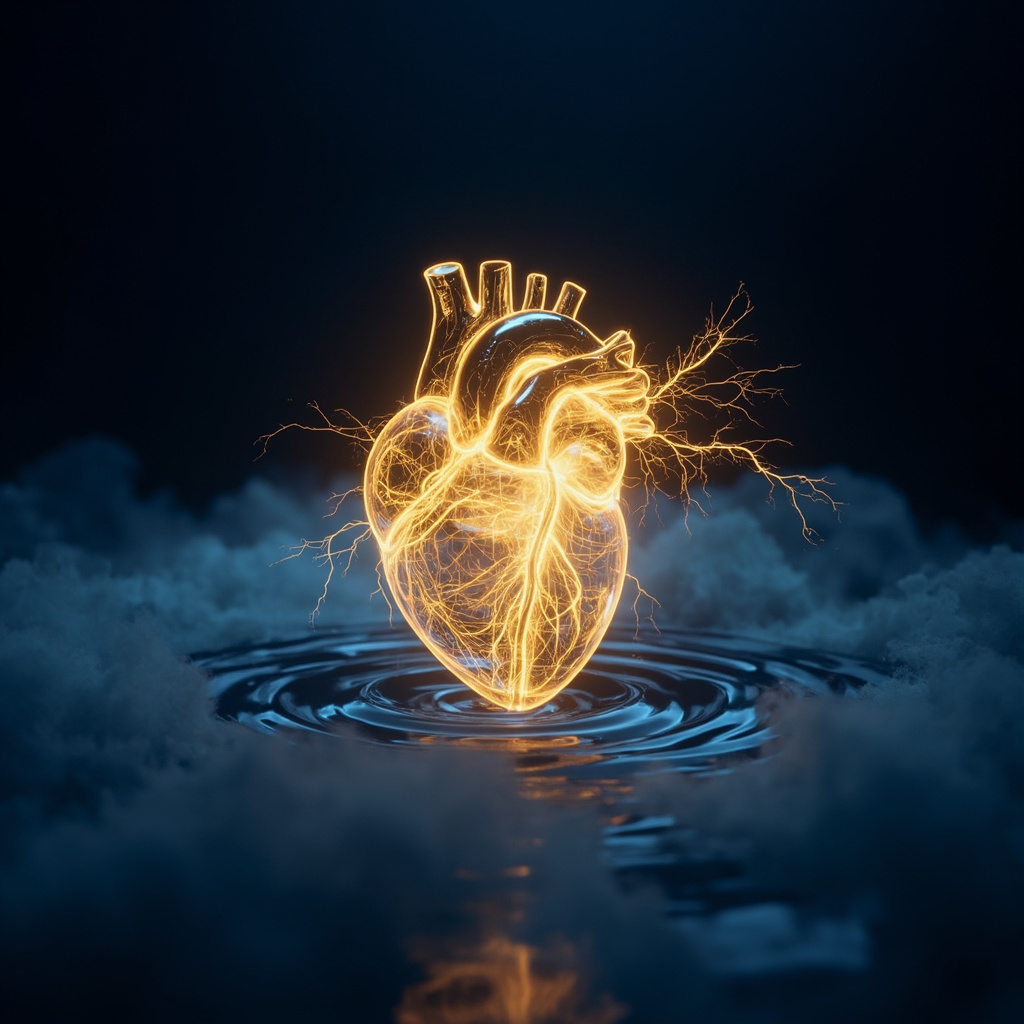
As a fitness coach, I often focus on the mechanics of movement: how muscles contract, how joints glide, and how we build endurance. However, the most profound performance gains often start with a single, silent spark. Deep within the right atrium of your heart sits a tiny cluster of cells known as the sinoatrial node. While it is technically the natural pacemaker of your heart, I have come to view it as much more than a biological metronome. It is the conductor of your entire physical and emotional symphony.
The Heart of Your Rhythm
Every heartbeat begins here. The sinoatrial node generates the electrical impulses that tell your heart when to contract. When this system is functioning optimally, your heart rate remains steady and responsive, adapting seamlessly to the demands of a heavy workout or the stillness of rest. In my practice, I look at the electrical activity of this node to understand how well a person is managing stress. When the rhythm is clear and stable, the body moves with purpose and efficiency. When that rhythm becomes erratic, it is often the first sign that the body is struggling to maintain its equilibrium.
More Than Just a Pulse
Beyond the physical act of pumping blood, the sinoatrial node is deeply connected to our internal sense of authority and self-governance. Think about how your heartbeat changes when you feel anxious or unsupported. When we feel a loss of control in our lives, or when we are challenged in our ability to lead our own path, it often reflects in the subtle electrical patterns of this node.
I have observed that when individuals struggle with feelings of fear, anxiety, or a lack of confidence, their heart's electrical data often shows a need for support in this specific area. By focusing on the sinoatrial node as a resource, we can encourage a sense of inner stability. It is about reclaiming your own rhythm and trusting your capacity to manage whatever challenges come your way.
Tuning Your Inner Conductor
How do we support such a delicate and vital structure? In the world of intelligent recovery, we use personalized frequencies to harmonize the body. By applying specific, targeted resonance, we can help guide the sinoatrial node back to a state of balance. This is not about forcing a change, but rather providing the body with the right information to find its natural, healthy pulse again.
When I work with clients, we often use guided meditations that direct attention toward the heart region. By becoming aware of your own rhythm, you can shift from a state of scattered stress to one of focused clarity. This is particularly useful when you are feeling overwhelmed by external pressures. By stabilizing your heart's pacemaker, you are effectively telling your nervous system that you are safe, that you are in control, and that you are ready to perform at your best.
Practical Steps for Vitality
If you find yourself feeling fatigued, dizzy, or simply lacking the drive you usually have, it may be time to check in with your internal rhythm. You do not need to be an athlete to benefit from this; anyone can experience the benefits of a well-tuned heart.
- Listen to your body: Pay attention to how your heart feels during moments of stress. Is it racing? Is it heavy? This is information, not a judgment.
- Prioritize consistency: Just as you would train a muscle, you can train your heart to find its rhythm through regular, calm breathing and intentional rest.
- Use your resources: Whether through specialized frequencies or simple meditative practices, give yourself the time to reconnect with your center.
By nurturing your sinoatrial node, you are doing more than supporting your cardiovascular health. You are reinforcing your foundation of self-development and resilience. When your inner rhythm is strong, your ability to navigate the world with confidence and vitality follows naturally.
Related posts
Glossary
- Energy and mind Structures > Focused Coherence; Focus
- Energy and mind Structures > Purpose
- Energy and mind Structures > Drive
- Energy and mind Structures > Performance
- Energy and mind Structures > Confidence
- Body zones > sinoatrial node
- Body zones > joints
- Body zones > muscles
- TCM Recipes > Heart Health: Remedies for Anxiety and Palpitations
- Energy and mind Structures > vitality
- Energy and mind Structures > equilibrium
- Energy and mind Structures > movement
- Energy and mind Structures > Stress
- Stimuli > Moon - Nasal Passage, Breathing, Taste
- Binaural beats > Nervous System: A Program for Emotional Balance and Relaxation
- Stimuli > Lead
- Stimuli > Blood
see also...
- Energy and mind Structures > HRV
- Energy and mind Structures > Body zones > cerebrospinal fluid
- Energy and mind Structures > TCM Recipes > Tension Headache Relief: A Natural Approach to Ease Stress
- Testimonials > 61% Drop in Nausea and 58% in Headaches from Sound Therapy
- Binaural beats > Stimuli > Variolinum
- Binaural beats > Transmutation: A Sound Journey for Personal Change