


Vasomotor Nerves: Yoga for Flow & Pressure Balance
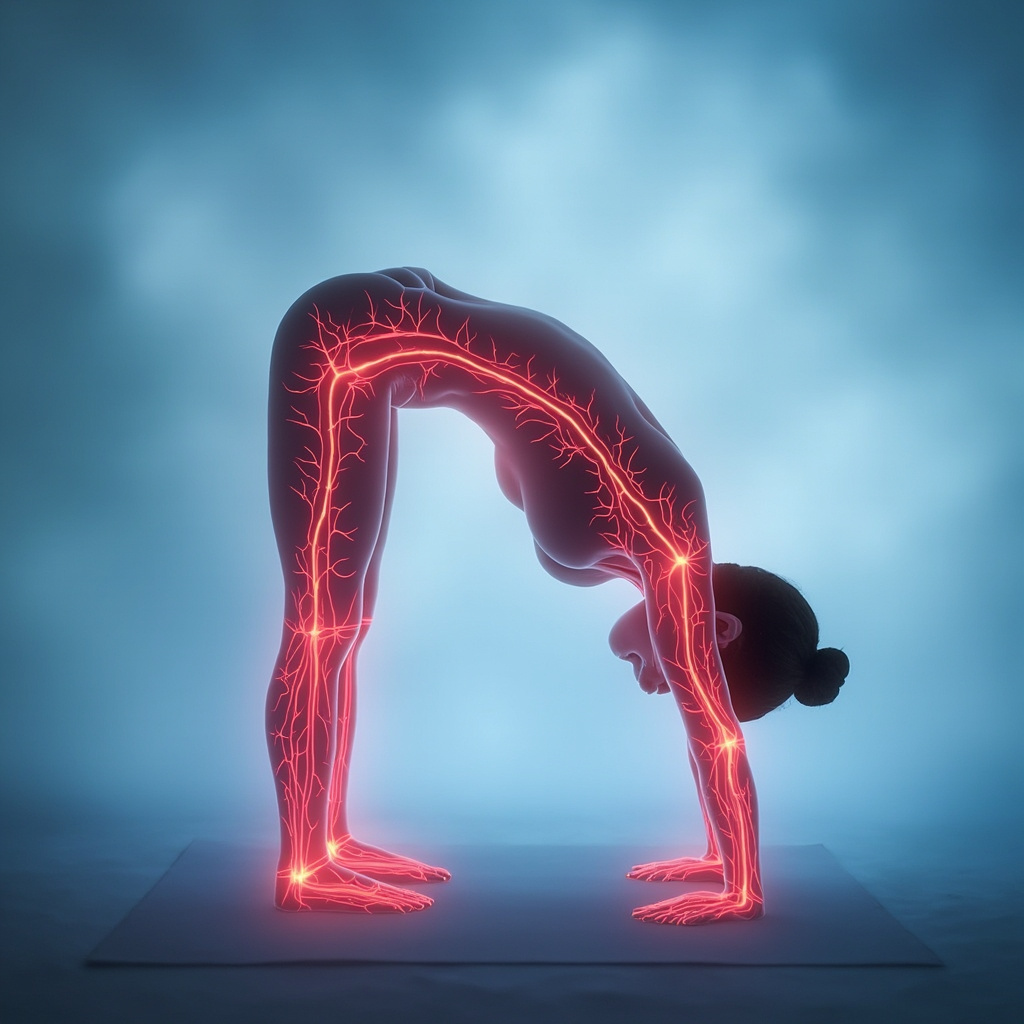
Vasomotor nerves, nestled in the spinal cord, act like tiny traffic controllers for your blood vessels. They decide when vessels should narrow or widen, ensuring your blood pressure stays balanced and every organ gets the oxygen and nutrients it needs. When they work well, you feel energized and steady. When not, you might notice dizziness, cold hands, or constant fatigue.
For a deeper look, check the vasomotor glossary.
Signs Your Vasomotor Nerves Need Attention
These nerves influence daily life more than you might think. Common imbalance signals include:
- High or low blood pressure that fluctuates.
- Poor circulation, like tingling in limbs or slow healing.
- Feeling constantly under pressure, as if life's demands squeeze you tight.
A recent study showed that yoga breathing over 12 weeks lowered blood pressure significantly, highlighting how movement and breath can tune these nerves.
The Emotional Link to Vasomotor Balance
Our bodies and emotions are deeply connected. Vasomotor issues often tie to feelings of overwhelm or lack of support. Imagine your vessels tightening under stress, mirroring inner tension from heavy responsibilities or emotional strain. This can create a cycle: stress tightens vessels, raising pressure, which amps up anxiety.
On the flip side, when vasomotor nerves serve as a resource, they steady the whole system. They direct blood flow where needed, helping organs thrive and fostering a sense of calm control amid chaos.
How Yoga Supports Vasomotor Harmony
As a yoga coach, I focus on practices that ease the nervous system, boost heart rate variability (HRV), and promote relaxation. Yoga reduces sympathetic overdrive-the fight-or-flight response that strains vasomotor function-and activates parasympathetic calm.
Studies confirm yoga lowers systolic blood pressure by about 5 mmHg on average, aiding those with mild hypertension. Breathing techniques especially shine, slowing respiration and signaling vessels to relax.
Key Yoga Practices for Vasomotor Support
Start with these simple, spine-friendly moves. Practice 20-30 minutes daily, focusing on smooth breath.
Breathing Exercise: Alternate Nostril Breathing (Nadi Shodhana)
- Sit comfortably, close right nostril with thumb.
- Inhale left nostril deeply for 4 counts.
- Close left with ring finger, exhale right for 4.
- Inhale right, exhale left. Repeat 5-10 rounds.
This balances the nervous system, easing vessel tension.
Gentle Poses Sequence
- Cat-Cow (Marjaryasana-Bitilasana): On all fours, alternate arching and rounding spine. 10 breaths. Mobilizes spinal nerves.
- Child's Pose (Balasana): Knees wide, forehead to floor, arms forward. Hold 2 minutes. Releases lower back pressure.
- Legs-Up-the-Wall (Viparita Karani): Lie with legs vertical against wall. 5-10 minutes. Boosts circulation without strain.
- Supported Bridge (Setu Bandhasana): Place block under sacrum, lift hips slightly. 3 minutes. Opens hips, supports spinal flow.
- Seated Forward Bend (Paschimottanasana): Legs extended, fold forward gently. 1 minute. Calms mind, soothes nerves.
End with 5 minutes of stillness, hands on belly, noticing breath.
Building a Personalized Routine
Tailor based on your needs: high stress calls for more restorative holds; low energy needs gentle flows. Track how you feel-better circulation shows as warmer hands and steady mood.
Vasomotor nerves thrive when you nurture them with awareness. Regular yoga not only balances pressure but rebuilds resilience, turning pressure into poise. Your body knows the way; yoga helps you listen.
- 1. ornish.com
- 2. youtube.com
- 3. emjreviews.com
- 4. health.harvard.edu
- 5. music.apple.com
- 6. pubmed.ncbi.nlm.nih.gov
- 7. pubmed.ncbi.nlm.nih.gov
- 8. pubmed.ncbi.nlm.nih.gov
- 9. pubmed.ncbi.nlm.nih.gov
- 10. healthcare-bulletin.co.uk
- 11. cureus.com
- 12. mymenoplan.org
- 13. pubmed.ncbi.nlm.nih.gov
- 14. healthcare-bulletin.co.uk
- 15. pmc.ncbi.nlm.nih.gov
- 16. pmc.ncbi.nlm.nih.gov
- 17. today.uconn.edu
- 18. youtube.com
- 19. aol.com
- 20. bristol.ac.uk
- 21. youtube.com
- 22. pubmed.ncbi.nlm.nih.gov
- 23. healthcare-bulletin.co.uk
- 24. pmc.ncbi.nlm.nih.gov
- 25. pubmed.ncbi.nlm.nih.gov
- 26. pubmed.ncbi.nlm.nih.gov
- 27. open.spotify.com
- 28. yogajala.com
- 29. pmc.ncbi.nlm.nih.gov
- 30. mdpi.com
- 31. juniperpublishers.com
- 32. pubmed.ncbi.nlm.nih.gov
- 33. youtube.com
- 34. onlinelibrary.wiley.com
- 35. enews.wvu.edu
- 36. journals.plos.org
- 37. youtube.com
- 38. pmc.ncbi.nlm.nih.gov
- 39. pubmed.ncbi.nlm.nih.gov
Related posts
Glossary
- Energy and mind Structures > oxygen
- Energy and mind Structures > Focused Coherence; Focus
- Energy and mind Structures > Relax
- Body zones > nerves
- Body zones > vasomotor
- Body zones > parasympathetic
- Energy and mind Structures > Organs
- TCM Recipes > Circulation: Boost Energy and Warm Your Extremities
- TCM Recipes > Hypertension: Remedies for High Blood Pressure Relief
- TCM Recipes > Heart Health: Remedies for Anxiety and Palpitations
- TCM Recipes > Boost Your Energy: A TCM Recipe for Fatigue Relief
- Energy and mind Structures > blood pressure
- Energy and mind Structures > movement
- Energy and mind Structures > Limbs, skin
- Energy and mind Structures > Stress
- Stimuli > Moon - Nasal Passage, Breathing, Taste
- Binaural beats > Spinal Cord Support: Enhance Wellness and Emotional Balance
- Binaural beats > Nervous System: A Program for Emotional Balance and Relaxation
- Binaural beats > Blood Vessels & Arteries: Boost Circulation & Well-Being
- Stimuli > Blood
see also...
- Energy and mind Structures > HRV
- Energy and mind Structures > Body zones > plasma
- Energy and mind Structures > TCM Recipes > Tension Headache Relief: A Natural Approach to Ease Stress
- Testimonials > 61% Drop in Nausea and 58% in Headaches from Sound Therapy
- Binaural beats > Stimuli > Variolinum
- Binaural beats > Blood Vessels & Arteries: Boost Circulation & Well-Being