


Menopausal Mood Swings 2: Psyche's Stability Echo
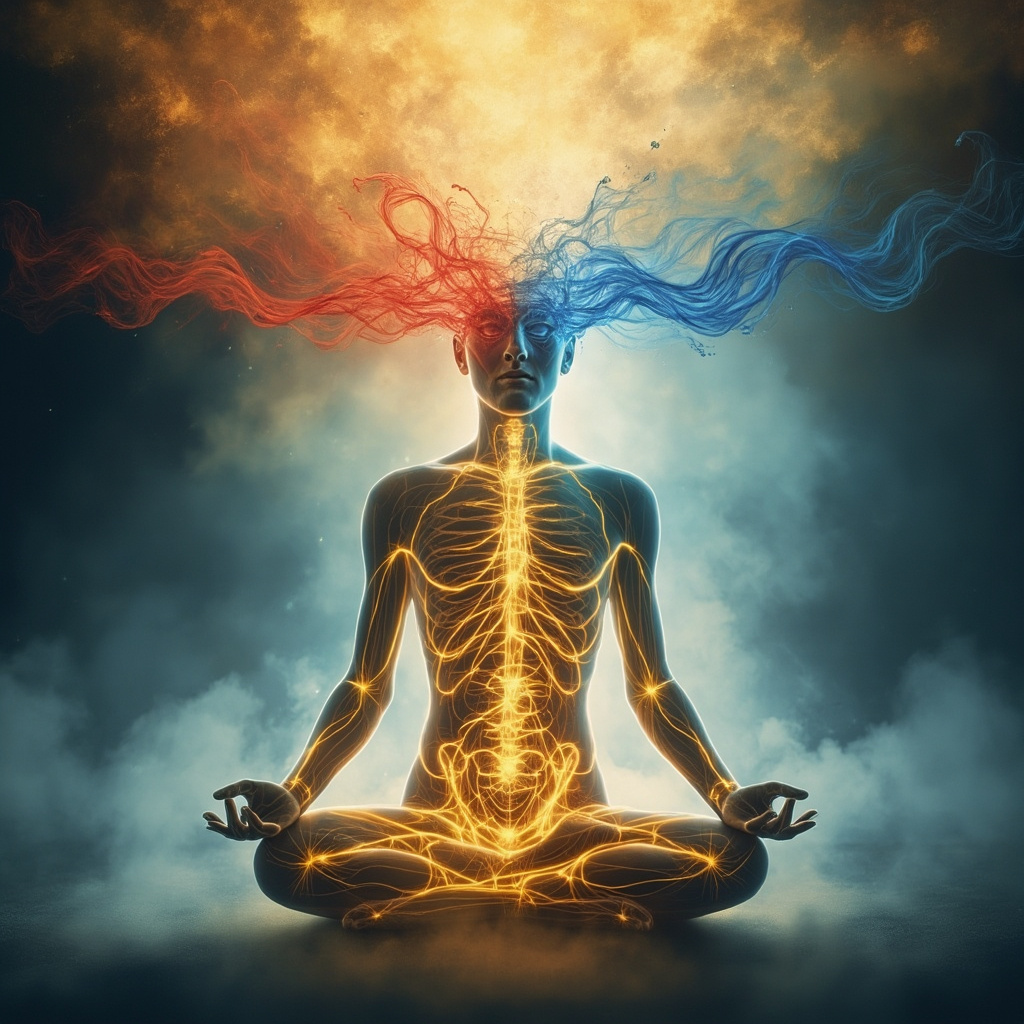
Menopause marks a profound transition, where the body and psyche engage in a deep dialogue. Mood swings during this phase frequently arise not only from hormonal shifts but also from the unconscious mind bringing forward unresolved emotions for attention and integration. The biomarker known as (F) Menopausal Mood Swings 2 serves as a clear mirror, reflecting the body's electrical activity tied to emotional stability.
Recognizing the Signs
This pattern emerges when the body's energy shows agitation in specific areas, leading to common experiences:
- Irritability: Sudden bursts of frustration, like inner heat rising without cause.
- Anxiety: Restless worry that tightens the chest and throat.
- Emotional instability: Waves of sadness or anger that shift unpredictably.
- Insomnia: Nights disrupted by racing thoughts or physical unease.
These symptoms signal a need for balance, where physical discomfort echoes psychological undercurrents. In my work as a Jungian psychotherapist, I see them as invitations to explore the shadow – those hidden aspects of the self seeking light.
Ancient Points of Healing
Traditional healers mapped key body points that resonate with emotional calm. These form the core of this biomarker's balancing approach:
- SI4 (Wangu): Located on the wrist, it provides grounding for overwhelming emotions, like an anchor in turbulent waters.
- LI18 (Futu): Near the throat, it soothes tension that blocks clear expression of feelings.
- ST45 (Lidui): On the foot, it clears excess heat, reducing fiery irritability.
- CV19 (Zigong): Along the chest midline, it opens the heart space for freer emotional flow. (Note caution if chest issues are present.)
- PE7 (Daling): At the wrist's inner crease, it directly calms the spirit, fostering peace.
By resonating with these points' natural frequencies, the body can realign, much like tuning an instrument to play harmonious notes.
The Psyche's Echo in Menopause
From a Jungian perspective, menopause is a rite of passage toward individuation – the process of becoming whole. Mood swings amplify as the ego confronts the unconscious. Irritability may echo repressed anger from past roles as nurturer or achiever. Anxiety often stems from fears of aging or loss, surfacing as throat constriction, symbolizing unsaid words. Insomnia invites dream work, where the psyche communicates through symbols.
Biomarkers like (F) Menopausal Mood Swings 2 quantify this interplay. High agitation levels indicate active inner conflict; balanced energy shows integration progress. Tracking these shifts helps clients witness their transformation, turning chaos into clarity.
Insights from Modern Research
Recent studies affirm the body-mind link in menopause. A systematic review protocol examines acupuncture therapies for perimenopausal symptoms, including mood swings, highlighting their potential to improve quality of life by addressing both physical and emotional layers. This aligns with observations that targeted stimulation reduces anxiety and stabilizes emotions through natural biochemical shifts, like increased serotonin.
Pathways to Inner Harmony
To work with these echoes:
- Observe without judgment: Note when swings occur – triggers often reveal shadow material.
- Active imagination: Visualize the points glowing with calm light, inviting unconscious wisdom.
- Dream journaling: Record nightly images; patterns may correlate with biomarker agitation.
- Gentle movement: Walks or yoga to circulate energy, easing stagnation.
- Resonance practices: Use guided audio with focusing words to call forth stability as a resource.
Over time, these steps foster resilience. Clients report not just fewer swings but a deeper sense of self, as if the psyche's storm has cleared for a brighter inner landscape.
In this transition, embrace the echo as a guide. It points to untapped strength, leading toward wholeness.
- 1. westsidewomenshealth.com
- 2. instagram.com
- 3. instagram.com
- 4. youtube.com
- 5. journals.sagepub.com
- 6. cambridge.org
- 7. lrhc.org
- 8. pmc.ncbi.nlm.nih.gov
- 9. pmc.ncbi.nlm.nih.gov
- 10. apa.org
- 11. whitecraneclinic.com
- 12. youtube.com
- 13. ctvnews.ca
- 14. instagram.com
- 15. herbandohm.com
- 16. capria.care
- 17. southslopeacupuncture.com
- 18. youtube.com
- 19. mimaclinic.com
- 20. acaomhealthcare.com
- 21. startribune.com
- 22. facebook.com
- 23. journals.sagepub.com
- 24. instagram.com
- 25. globalnews.ca
- 26. letstalkmenopause.org
- 27. saffronsageliving.com
- 28. thomsonmedical.com
- 29. psychologytoday.com
- 30. instagram.com
- 31. naplesnews.com
- 32. cleopatrarx.com
- 33. berkeley-acupuncture.com
- 34. med.stanford.edu
- 35. raleighacupunctureinc.com
- 36. albanacupuncture.com
- 37. pmc.ncbi.nlm.nih.gov
- 38. ctvnews.ca
- 39. amazon.com
Related posts
Glossary
- Energy and mind Structures > Sadness
- Energy and mind Structures > Peace
- Energy and mind Structures > Stagnation
- Body zones > hormonal
- Body zones > throat
- Body zones > chest
- TCM Recipes > Menopausal Mood Relief: Soothing Emotional Ups and Downs
- TCM Recipes > Menopausal Mood Relief: Soothing Emotional Ups and Downs
- TCM Recipes > Heart Health: Remedies for Anxiety and Palpitations
- Stimuli > Serotonin
see also...
- Energy and mind Structures > Stagnation
- Energy and mind Structures > Body zones > substantia nigra
- Energy and mind Structures > TCM Recipes > Tension Headache Relief: A Natural Approach to Ease Stress
- Testimonials > 61% Drop in Nausea and 58% in Headaches from Sound Therapy
- Binaural beats > Stimuli > Serotonin