


Heart: Psyche's Calm Mirror
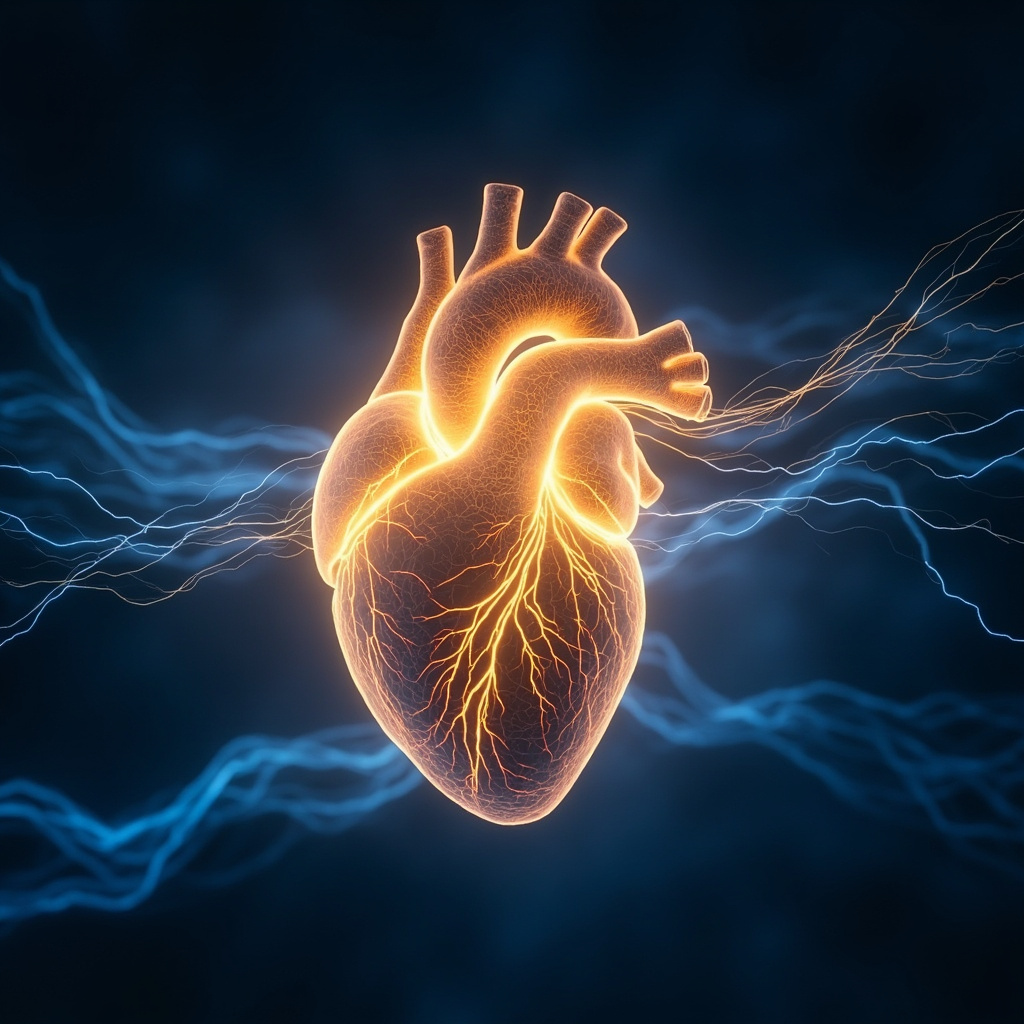
The Heart's Whisper to the Psyche
In the quiet rhythm of the heart, we find a profound mirror to the soul. As a Jungian psychotherapist, I see the heart not merely as a physical organ, but as a guardian of our emotional depths. Its steady beat reflects the flow of our inner life-love, fear, joy, and hidden tensions from the unconscious. When stress builds unseen, the heart responds with subtle shifts in its electrical activity, signaling imbalances that affect both body and mind.
Recent studies confirm this ancient wisdom. Research from Mass General Brigham reveals that people with both depression and anxiety face a 35% increased risk of cardiovascular disease compared to those without. Even one condition alone raises the risk by 25%. Brain scans show heightened activity in stress centers like the amygdala and prefrontal cortex, leading to lower heart rate variability-a sign of autonomic dysregulation-and elevated inflammation markers like C-reactive protein. This keeps the body locked in 'fight or flight,' raising heart rate, blood pressure, and damaging vessels over time.
Biomarkers as Windows to Inner Tension
Heart biomarkers, derived from electrical activity recordings, reveal this interplay. High agitation might show as irregular rhythms linked to palpitations or insomnia, mirroring anxious thoughts or unresolved conflicts. Low energy could echo depressive states, where the psyche withdraws into shadow. These patterns connect physical symptoms to unconscious patterns-trauma echoes, repressed emotions, or the call for individuation.
In traditional Chinese medicine, points like HT7 (Spirit Gate), PC6, and PC7 target the heart meridian to calm the spirit, ease palpitations, promote sleep, and soothe anxiety. Clinical evidence supports single-point stimulation at HT7 for reducing stress, emergence agitation, and insomnia, possibly by enhancing parasympathetic activity and modulating brain regions via serotonin and GABA pathways.
Psyche's Reflections in Heart Patterns
Consider these common mirrors:
- Palpitations and Anxiety: Rapid beats signal psyche's vigilance, perhaps guarding against vulnerability. Shadow work here uncovers fears of intimacy or loss.
- Insomnia: Restless heart rhythms reflect racing thoughts, inviting dream exploration to integrate unconscious content.
- Low Vitality: Sluggish patterns may point to emotional stagnation, a call to reclaim joy and purpose.
- Emotional Flux: Variable rhythms echo mood swings, opportunities for active imagination to harmonize opposites.
Tracking these over time shows progress in therapy. As clients engage in inner journeys, heart coherence improves-smoother rhythms foster clarity, resilience, and emotional balance.
Pathways to Harmony
Healing begins with awareness. Heart coherence practices, like focused breathing or meditation, boost heart rate variability, reducing negative emotions and enhancing well-being. Studies on HRV biofeedback confirm it mediates stress reduction, aligning heart and brain for better emotional regulation.
In sessions, I correlate heart data with dreams and symbols. A tense heart might prompt visualization of its 'guardian' archetype, releasing held grief or fostering self-compassion. This Jungian approach transforms physiological signals into steps toward wholeness.
The heart invites us to listen. By honoring its messages, we bridge body and psyche, paving the way for true renewal.
- 1. mi-psych.com.au
- 2. jamanetwork.com
- 3. advances.massgeneral.org
- 4. acubody.net
- 5. news.emory.edu
- 6. news.harvard.edu
- 7. onlinelibrary.wiley.com
- 8. pmc.ncbi.nlm.nih.gov
- 9. pubmed.ncbi.nlm.nih.gov
- 10. pmc.ncbi.nlm.nih.gov
- 11. healthcare-bulletin.co.uk
- 12. pubmed.ncbi.nlm.nih.gov
- 13. youtube.com
- 14. youtube.com
- 15. researchgate.net
- 16. psycnet.apa.org
- 17. computer.org
- 18. facebook.com
- 19. psyche.co
- 20. psychomed.crpitalia.eu
- 21. open.spotify.com
- 22. taichi-wellness.com
- 23. mgriblog.org
- 24. sciencenews.org
- 25. pmc.ncbi.nlm.nih.gov
- 26. frontiersin.org
- 27. quantumclinic.com
- 28. newscientist.com
- 29. youtube.com
- 30. facebook.com
- 31. sciencedirect.com
- 32. youtube.com
- 33. soundcloud.com
- 34. evidencebasedacupuncture.org
- 35. sciencedirect.com
- 36. nature.com
- 37. pubmed.ncbi.nlm.nih.gov
- 38. health.harvard.edu
- 39. pennstatehealthnews.org
- 40. nyulangone.org
- 41. cardiovascularbusiness.com
- 42. insighttimer.com
- 43. sciencedaily.com
- 44. music.youtube.com
- 45. nature.com
- 46. med.nyu.edu
- 47. youtube.com
- 48. researchgate.net
- 49. news.harvard.edu
- 50. pmc.ncbi.nlm.nih.gov
- 51. acupuncturetimes.com
- 52. heartmath.com
- 53. noetic.org
- 54. mpg.de
- 55. pmc.ncbi.nlm.nih.gov
- 56. acc.org
- 57. youtube.com
- 58. youtube.com
Related posts
Glossary
- Energy and mind Structures > Regulation
- Energy and mind Structures > Purpose
- Energy and mind Structures > Grief
- Energy and mind Structures > Stagnation
- Body zones > parasympathetic
- Body zones > face
- TCM Recipes > Emotional Balance: A TCM Guide to Calm Anxiety & Insomnia
- TCM Recipes > Heart Health: A TCM Recipe for Calm and Restful Sleep
- TCM Recipes > Heart Health: Remedies for Anxiety and Palpitations
- TCM Recipes > Brain Boost: Clear Fog, Improve Focus & Memory
- TCM Recipes > Stress Relief: A Simple Guide to Reducing Tension
- Energy and mind Structures > sleep
- Energy and mind Structures > blood pressure
- Energy and mind Structures > Theta; 4.31-6.97 Hz. Light sleep, meditation.
- Energy and mind Structures > Stress
- Stimuli > Serotonin
- Stimuli > GABA
- Stimuli > Moon - Nasal Passage, Breathing, Taste
- Binaural beats > Inflammation Relief: Heal Faster with Binaural Beats
- Stimuli > Blood
see also...
- Energy and mind Structures > HRV
- Energy and mind Structures > Body zones > thoracic
- Energy and mind Structures > TCM Recipes > Stress Relief: A Simple Guide to Reducing Tension
- Testimonials > 61% Drop in Nausea and 58% in Headaches from Sound Therapy
- Binaural beats > Stimuli > Variolinum
- Binaural beats > Desensitizer: Boost Your Energy and Focus Effectively