


Sympathetic Nerves: Psyche's Fight Echo
Awakening the Guardian Within
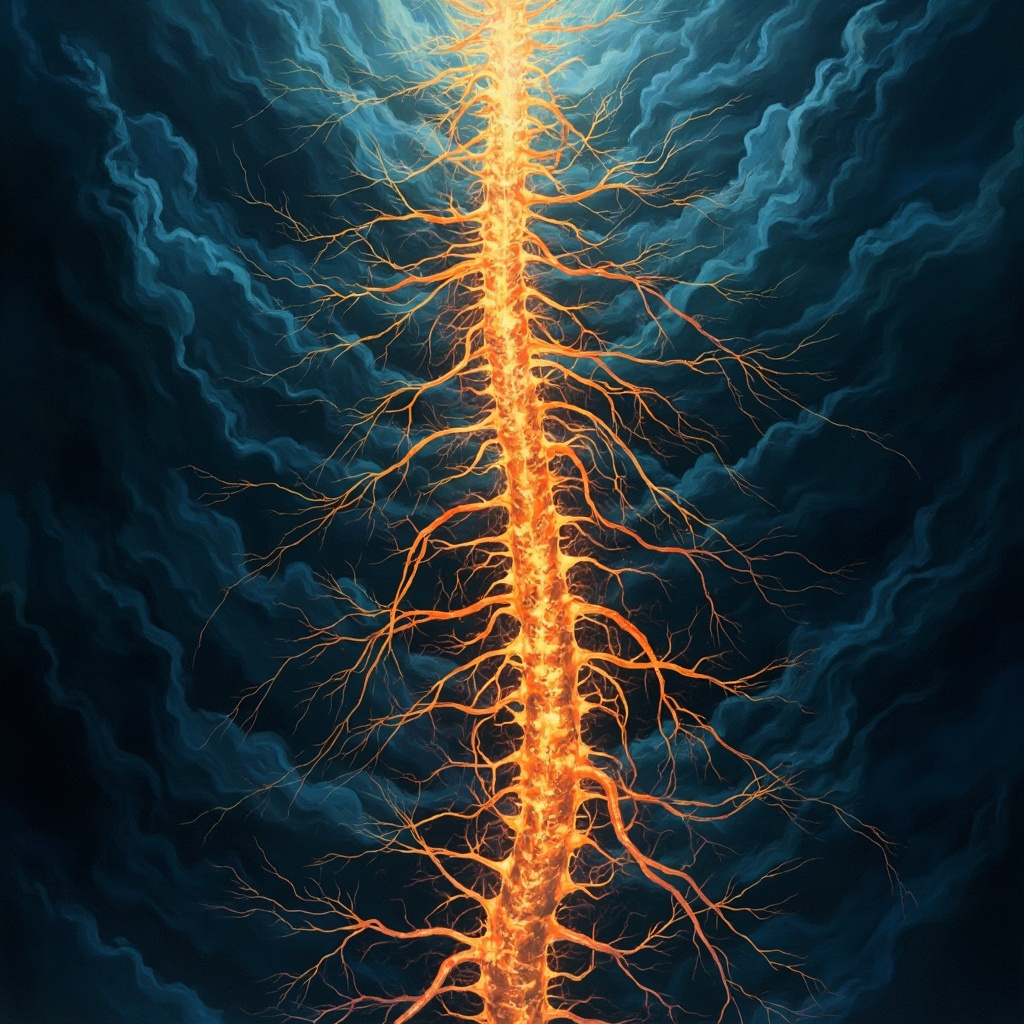
The sympathetic nervous system runs like a vigilant sentinel along your spine, in the chest and lower back areas. It springs into action during moments of danger or pressure, quickening your heartbeat, opening airways for deeper breaths, and unleashing stored energy. This is the classic "fight or flight" response, a survival mechanism honed over millennia.
In everyday life, it helps you rise to challenges: facing a deadline, navigating conflict, or pushing through fatigue. But when it lingers in overdrive, it signals deeper unrest. For more details on this structure, see our glossary.
Echoes from the Unconscious
From a Jungian view, the body speaks the language of the psyche. An overactive sympathetic system often reflects unresolved fears, lingering traumas, or the shadow aspects we push away. Imagine it as the psyche's drumbeat, urging attention to inner conflicts.
Prolonged activation can manifest as restlessness, high blood pressure, or digestive slowdowns. Emotions like anxiety and constant alertness arise, trapping you in a cycle of vigilance. Traumatic events or ongoing stress keep the body primed, as if danger never recedes. This mirrors the Jungian process of individuation, where ignored parts of the self demand reckoning.
Recent Insights: A Pathway to Heart Risks
A compelling study from Mass General Brigham, published in late 2025, illuminates these links. Researchers analyzed brain scans and health data from thousands, finding heightened activity in stress centers like the amygdala alongside reduced heart rate variability – a sign of sympathetic dominance.
In people with depression and anxiety, this pattern drives inflammation and vessel damage, raising cardiovascular risks by up to 32%. Even after accounting for smoking or diet, the chain persists: emotional stress fires the fight-or-flight system, inflaming the body over time. This underscores how psyche tensions etch into physical form.
When It Calls for Attention
If biomarkers show sympathetic agitation, it may highlight priorities like:
- Chronic stress: A body unable to downshift, echoing mental loops.
- Fear patterns: Unconscious alerts from past wounds.
- Energy imbalances: Over-mobilization draining vitality.
In therapy, we explore these through dream work and active imagination. Dreams of pursuit or alarms often parallel this state, inviting symbolic integration.
Harnessing It as a Resource
Balanced, the sympathetic system supports harmony:
- Boosts heart output for oxygen delivery during need.
- Regulates blood flow to vital areas.
- Mobilizes energy for focused action.
It aids other organs in stress, fostering resilience. In shadow work, we befriend this guardian, channeling its vigor without exhaustion. Practices like mindful breathing shift toward restful states, while visualization aligns it with conscious goals.
Pathways to Integration
Track emotional biomarkers alongside dreams for profound insights. A client with sympathetic overload might recall fleeing dreams, revealing repressed anger. Guiding attention here – through inner journeys or resonance practices – promotes healing.
As Jung taught, psyche and body entwine. Calming this system eases mood swings, enhances clarity, and unveils hidden capacities. It paves the way for individuation, where stress becomes a teacher.
Embrace the echo. Listen to your sentinel's wisdom for deeper self-realization.
- 1. tpcportland.com
- 2. sciencedirect.com
- 3. nature.com
- 4. youtube.com
- 5. psychologytoday.com
- 6. researchgate.net
- 7. whitsongroupcounseling.com
- 8. music.apple.com
- 9. apa.org
- 10. youtube.com
- 11. thedubinclinic.com
- 12. quantumclinic.com
- 13. microcurrentneurofeedback.com
- 14. noonday.org
- 15. frontiersin.org
- 16. pmc.ncbi.nlm.nih.gov
- 17. youtube.com
- 18. centerforbrain.com
- 19. x.com
- 20. ahajournals.org
- 21. academyofideas.com
- 22. miamibeachcwc.com
- 23. youtube.com
- 24. facebook.com
- 25. ieeexplore.ieee.org
- 26. x.com
- 27. topoftheworldranch.com
- 28. massgeneralbrigham.org
- 29. sciencedirect.com
- 30. youtube.com
- 31. mdpi.com
- 32. frontiersin.org
- 33. caseintegrativehealth.com
- 34. x.com
- 35. researchgate.net
- 36. pmc.ncbi.nlm.nih.gov
- 37. x.com
- 38. cbfclinic.com
- 39. journals.sagepub.com
- 40. insighttimer.com
- 41. x.com
- 42. pmc.ncbi.nlm.nih.gov
- 43. pmc.ncbi.nlm.nih.gov
- 44. youtube.com
Related posts
Glossary
- Energy and mind Structures > oxygen
- Energy and mind Structures > Structure
- Energy and mind Structures > Mental
- Energy and mind Structures > Exhaustion
- Energy and mind Structures > Drives
- Body zones > sympathetic
- Body zones > chest
- Energy and mind Structures > Organs
- TCM Recipes > Stress Relief for High Blood Pressure: A TCM Approach
- TCM Recipes > Digestive Relief: A Simple Guide to Ease Bloating & Indigestion
- TCM Recipes > Heart Health: Remedies for Anxiety and Palpitations
- TCM Recipes > Brain Boost: Clear Fog, Improve Focus & Memory
- TCM Recipes > Boost Your Energy: A TCM Recipe for Fatigue Relief
- Energy and mind Structures > vitality
- Energy and mind Structures > blood pressure
- Energy and mind Structures > Stress
- Stimuli > Moon - Nasal Passage, Breathing, Taste
- Stimuli > AIDS
- Binaural beats > Inflammation Relief: Heal Faster with Binaural Beats
- Stimuli > Harmony
- Stimuli > Blood
see also...
- Energy and mind Structures > HRV
- Energy and mind Structures > Body zones > substantia nigra
- Energy and mind Structures > TCM Recipes > Tension Headache Relief: A Natural Approach to Ease Stress
- Testimonials > 61% Drop in Nausea and 58% in Headaches from Sound Therapy
- Binaural beats > Stimuli > Variolinum
- Binaural beats > Desensitizer: Boost Your Energy and Focus Effectively