


The Sympathetic Nervous System: More Than Just Stress
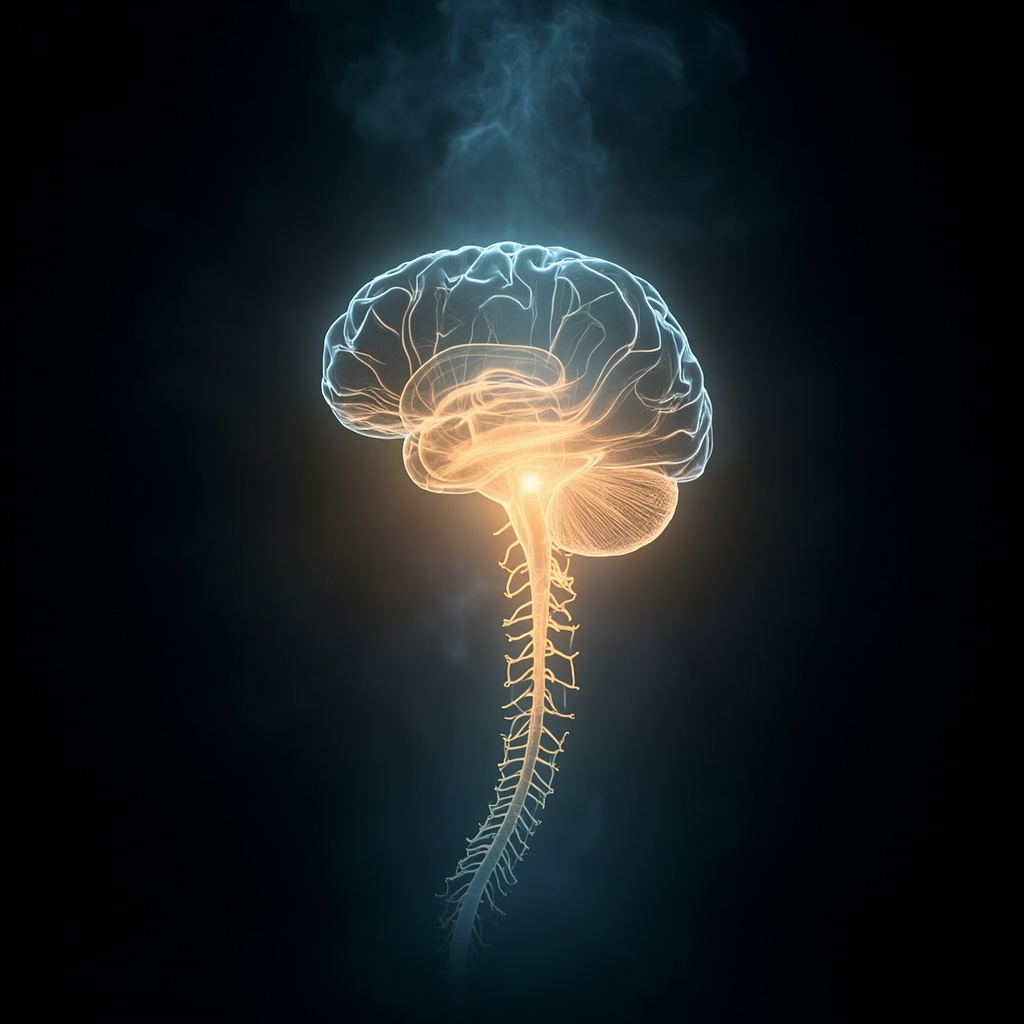
As a psychologist, I often see people who feel like they are stuck in a state of high alert. They describe a lingering sense of tension, a racing mind, or the feeling that they are constantly waiting for the next challenge to appear. When we look at the body's electrical activity, we often find that the sympathetic nervous system is at the heart of this experience.
Understanding Your Internal Alarm
You have likely heard of the fight or flight response. This is the primary role of the sympathetic nervous system. It is a sophisticated network of nerves located along your spine that acts as your body's rapid-response team. When you face a stressful situation, this system springs into action. It tells your heart to beat faster, opens your airways to take in more oxygen, and releases stored energy to help you react quickly.
In our modern world, however, this system can sometimes get stuck in the 'on' position. When we remain in this heightened state for too long due to chronic stress or past experiences, it can lead to feelings of fear, anxiety, and exhaustion. It is important to remember that this is not a sign of weakness; it is a physiological signal that your body is trying to protect you, even when the immediate danger has passed.
The Sympathetic System as a Resource
While we often talk about the sympathetic system in the context of stress, it is also a powerful resource for your well-being when it is balanced. It is not just about emergency responses; it is about vitality and engagement.
When your body is in harmony, this system supports you in beautiful ways:
- Energy Mobilization: It helps you access the fuel you need to pursue your goals and stay active.
- Oxygen Delivery: By regulating heart rate and blood flow, it ensures your brain and muscles get the oxygen required for peak performance.
- Coordinated Response: It works in tandem with the rest of your nervous system to maintain homeostasis, which is your body's natural state of balance.
Finding Your Balance
How do we move from a state of chronic stress to one of empowered action? The key lies in understanding your own body signals. By observing biomarkers related to this system, we can learn when it is overactive and needs soothing, or when it is under-active and needs a gentle boost to help us feel more present.
I often encourage those I work with to view their nervous system not as an enemy to be silenced, but as a partner to be understood. When you feel that familiar rise in tension, you can use that awareness to guide your focus. Through targeted practices like deep, intentional breathing or calming audio frequencies, you can teach your body to shift gears more easily.
When we use the sympathetic system as a resource, we are essentially training our bodies to be resilient. We learn to use that surge of energy for creativity, focus, and purposeful action rather than letting it turn into anxiety. It is about reclaiming your capacity for calm, even in the midst of a busy life.
By paying attention to these internal rhythms and using the right tools to harmonize them, you can transform your relationship with stress. You are capable of moving from a place of reactive survival to a place of proactive, vibrant living.
Related posts
Glossary
- Energy and mind Structures > oxygen
- Energy and mind Structures > Focused Coherence; Focus
- Energy and mind Structures > Exhaustion
- Energy and mind Structures > Performance
- Body zones > muscles
- Body zones > nerves
- Body zones > sympathetic
- Body zones > face
- TCM Recipes > Heart Health: Remedies for Anxiety and Palpitations
- TCM Recipes > Brain Boost: Clear Fog, Improve Focus & Memory
- Energy and mind Structures > Stress
- Stimuli > Hepatitis G virus, Primary
- Stimuli > Moon - Nasal Passage, Breathing, Taste
- Binaural beats > Nervous System: A Program for Emotional Balance and Relaxation
- Stimuli > Lead
- Stimuli > Harmony
- Stimuli > Blood
see also...
- Energy and mind Structures > HRV
- Energy and mind Structures > Body zones > thoracic
- Energy and mind Structures > TCM Recipes > Boost Energy: A Simple Remedy for Low Energy and Fatigue
- Testimonials > 61% Drop in Nausea and 58% in Headaches from Sound Therapy
- Binaural beats > Stimuli > Variolinum
- Binaural beats > Transmutation: A Sound Journey for Personal Change