


Adrenal Cortex: Stress, Fear, and Resilience
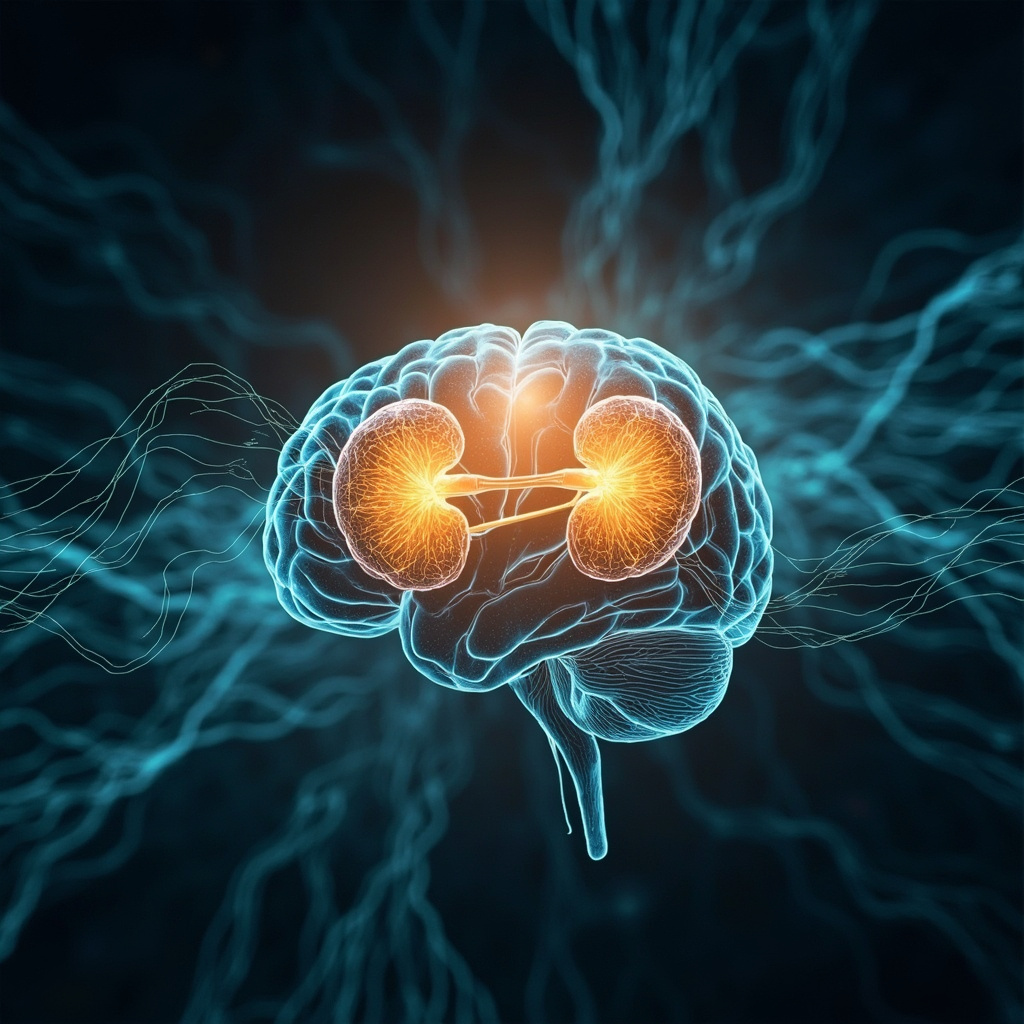
Understanding the Adrenal Cortex
The adrenal cortex forms the outer layer of the adrenal glands, which rest on top of your kidneys. It produces vital hormones such as cortisol, aldosterone, and androgens. These help control metabolism, blood pressure, immune function, and your response to stress. For more details, see the glossary entry.
When working well, the adrenal cortex keeps your body in balance, or homeostasis. It readies you for daily challenges and supports overall health. But issues here can lead to problems like fatigue, weight shifts, blood pressure changes, or weakened immunity.
Emotional Connections
This gland links closely to your inner world. It handles intense stress, fear, and survival drives. If out of balance, you might feel overwhelmed by life's pressures, threatened in your safety, or anxious about the future. You could struggle to control your surroundings, leading to ongoing worry or tension.
As a psychologist, I see these patterns often. High agitation or low focus in emotional health checks point to adrenal cortex strain. It shows up in clients feeling stuck in fight-or-flight mode, where every demand feels like a threat.
Signs of Imbalance
Watch for these common signals:
- Persistent fatigue despite rest
- Heightened anxiety or fear
- Sleep troubles or low energy
- Mood swings or irritability
- Immune dips, like frequent colds
- Blood pressure ups and downs
These stem from too much or too little cortisol. Chronic stress keeps levels high, wearing you down. Low output mimics exhaustion from diseases like Addison's.
As a Valuable Resource
A healthy adrenal cortex aids your whole body. It regulates stress reactions, steadies blood pressure, and balances energy use. This builds resilience against physical and emotional hits.
It supports other organs by curbing overreactions. For example, it helps your heart, immune system, and brain stay steady. In therapy, I use it as a strength: call on it to face challenges with calm power.
Insights from Heart Rate Variability
HRV measures beat-to-beat changes in your heart. High HRV signals good stress handling and emotional control. Low HRV often pairs with adrenal cortex strain, showing poor recovery from tension.
Track HRV to gauge progress. Simple breathing or mindfulness boosts it, easing cortisol's grip. Studies link better HRV to stronger emotional regulation, proving mind-body ties.
Recent Research on Cortisol and Memories
A Yale study from late 2025 highlights cortisol's role. It shows how this hormone reshapes brain networks during stress, boosting memories of emotional events. Under pressure, emotion areas sync better, and memory circuits focus sharply.
Lead researcher Elizabeth Goldfarb notes: "Stress responses are fundamentally adaptive and can help you form strong memories - but this is specific to experiences that you find to be emotionally intense or meaningful." This explains why tough moments stick, aiding learning but risking rumination if unbalanced.
Practical Steps for Balance
Support your adrenal cortex daily:
- Practice deep breathing to lower acute stress
- Build routines for steady sleep and meals
- Use mindfulness to process fears
- Exercise moderately to build resilience
- Consider biofeedback for HRV training
In sessions, we review stress biomarkers alongside HRV. This guides targeted relaxation or cognitive tools. Over time, trends show real gains in calm and focus.
Balance here fosters emotional strength. It turns survival fears into steady power, helping you thrive amid demands.
- 1. pubmed.ncbi.nlm.nih.gov
- 2. mdpi.com
- 3. onlinelibrary.wiley.com
- 4. pubmed.ncbi.nlm.nih.gov
- 5. news.yale.edu
- 6. ncbi.nlm.nih.gov
- 7. nature.com
- 8. pubmed.ncbi.nlm.nih.gov
- 9. mayoclinic.org
- 10. pmc.ncbi.nlm.nih.gov
- 11. pmc.ncbi.nlm.nih.gov
- 12. theguardian.com
- 13. sciencedirect.com
- 14. pubmed.ncbi.nlm.nih.gov
- 15. sciencedirect.com
- 16. mdpi.com
- 17. epublications.marquette.edu
- 18. my.clevelandclinic.org
- 19. sciencedirect.com
- 20. frontiersin.org
- 21. pubmed.ncbi.nlm.nih.gov
- 22. pmc.ncbi.nlm.nih.gov
- 23. link.springer.com
- 24. pmc.ncbi.nlm.nih.gov
- 25. medicalxpress.com
- 26. pubmed.ncbi.nlm.nih.gov
- 27. endocrine-abstracts.org
- 28. pmc.ncbi.nlm.nih.gov
- 29. pubmed.ncbi.nlm.nih.gov
- 30. ebsco.com
- 31. frontiersin.org
- 32. pubmed.ncbi.nlm.nih.gov
- 33. sciencedirect.com
- 34. pubmed.ncbi.nlm.nih.gov
- 35. health.harvard.edu
- 36. pmc.ncbi.nlm.nih.gov
- 37. gero.usc.edu
- 38. pubmed.ncbi.nlm.nih.gov
- 39. mdanderson.org
Related posts
Glossary
- Energy and mind Structures > Focused Coherence; Focus
- Energy and mind Structures > Regulation
- Energy and mind Structures > Exhaustion
- Energy and mind Structures > Memory
- Energy and mind Structures > Drives
- Energy and mind Structures > Immunity
- Body zones > glands
- Body zones > cortex
- Body zones > hormones
- Body zones > kidneys
- Body zones > face
- Energy and mind Structures > Organs
- TCM Recipes > Heart Health: Remedies for Anxiety and Palpitations
- TCM Recipes > Brain Boost: Clear Fog, Improve Focus & Memory
- TCM Recipes > Adrenal Support: Remedies for Fatigue and Stress
- TCM Recipes > Boost Your Energy: A TCM Recipe for Fatigue Relief
- Energy and mind Structures > sleep
- Energy and mind Structures > blood pressure
- Energy and mind Structures > Stress
- Stimuli > Cortisol
- Stimuli > Moon - Nasal Passage, Breathing, Taste
- Stimuli > AIDS
- Binaural beats > Immune System Support: Enhancing Health with Sound Frequencies
- Stimuli > Lead
- Stimuli > Blood
- Stimuli > GAPDH, Metabolism
see also...
- Energy and mind Structures > HRV
- Energy and mind Structures > Body zones > thoracic
- Energy and mind Structures > TCM Recipes > Tension Headache Relief: A Natural Approach to Ease Stress
- Testimonials > 61% Drop in Nausea and 58% in Headaches from Sound Therapy
- Binaural beats > Stimuli > Chakra Throat
- Binaural beats > Immune System Support: Enhancing Health with Sound Frequencies