


VHF Nervousness: Stress Signal Disrupting Sleep
What is VHF Nervousness?
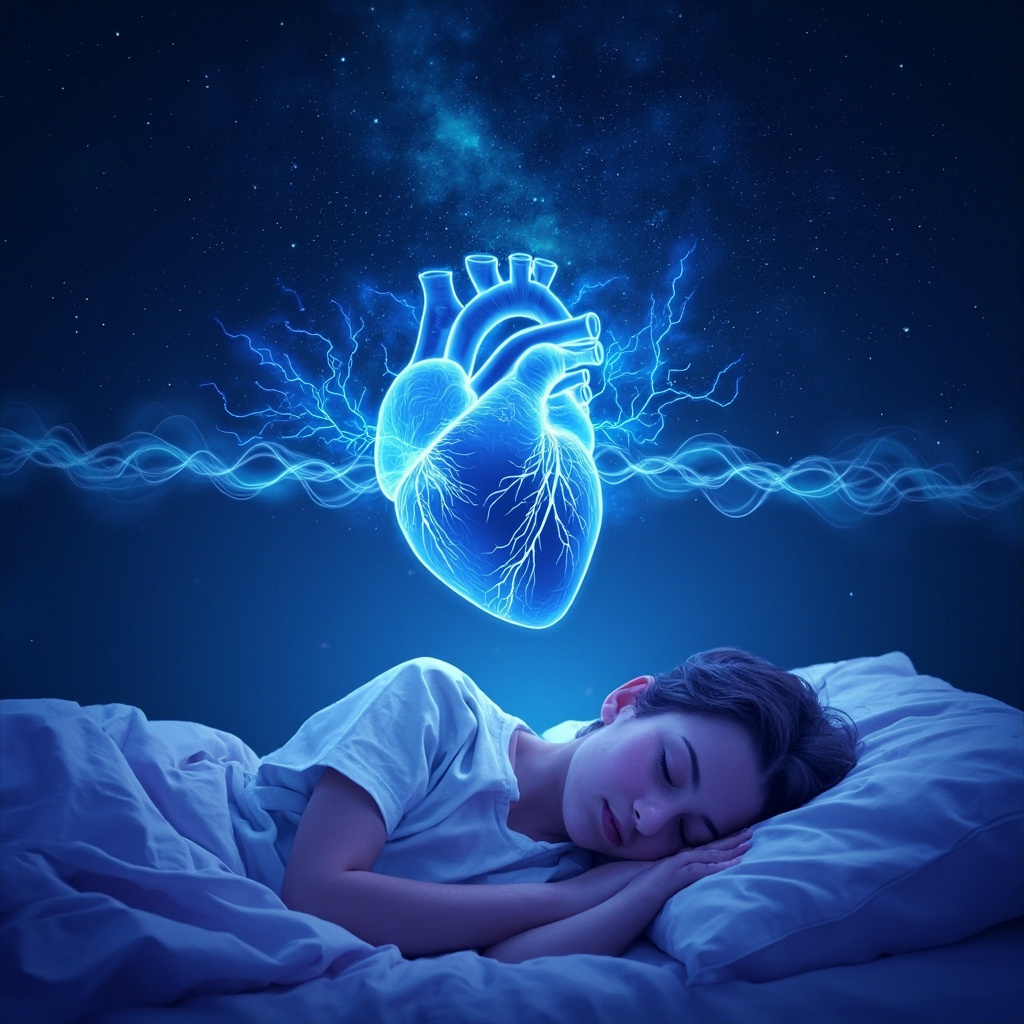
Your heart produces electrical signals that we can measure with a simple ECG test. Among these, very high frequencies, or VHF, are the quickest vibrations, faster than 0.4 cycles per second. These fast patterns reflect activity in your nervous system. When VHF levels rise, it often points to nervousness – that inner buzz of worry, tension, or over-stimulation from daily life.
Think of VHF as a window into how revved up your nerves are. In calm states, they stay low and steady. But under stress, they spike, signaling your body to stay on guard. This marker helps spot when your nervous system needs attention. For more details, see the glossary on VHF nervousness.
How VHF Affects Your Sleep
Sleep relies on shifting from the fight-or-flight mode (sympathetic nervous system) to rest-and-digest (parasympathetic). High VHF keeps the alert system dominant, making it hard to unwind. You might toss and turn, wake frequently, or wake feeling drained.
Research links these fast heart frequencies to poor heart rate variability (HRV), a key measure of recovery. Low HRV from elevated VHF ties to higher cortisol (stress hormone) at night, disrupting circadian rhythms. Over time, this leads to shallow sleep stages, less energy restoration, and fatigue buildup.
In my coaching, I often see clients with high VHF struggling with sleep onset. Their biomarkers show nervous overdrive, blocking the deep recovery everyone needs.
Signs Your VHF Might Be High
Not sure if VHF nervousness plays a role? Watch for these common clues:
- Racing thoughts or restlessness before bed
- Feeling wired despite exhaustion
- Frequent awakenings or light sleep
- Morning grogginess, even after enough hours
- Tight muscles or jittery energy during the day
- Sensitivity to caffeine or screens in the evening
These stem from sustained nervous activity. If breathing feels shallow or irregular, that's another hint – nerves influence breath patterns too.
The Positive Side: VHF as a Resource
When balanced, VHF offers valuable insights. It reveals your nervous system's flow, helping target emotions, organ support, and well-being. Low, harmonious VHF supports clear thinking, stable moods, and efficient energy use.
As a resource, it guides relaxation. Imagine tuning into these frequencies to release tension, much like settling a buzzing engine to a smooth hum.
Practical Steps to Calm VHF for Better Sleep
You can lower VHF naturally with consistent habits. Here's a simple plan:
Evening Wind-Down Routine
- Dim lights 2 hours before bed to signal melatonin release.
- Avoid screens; blue light amps up nerves.
Breathing for Nervous Balance
- Try 4-7-8 breaths: Inhale 4 seconds, hold 7, exhale 8. This boosts parasympathetic activity, cutting VHF.
- Practice 5 minutes nightly.
Daytime Stress Busters
- Walk in nature to sync circadian cues.
- Eat magnesium-rich foods (leafy greens, nuts) to soothe nerves.
Monitor and Adjust
- Track sleep quality with a journal or app.
- Notice HRV trends if possible – apps estimate it from wearables.
In BioCoherence assessments, we compute over 1500 biomarkers, including VHF, from ECG recordings. This pinpoints imbalances for personalized recovery.
Long-Term Benefits of Balanced VHF
Reducing VHF nervousness transforms sleep. Clients report deeper rest, steady energy, and emotional calm. HRV improves, cortisol drops, and vitality returns.
One example: A busy professional with high VHF from work stress saw sleep deepen after breathing focus and routine tweaks. Their recovery biomarkers shifted positively in weeks.
Start small tonight. Your nervous system will thank you with nights of true restoration.
- 1. frontiersin.org
- 2. sciencedirect.com
- 3. arxiv.org
- 4. researchgate.net
- 5. researchgate.net
- 6. pmc.ncbi.nlm.nih.gov
- 7. en.wikipedia.org
- 8. revespcardiol.org
- 9. pdfs.semanticscholar.org
- 10. frontiersin.org
- 11. researchgate.net
- 12. ibroneuroreports.org
- 13. pmc.ncbi.nlm.nih.gov
- 14. pmc.ncbi.nlm.nih.gov
- 15. diva-portal.org
- 16. pmc.ncbi.nlm.nih.gov
- 17. theexpertta.com
- 18. pmc.ncbi.nlm.nih.gov
- 19. dl.acm.org
- 20. pmc.ncbi.nlm.nih.gov
- 21. nature.com
- 22. ahajournals.org
- 23. mdpi.com
- 24. journals.sagepub.com
- 25. imotions.com
- 26. sciencedirect.com
- 27. pmc.ncbi.nlm.nih.gov
- 28. pmc.ncbi.nlm.nih.gov
- 29. sciencedirect.com
- 30. ieeexplore.ieee.org
- 31. mdpi.com
- 32. mdpi.com
- 33. sciencedirect.com
- 34. preprints.org
- 35. pmc.ncbi.nlm.nih.gov
- 36. imotions.com
- 37. pmc.ncbi.nlm.nih.gov
- 38. nature.com
- 39. repository.fit.edu
- 40. iopscience.iop.org
- 41. pubmed.ncbi.nlm.nih.gov
- 42. clinicalgate.com
- 43. pmc.ncbi.nlm.nih.gov
- 44. nature.com
- 45. pmc.ncbi.nlm.nih.gov
Related posts
Glossary
- Energy and mind Structures > Focused Coherence; Focus
- Body zones > muscles
- Body zones > nerves
- Body zones > parasympathetic
- TCM Recipes > Heart Health: Remedies for Anxiety and Palpitations
- TCM Recipes > Boost Your Energy: A TCM Recipe for Fatigue Relief
- Energy and mind Structures > sleep
- Energy and mind Structures > vitality
- Energy and mind Structures > VHF; Nervousness
- Energy and mind Structures > Stress
- Stimuli > Cortisol
- Stimuli > Moon - Nasal Passage, Breathing, Taste
- Binaural beats > Nervous System: A Program for Emotional Balance and Relaxation
- Stimuli > Melatonin
see also...
- Energy and mind Structures > HRV
- Energy and mind Structures > Body zones > plasma
- Energy and mind Structures > TCM Recipes > Tension Headache Relief: A Natural Approach to Ease Stress
- Testimonials > 61% Drop in Nausea and 58% in Headaches from Sound Therapy
- Binaural beats > Stimuli > Melatonin
- Binaural beats > Transmutation: A Sound Journey for Personal Change