


Bronchi: Pathways to Deep Sleep and Calm
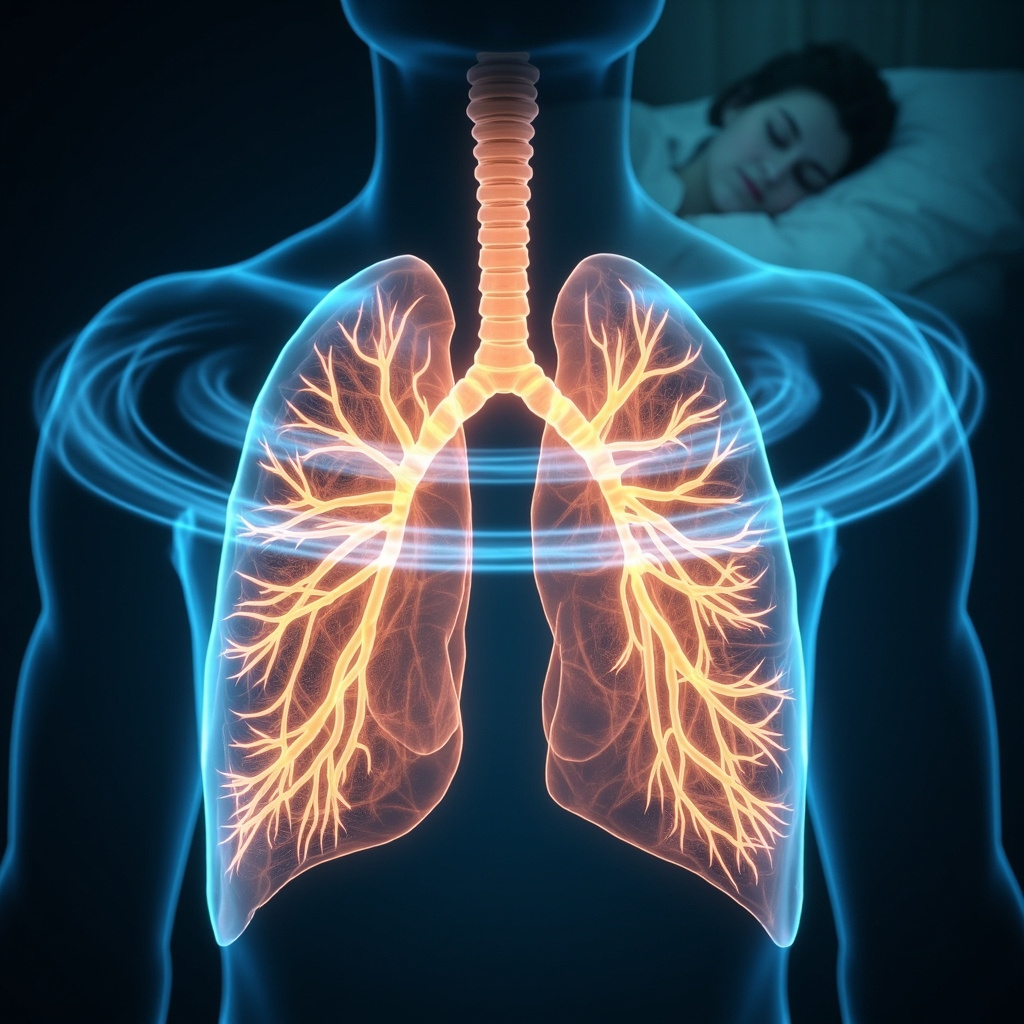
Understanding the Bronchi
The bronchi are the main tubes that carry air from your windpipe into your lungs. They split into left and right branches, then narrow into smaller passages where oxygen enters your blood. Think of them as highways for breath, ensuring every cell gets the oxygen it needs, especially at night when your body repairs itself.
When working well, the bronchi support steady airflow. This keeps oxygen levels high, helping your heart beat calmly and your brain rest deeply. But if they tighten or inflame, breathing becomes shallow. You might wake up tired, even after hours in bed.
Learn more about bronchi in the glossary.
How Bronchi Affect Sleep Quality
Good breathing is the foundation of deep sleep. During rest, your body slows down, but oxygen demand stays steady for recovery. Healthy bronchi deliver it smoothly, boosting heart rate variability (HRV) – a sign of relaxed nerves and strong recovery.
Issues like inflammation or narrowing cut oxygen flow. This triggers stress responses, raising cortisol and fragmenting sleep. You end up with light rest, low energy, and foggy mornings. Studies link poor respiratory flow to insomnia and daytime fatigue, as irregular breathing wakes the brain just enough to disrupt cycles.
In my work as a sleep coach, I see this often. Clients with tense breathing patterns show low HRV biomarkers, pointing to bronchi strain. Fixing it restores circadian balance and deeper nights.
Common Signs of Bronchi Imbalance
- Waking short of breath or with a dry throat
- Snoring or mouth breathing
- Morning headaches from low oxygen
- Feeling unrested despite long sleep
The Emotional Side of Breathing
Bronchi hold more than air – they reflect your sense of space. Feelings of invasion, like cramped living areas or boundary pressures at work, can tense these passages. It's like your body holds its breath against 'intruders' in your territory.
This emotional load raises stress hormones, tightening muscles around the airways. Over time, it harms sleep: shallow breaths spike cortisol, block melatonin, and cut recovery time. Unresolved, it creates a cycle of fatigue and irritability.
Supporting your bronchi means honoring personal space. Simple awareness – claiming your room, setting limits – eases tension, smooths breath, and invites calm sleep.
Bronchi as a Resource for Recovery
When balanced, bronchi fuel your whole system. They oxygenate the brain for memory consolidation, energize muscles for tomorrow, and calm the nerves via steady HRV.
In BioCoherence assessments, strong bronchi biomarkers signal reliable oxygen support. As a resource, they aid other areas like the heart and adrenals. If a priority, guiding attention to them promotes flow and release.
Practical Steps from a Sleep Coach
Build bronchi strength for better rest:
- Deep belly breaths: Inhale for 4 counts, hold 4, exhale 6. Do 5 minutes before bed to boost HRV.
- Nasal breathing: Tape mouth gently at night to train bronchi efficiency.
- Space rituals: Evening wind-down with boundary affirmations, like 'This is my calm zone.'
- Hydrate and humidify: Moist air keeps passages open.
- Track patterns: Note breath ease upon waking – tie to sleep depth.
These align your circadian rhythm, lower stress, and enhance vitality. Clients report falling asleep faster and waking refreshed.
Nurture your bronchi today. Smooth breath leads to profound recovery.
- 1. apexmedicalcenter.com
- 2. journalomp.org
- 3. pmc.ncbi.nlm.nih.gov
- 4. apria.com
- 5. 4dmedical.com
- 6. airwayhealth.org
- 7. therespireinstitute.com
- 8. pubmed.ncbi.nlm.nih.gov
- 9. craftbodyscan.com
- 10. pmc.ncbi.nlm.nih.gov
- 11. sparshdiagnostica.com
- 12. amjmed.com
- 13. sciencedirect.com
- 14. sciencedirect.com
- 15. journalpulmonology.org
- 16. frontiersin.org
- 17. link.springer.com
- 18. pmc.ncbi.nlm.nih.gov
- 19. publications.ersnet.org
- 20. academic.oup.com
- 21. lyracore.com
- 22. kingshealthpartners.org
- 23. cureus.com
- 24. universityofcalifornia.edu
- 25. pmc.ncbi.nlm.nih.gov
- 26. sciencedirect.com
- 27. nature.com
- 28. sciencedirect.com
- 29. pmc.ncbi.nlm.nih.gov
- 30. medicalxpress.com
- 31. pmc.ncbi.nlm.nih.gov
- 32. mdpi.com
- 33. link.springer.com
- 34. ecfr.gov
- 35. respiratory-therapy.com
- 36. breathlessexpeditions.com
- 37. bmjopen.bmj.com
- 38. pmc.ncbi.nlm.nih.gov
- 39. atsjournals.org
Related posts
Glossary
- Energy and mind Structures > oxygen
- Energy and mind Structures > Memory
- Body zones > hormones
- Body zones > lungs
- Body zones > bronchi
- Body zones > mouth
- Body zones > muscles
- Body zones > nerves
- Body zones > respiratory
- TCM Recipes > Heart Health: Remedies for Anxiety and Palpitations
- TCM Recipes > Brain Boost: Clear Fog, Improve Focus & Memory
- TCM Recipes > Boost Your Energy: A TCM Recipe for Fatigue Relief
- Energy and mind Structures > sleep
- Energy and mind Structures > vitality
- Energy and mind Structures > Stress
- Stimuli > Moon - Nasal Passage, Breathing, Taste
- Binaural beats > Foundation of Security: Enhance Serenity and Well-Being
- Binaural beats > Inflammation Relief: Heal Faster with Binaural Beats
- Stimuli > Blood
see also...
- Energy and mind Structures > HRV
- Energy and mind Structures > Body zones > amino acids
- Energy and mind Structures > TCM Recipes > Tension Headache Relief: A Natural Approach to Ease Stress
- Testimonials > 61% Drop in Nausea and 58% in Headaches from Sound Therapy
- Binaural beats > Stimuli > Variolinum
- Binaural beats > Desensitizer: Boost Your Energy and Focus Effectively