


The Hindbrain: Your Survival Anchor
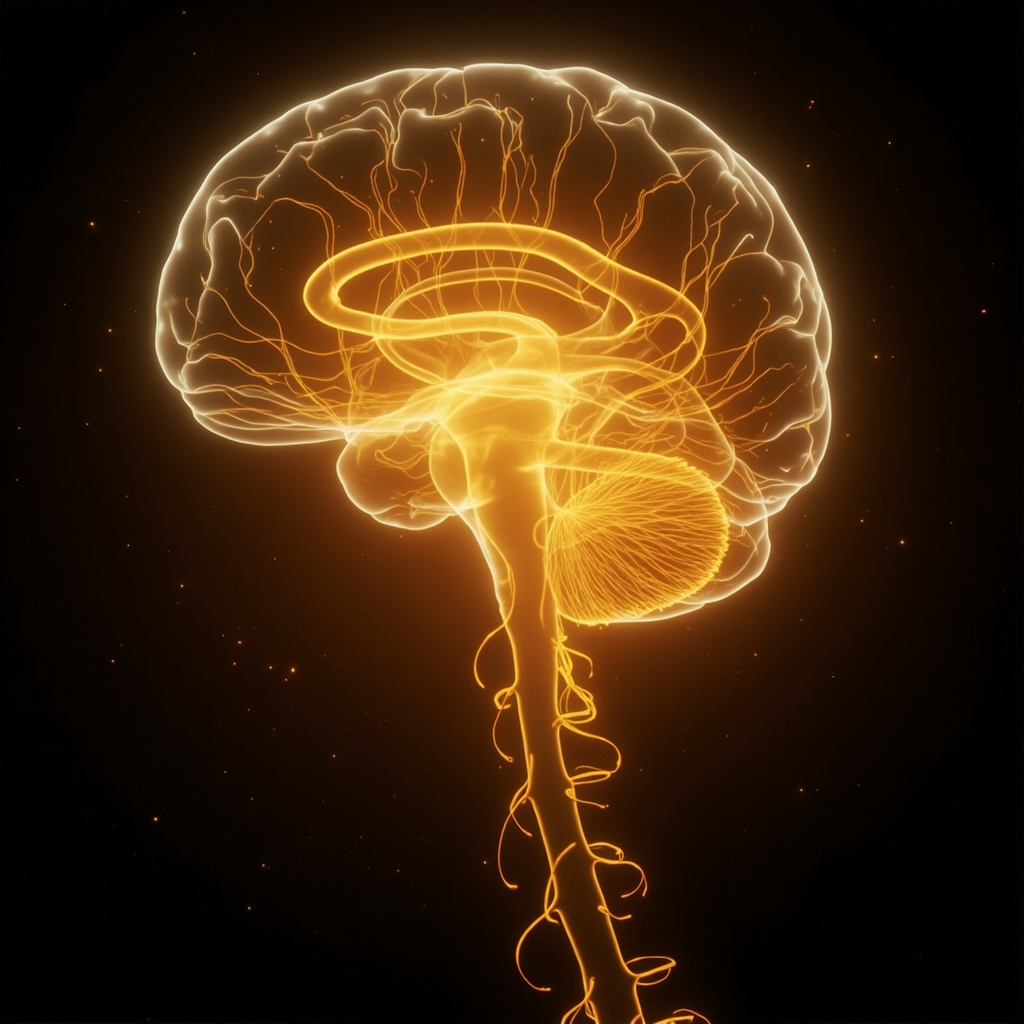
As a meditation coach, I often work with people who feel overwhelmed by the fast pace of modern life. When we feel anxious or insecure, our bodies often react by tensing up, shortening our breath, or racing our hearts. To find true calm, it is helpful to look toward the foundation of our nervous system: the hindbrain.
Understanding the Hindbrain
Located at the base of the brain, the hindbrain is the command center for your most essential life functions. It encompasses areas known as the medulla oblongata, the pons, and the cerebellum. Think of it as the pilot of your internal ship. It manages the rhythms that keep you alive without you ever having to think about them, such as your heart rate, the steady flow of your breathing, and your physical coordination.
When this area is functioning optimally, you feel stable, grounded, and physically aligned. However, because it is so closely tied to our survival instincts, it is also highly sensitive to stress. When you experience deep feelings of insecurity, fear for your future, or a perceived lack of support, these emotions can create tension in this area. You might notice this as physical symptoms like dizziness, a feeling of being off-balance, or even a sense of disconnectedness from your own body.
The Emotional Connection
In my practice, I observe how emotional states are not just in our minds; they are reflected in our body's electrical activity. If you are constantly operating in a state of 'fight-or-flight,' your hindbrain may be working overtime to manage those survival signals. This can lead to a sense of exhaustion because your body never truly switches into a restorative, resting state.
By bringing conscious awareness to this area through meditation and targeted breathing patterns, we can begin to signal to our nervous system that it is safe to relax. This is not about changing who you are, but about returning to your natural state of equilibrium.
Using the Hindbrain as a Resource
When we purposefully connect with the hindbrain, we can transform it from a source of stress into a powerful resource. Instead of letting it react to every challenge, we can 'tune' it to provide steadiness.
- Stabilizing Rhythms: By focusing on the steady, rhythmic nature of your breath, you provide the hindbrain with a signal of safety. This helps regulate the heart and encourages parasympathetic activation, which is the body's natural 'rest and digest' mode.
- Enhancing Coordination: When you feel scattered, grounding your attention at the base of the skull can improve your sense of physical presence and mental clarity.
- Emotional Resilience: Acknowledging the survival roots of your anxiety allows you to move through fear with more grace. When you feel supported by your own internal stability, the external world feels less threatening.
Cultivating Inner Calm
To begin this journey, you do not need complex equipment. You only need the willingness to sit and observe your own internal landscape. When you notice yourself becoming agitated, try to gently draw your awareness to the back of your head, right where your skull meets your neck. Imagine a soft, warm light resting there, smoothing out any tension.
As you breathe, imagine that your breath is reaching all the way down to this foundation, nourishing it with calm, steady energy. This simple practice can help you move from a state of reactive survival to a place of proactive balance. Remember, your body is always listening to the signals you send it. By choosing to focus on your hindbrain, you are choosing to tell your nervous system that you are safe, you are grounded, and you are capable of finding peace even in the midst of change.
Related posts
Glossary
- Energy and mind Structures > Focused Coherence; Focus
- Energy and mind Structures > Mental
- Energy and mind Structures > Peace
- Energy and mind Structures > Exhaustion
- Energy and mind Structures > Relax
- Body zones > head
- Body zones > hindbrain
- TCM Recipes > Heart Health: Remedies for Anxiety and Palpitations
- TCM Recipes > Brain Boost: Clear Fog, Improve Focus & Memory
- Energy and mind Structures > equilibrium
- Energy and mind Structures > Theta; 4.31-6.97 Hz. Light sleep, meditation.
- Energy and mind Structures > Stress
- Binaural beats > Foundation of Security: Enhance Serenity and Well-Being
- Binaural beats > Nervous System: A Program for Emotional Balance and Relaxation
- Stimuli > Lead
see also...
- Energy and mind Structures > HRV
- Energy and mind Structures > Body zones > hindbrain
- Energy and mind Structures > TCM Recipes > Boost Energy: A Simple Remedy for Low Energy and Fatigue
- Testimonials > 61% Drop in Nausea and 58% in Headaches from Sound Therapy
- Binaural beats > Transmutation: A Sound Journey for Personal Change
- Binaural beats > Stimuli > Sacral, Zinc Etc