


Why Can't I Fall Asleep Quickly?
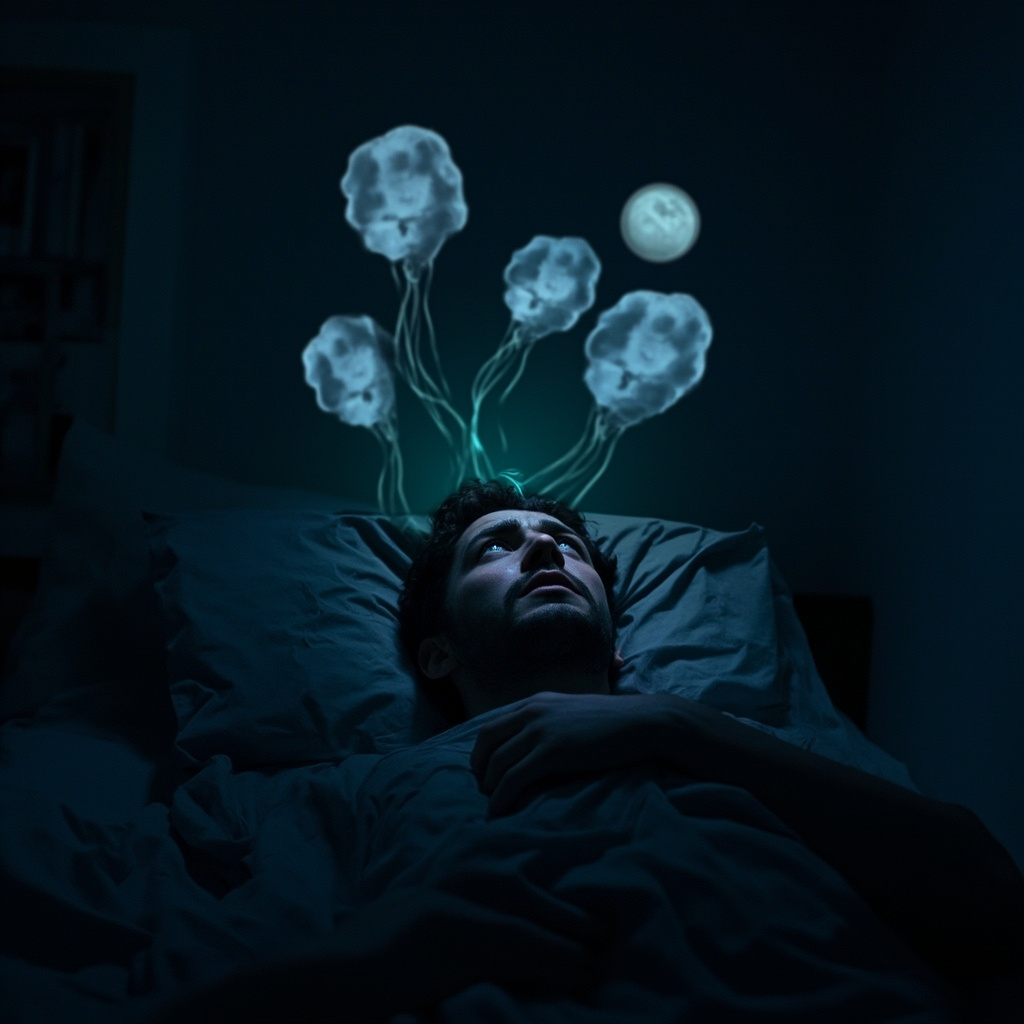
Ever Lie Awake Feeling Exhausted?
You climb into bed after a long day, body tired, eyes heavy. But sleep won't come. Your mind races with worries, to-do lists, or random thoughts. Minutes turn to hours. The clock ticks past midnight. This isn't just 'a bad night.' It's sleep-onset insomnia – trouble falling asleep despite needing rest.
If this sounds familiar, you're not alone. Millions face it nightly. It leaves you drained, irritable, foggy-headed the next day. Work suffers, relationships strain. You've tried everything: warm milk, no screens, counting sheep. Nothing sticks. Why?
You Feel Seen: The Frustration Hits Home
Picture this: You're desperate for sleep, but your brain buzzes like a hive. Stress from work, family, or unspoken fears amps up. Heart races slightly, muscles tense. Even deep breaths fail. Morning comes too soon, cycle repeats.
Common signs:
- Takes 30+ minutes to drift off most nights
- Racing thoughts or anxiety spikes in bed
- Daytime fatigue despite full sleep potential
- Tried routines, but no lasting change
This isn't laziness. It's your body's signal something's off.
Why Your Usual Fixes Fall Short
Pills promise quick relief but bring grogginess, dependency. Herbal teas soothe briefly, ignore root issues. Sleep hygiene advice – dark room, routine – helps some, not when stress overrides.
You've validated: Apps, white noise, exercise. Temporary wins, but insomnia returns. No blame – you've done the work. The issue? Surface fixes miss deeper causes.
The Hidden Truth: Stress and Body Signals
Sleep-onset insomnia stems from your nervous system stuck in 'alert mode.' Low heart rate variability (HRV) – a measure of nervous system balance – predicts it. High stress floods cortisol, adrenaline. Brain waves stay in beta (alert, 13-30 Hz) instead of theta/delta (sleepy, 4-8 Hz / 0.5-4 Hz).
Emotional factors play big: Unresolved anxiety, perfectionism, overthinking. As a psychologist, I see clients with agitation biomarkers elevated, focus scattered. Your body holds emotional tension, blocking relaxation.
New insight: It's often linked to autonomic imbalance. Sympathetic (fight-flight) dominates, parasympathetic (rest-digest) weak. Studies show this in chronic worriers.
Curiosity hook: What if everyday stress rewires your sleep switch?
How It Works: The Science Behind the Struggle
At bedtime, healthy brains shift waves: Alpha (relaxed) to theta (drowsy) to delta (deep sleep). In sleep-onset insomnia, beta persists. Why? Hyperarousal from day stress lingers.
Research confirms:
- A study on delta binaural beats cut sleep latency by reducing beta waves, boosting theta. Source
- Acupuncture points like HT7 (calms mind), SP6 (nourishes calm energy) improve onset in trials. PubMed study
- Low HRV correlates with longer onset times, per sleep research.
Previous attempts fail because they don't target this arousal. Meds mask, don't rebalance.
Why Wait? The Risks Mount Fast
Unchecked, it cascades: Chronic fatigue weakens immunity, spikes anxiety, impairs memory. Cognitive tests show deficits like sleep deprivation. Relationships fray from irritability. Health risks rise – heart issues, depression.
Urgency: Nightly battles compound. Fix the root now.
A New Path: Frequency and Energy Therapies
Enter non-drug options: Sound frequencies mimic brain waves, guide to sleep. Microcurrents nudge nerves gently. Guided audio calms mind-body links.
Expensive alternatives? Sleep clinics ($2000+), years therapy. Drugs: $100/month, side effects.
These work by resonating body structures, like tuning a radio to calm station. Studies back: Acoustic therapy cuts insomnia severity 30-50%.
Anticipation builds: Imagine personalized tools matching your needs.
Introducing Targeted Balance
Science-backed methods use your body's electrical signals. Record via simple sensor, analyze imbalances. Apply precise frequencies to harmonize.
Not random – rooted in TCM, like HT7 for heart calm, GV20 for mind clear. TCM Recipe.
Endorsement: Psychologists use biomarkers for emotional tracking. HRV guides therapy success.
Price? Affordable vs. specialists. Risk-free: Track progress yourself.
BioCoherence: Your Guide to Restful Nights
BioCoherence software reveals sleep-onset insomnia through body electrical scans. A quick ECG sensor recording yields 1500+ biomarkers – energy, agitation in structures like heart, kidneys, liver.
Part 1: Discover the Imbalance An 'exploration' session computes your profile. Spot if stress agitates nerves, low Yin blocks calm, or mind structures need soothing.
Part 2: Personalized Healing Tools
- Harmonic Boost: Audio frequencies resonate exact structures. Stimuli guide toward sleep goals. Build from exploration or basic library. Play anytime.
- Personal Guide: 21-day daily audio. Guided words + frequencies target priorities (e.g., 'calm your racing heart'). Changes daily for progress.
- Harmonizer: Microcurrents via device, real-time app-driven. Choose from 10,000+ programs or custom.
Harmonic Boost Tutorial | Personal Guide | Harmonizer
Real results:
"My wife hadn't slept well in two years. After frequencies once or twice, she sleeps deeply." – Kat, USA
"Sleep quality improving after 21 days." – Raymond, France
"Sleeping better, more energy, less fog." – Mike N., USA
As psychologist, I integrate this: Monitor HRV, agitation for emotional gains. Clients report resilience, focus returns.
Start simple: Basic sleep program. Track biomarkers over weeks. Emotional regulation follows better rest.
- 1. youtube.com
- 2. youtube.com
- 3. mdpi.com
- 4. biocoherence.net
- 5. onlinelibrary.wiley.com
- 6. pdfs.semanticscholar.org
- 7. morningsideacupuncturenyc.com
- 8. soundhealth.life
- 9. mdpi.com
- 10. mysoundtherapy.com
- 11. theartofsoundhealing.com
- 12. youtube.com
- 13. frontiersin.org
- 14. psycnet.apa.org
- 15. medicalnewstoday.com
- 16. ouraring.com
- 17. technologyreview.com
- 18. sciencedirect.com
- 19. amazon.com
- 20. e-jsm.org
- 21. aasm.org
- 22. altha.com
- 23. reddit.com
- 24. pmc.ncbi.nlm.nih.gov
- 25. onlinelibrary.wiley.com
- 26. pubmed.ncbi.nlm.nih.gov
- 27. hcplive.com
- 28. feministfutures.socialsciences.ucsb.edu
- 29. sleepreviewmag.com
- 30. ksparrowmd.com
- 31. sleepphones.com
- 32. amazon.com
- 33. ebay.com
- 34. neurologylive.com
- 35. facebook.com
- 36. soulbeing.com
- 37. biocoherence.net
- 38. sciencedirect.com
- 39. 2minutemedicine.com
- 40. sciencedirect.com
- 41. youtube.com
- 42. facebook.com
- 43. pmc.ncbi.nlm.nih.gov
- 44. open.spotify.com
- 45. pmc.ncbi.nlm.nih.gov
- 46. vibroacousticsolutions.com
- 47. open.spotify.com
- 48. pmc.ncbi.nlm.nih.gov
- 49. youtube.com
- 50. youtube.com
- 51. aasm.org
- 52. miraclesworldwide.com
- 53. pmc.ncbi.nlm.nih.gov
- 54. frontiersin.org
- 55. pmc.ncbi.nlm.nih.gov
- 56. mindalive.com
Related posts
Glossary
- Energy and mind Structures > Alpha; 6.97-11.29 Hz. Calm state.
- Energy and mind Structures > Beta; 11.29-29.56 Hz. Global mental activity.
- Energy and mind Structures > Focused Coherence; Focus
- Energy and mind Structures > Regulation
- Energy and mind Structures > Delta; Below 4.31 Hz. Deep sleep, deep meditation.
- Energy and mind Structures > Truth
- Energy and mind Structures > Memory
- Energy and mind Structures > Clock
- Energy and mind Structures > Immunity
- Body zones > kidneys
- Body zones > muscles
- Body zones > nerves
- Body zones > parasympathetic
- Body zones > eyes
- Body zones > face
- Energy and mind Structures > GV20
- Energy and mind Structures > Acupuncture points
- TCM Recipes > Chronic Fatigue Relief: Natural Remedies for Energy
- TCM Recipes > Liver Health: A TCM Recipe for Balance and Calm
- TCM Recipes > Sleep-Onset Insomnia: A TCM Recipe for Better Sleep
- TCM Recipes > Heart Health: Remedies for Anxiety and Palpitations
- TCM Recipes > Brain Boost: Clear Fog, Improve Focus & Memory
- TCM Recipes > Herbal Relief: A TCM Approach to Lift Your Mood
- TCM Recipes > Boost Your Energy: A TCM Recipe for Fatigue Relief
- Energy and mind Structures > sleep
- Energy and mind Structures > Theta; 4.31-6.97 Hz. Light sleep, meditation.
- Energy and mind Structures > Stress
- Stimuli > Cortisol
- Binaural beats > Nervous System: A Program for Emotional Balance and Relaxation
see also...
- Energy and mind Structures > HRV
- Energy and mind Structures > Body zones > thoracic
- Energy and mind Structures > TCM Recipes > Tension Headache Relief: A Natural Approach to Ease Stress
- Testimonials > 61% Drop in Nausea and 58% in Headaches from Sound Therapy
- Binaural beats > Stimuli > Variolinum
- Binaural beats > Transmutation: A Sound Journey for Personal Change