


Why do tight bronchi muscles cause asthma fear?
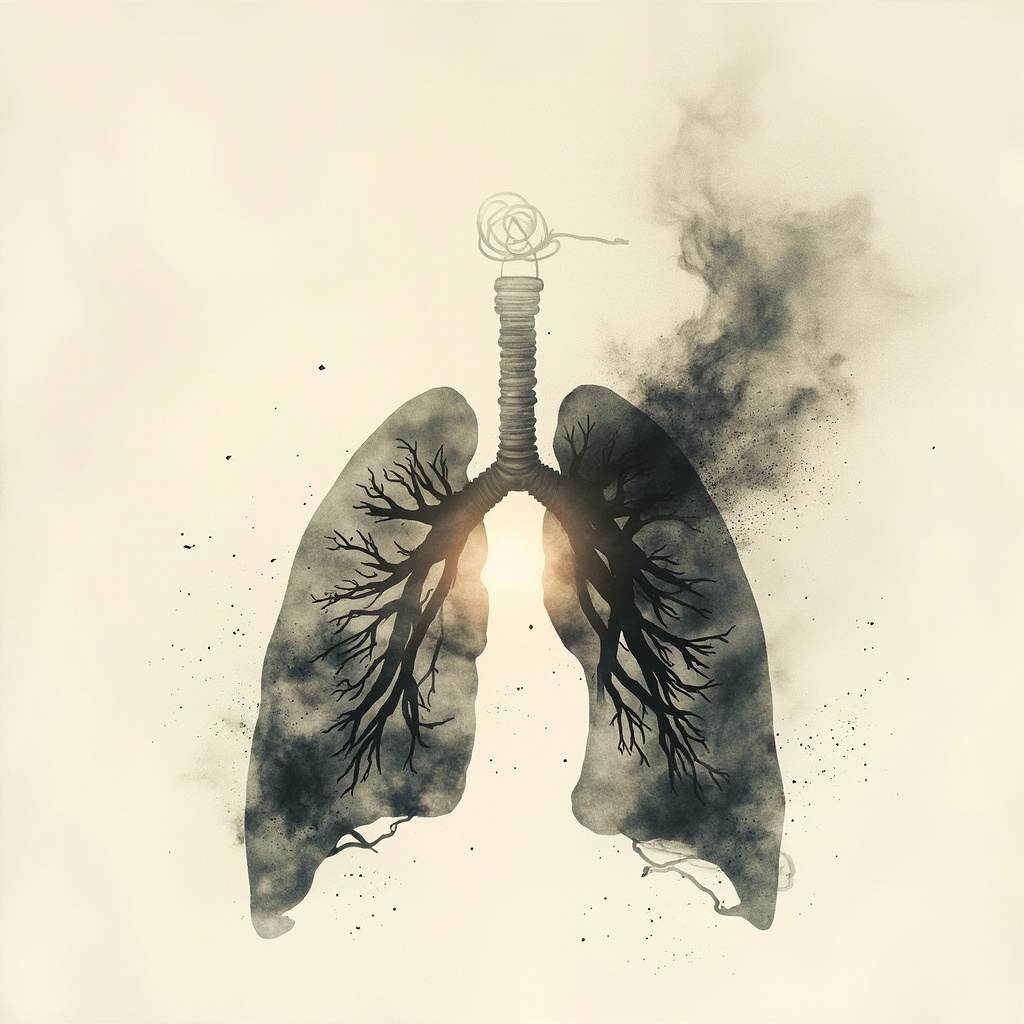
Feeling Trapped: The Chest Tightness You Can't Shake
Do you ever wake up with a band around your chest, making every breath feel like a struggle? Your airways narrow without warning, leaving you short of breath and on edge. Maybe it happens during arguments, deadlines, or even quiet moments when old fears bubble up. You gasp for air, heart racing, a sense of dread washing over you. This isn't just asthma-it's your body signaling deeper unrest.
Thousands feel this daily. Shallow breaths, wheezing, that constant anxiety tying your lungs in knots. You check the weather for pollen, avoid exercise, yet attacks strike when emotions peak. You're not alone, and it's not 'all in your head'.
You've Tried It All-Why Nothing Lasts
Inhalers puff relief for hours, steroids calm inflammation temporarily, but the tightness returns. Stronger meds bring side effects: jitteriness, weight gain, fatigue. Breathing exercises help a bit, but stress triggers undo progress overnight. You've seen doctors, tried diets, even yoga-yet that bronchial squeeze persists, especially when fear or threat looms.
Failed attempts build frustration. You wonder if it's forever. But what if surface fixes miss the root? Modern medicine targets symptoms; ancient wisdom sees the whole picture.
The Overlooked Culprit: Smooth Muscles in Your Bronchi
Deep in your lungs, smooth muscles line the bronchi-tiny airways carrying oxygen. These involuntary muscles contract and relax to control airflow. Healthy, they keep paths open for deep, easy breaths.
But under stress, they spasm. Airways narrow (bronchoconstriction), oxygen drops, panic rises. Why? Emotions.
In Traditional Chinese Medicine (TCM), lungs link to fear and grief. Fear-like feeling trapped, threatened territory, or survival scares-weakens lung qi (vital energy). Qi stagnates, failing to descend smoothly. Bronchi tighten, breath shortens. TCM texts note excessive fear disrupts lung function, causing wheezing and chest oppression.
Western studies confirm: emotional stress triggers bronchospasm. A 2012 study in Psychosomatic Medicine showed sustained negative emotions cause measurable airway constriction in asthmatics. Another in Frontiers in Physiology (2012) linked psychological stimuli to hyperresponsive airways via neural pathways.
Curiosity sparks: What if your 'asthma' stems from unresolved fears tightening these muscles?
How Fear Locks Your Airways Tight
Picture this: A scary memory or argument activates your sympathetic nervous system-fight-or-flight mode. Adrenaline surges, smooth muscles contract to protect (evolutionary holdover from danger). In sensitive lungs, this lingers, causing chronic tightness.
TCM adds layers: Metal element (lungs) governs boundaries. Territorial fears-job loss, relationship threats-create 'stuck qi'. Bronchial smooth muscles, per bioelectric signals, reflect this imbalance. Low oxygen follows: fatigue, brain fog, endless anxiety cycle.
Studies back it: NIH research ties psychosocial stress to asthma exacerbations. Emotional triggers increase inflammatory cytokines, hypersensitizing smooth muscles.
Why Past Fixes Failed-and It's Not Your Fault
Puffers relax muscles briefly but ignore emotional triggers. Antibiotics miss viral/stress links. Therapy helps mind, not body signals. No blame-you lacked the full map. Without addressing qi flow and biomarkers, symptoms rebound.
Untreated, it worsens: thicker mucus, scarred airways, dependency on drugs. Heart strain, sleep loss, eroded confidence. Urgency: Root imbalance spreads, stealing vitality.
Enter Root-Cause Solutions
Not pills forever. Consider bioresonance therapies-using frequencies to retune tissues. Or microcurrent devices mimicking body's signals for repair. Costly clinics ($200/session) vs. home tools.
Why they work: Target smooth muscle resonance, calm neural overdrive, release emotional blocks.
Anticipation builds: What tech bridges TCM wisdom with modern scans?
Science Meets Ancient Healing
Enter tools analyzing body's electrical activity via simple ECG-like sensors. They reveal biomarker imbalances-like weak bronchial smooth muscles (glossary). Frequencies match tissue vibrations, easing constriction. Guided audios address fear, restoring qi flow.
Endorsed by practitioners: TCM experts use similar for meridian balance.
Price reality: Sensor + software beats years of meds ($1000s). Risk-free trials exist.
Real Stories: Breathing Free Again
"I had chronic wheeze from stress. Frequencies relaxed my chest in days-no inhaler needed." – Mark, 45, after 2 weeks.
"Fear attacks triggered spasms. Now, deep breaths come easy; energy returned." – Sarah, post-21-day program.
"Skeptical, but biomarkers showed lung weakness. Microcurrents + meditation fixed it-no pain, better sleep." – Like Mike N.'s shift from aches to vitality.
These aren't miracles-measurable harmony.
Restore Your Breath with BioCoherence
BioCoherence scans your electrical signals, computing 1500+ biomarkers. Spot lungs.bronchi.smoothmuscles issues? It crafts personalized fixes.
Harmonic Boost: Audio frequencies resonate smooth muscles, opening airways. Structures relax, stimuli guide toward calm qi.
Personal Guide: Daily 21-day meditations evolve. If smooth muscles prioritize, words direct: "Feel your bronchial pathways widen, releasing fear's grip." Builds resources for fear-free breathing.
Harmonizer: Microcurrents pulse real-time via app, targeting lungs from program catalogs or basics.
Explore tutorials for lung programs. See transformations at testimonials-like Raymond's joint relief mirroring breath ease.
TCM synergy: Aligns meridians, five elements. Fear (water-metal clash) balances.
Start today: Record, balance, breathe deep. Harmony awaits.
- 1. pubmed.ncbi.nlm.nih.gov
- 2. rebalancetcm.com
- 3. youtube.com
- 4. open.spotify.com
- 5. pmc.ncbi.nlm.nih.gov
- 6. kurrajongnaturalmedicinecentre.com.au
- 7. pmc.ncbi.nlm.nih.gov
- 8. sciencedirect.com
- 9. innerchihawaii.com
- 10. bodymind-therapy.com
- 11. bethechangewellnesscenter.com
- 12. journals.physiology.org
- 13. facebook.com
- 14. yestolife.org.uk
- 15. ccjm.org
- 16. pmc.ncbi.nlm.nih.gov
- 17. frontiersin.org
- 18. pmc.ncbi.nlm.nih.gov
- 19. calandraacupuncture.com
- 20. yaledailynews.com
- 21. zenshiatsuandwellbeing.co.uk
- 22. southslopeacupuncture.com
- 23. pmc.ncbi.nlm.nih.gov
- 24. jacionline.org
- 25. jbc.org
- 26. verywellmind.com
- 27. akuterapist.com.tr
- 28. facebook.com
- 29. frontiersin.org
- 30. library.oapen.org
- 31. ncbi.nlm.nih.gov
- 32. youtube.com
- 33. acupuncture.com
- 34. pmc.ncbi.nlm.nih.gov
- 35. lvimed.com
- 36. resetbigsky.com
- 37. asthmaandlung.org.uk
- 38. learninggnm.com
- 39. onlinelibrary.wiley.com
- 40. learninggnm.com
- 41. biocoherence.net
- 42. drtanyakelloway.com
- 43. clinic.acumedic.com
- 44. uhhospitals.org
- 45. katokamassagetherapy.com
- 46. publications.ersnet.org
- 47. my.clevelandclinic.org
- 48. centerpointmedicine.com
- 49. frequencyspecific.com
- 50. morningtonchinesemedicine.com.au
- 51. biocoherence.net
- 52. toolkit.severeasthma.org.au
- 53. aldebaranhealing.co.nz
- 54. mdpi.com
- 55. aafa.org
- 56. wavwatch.com
- 57. sciencedirect.com
- 58. bmjopenrespres.bmj.com
- 59. researchgate.net
- 60. pmc.ncbi.nlm.nih.gov
- 61. link.springer.com
- 62. drxuacupuncture.co
- 63. instagram.com
- 64. pubmed.ncbi.nlm.nih.gov
- 65. acaacupuncture.com
- 66. instagram.com
- 67. familyacupunctureandhealth.com
Related posts
Glossary
- Energy and mind Structures > oxygen
- Energy and mind Structures > Memory
- Energy and mind Structures > Confidence
- Energy and mind Structures > Relax
- Energy and mind Structures > Meridians
- Body zones > lungs
- Body zones > smooth muscles
- Body zones > muscles
- Body zones > tissues
- Body zones > chest
- TCM Recipes > Breathe Easy: Relief for Asthma Symptoms
- TCM Recipes > Heart Health: Remedies for Anxiety and Palpitations
- TCM Recipes > Lung Support: A TCM Recipe for Respiratory Health
- TCM Recipes > Brain Boost: Clear Fog, Improve Focus & Memory
- TCM Recipes > Boost Your Energy: A TCM Recipe for Fatigue Relief
- Energy and mind Structures > sleep
- Energy and mind Structures > vitality
- Energy and mind Structures > Theta; 4.31-6.97 Hz. Light sleep, meditation.
- Energy and mind Structures > Stress
- Stimuli > Moon - Nasal Passage, Breathing, Taste
- Stimuli > Spasm
- Stimuli > Pain
- Binaural beats > Inflammation Relief: Heal Faster with Binaural Beats
- Stimuli > Harmony
see also...
- Energy and mind Structures > HRV
- Energy and mind Structures > Body zones > substantia nigra
- Energy and mind Structures > TCM Recipes > Tension Headache Relief: A Natural Approach to Ease Stress
- Testimonials > 61% Drop in Nausea and 58% in Headaches from Sound Therapy
- Binaural beats > Stimuli > Sacral, Zinc Etc
- Binaural beats > Desensitizer: Boost Your Energy and Focus Effectively