


Breathing Room: The Hidden Power of Intercostal Muscles
The Rhythm Under Your Ribs
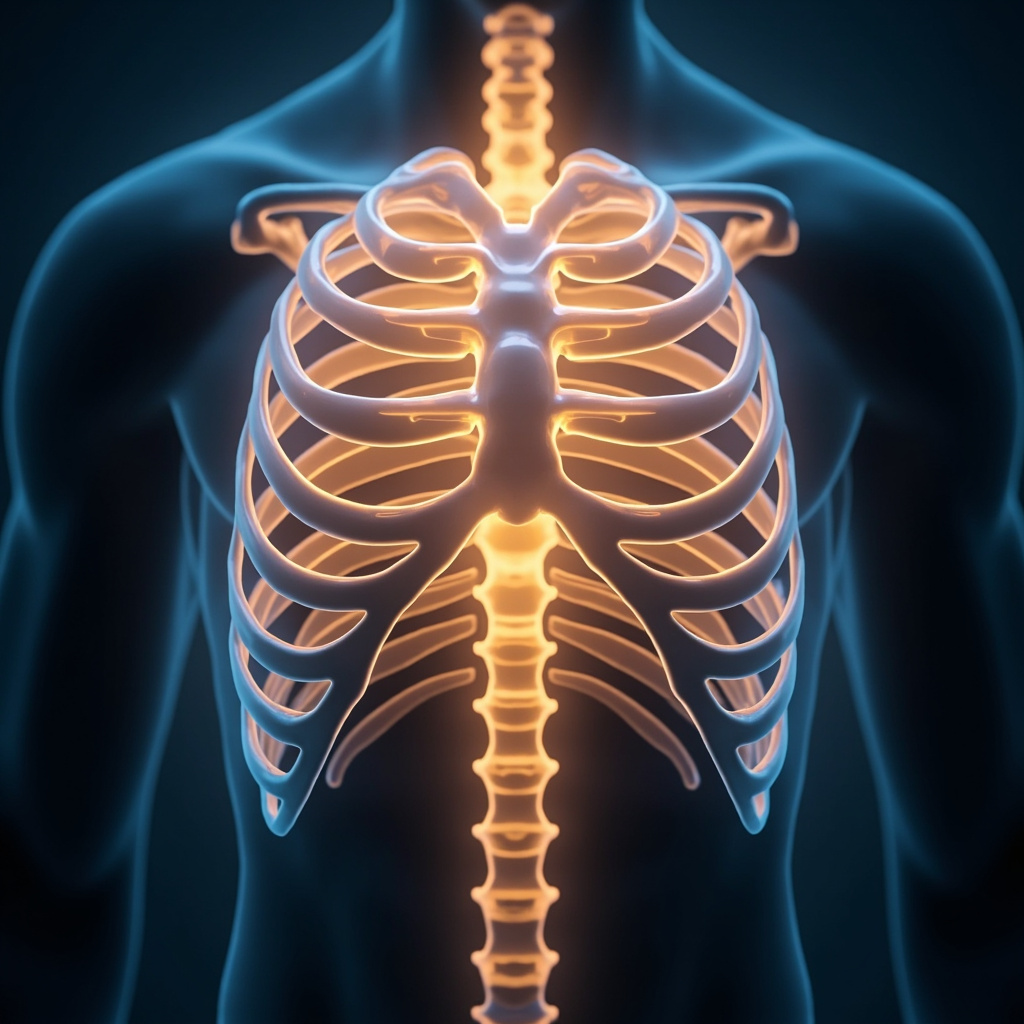
As a biochemistry specialist, I spend much of my time looking at how your cells produce energy and manage stress. Often, we focus on the major organs like the heart or the liver. However, there is a structural system that acts as a silent partner to every breath you take: the intercostal muscles. These are the small, essential muscles located between your ribs that work tirelessly to expand and contract your chest cavity.
While we often take breathing for granted, the efficiency of your respiratory process depends heavily on these muscles. They do not just move air; they facilitate the oxygenation of every cell in your body. When these muscles are tense or restricted, it can lead to a subtle but significant drop in your overall vitality and lung capacity.
The Emotional Connection
In my analysis of biomarkers, I have observed that physical tension rarely exists in a vacuum. The intercostal muscles are particularly sensitive to our emotional states. Have you ever felt like you were being held back, or perhaps felt a sense of being trapped by a difficult situation? Often, this manifests as a tightening of the chest.
From a physiological perspective, chronic stress triggers a defensive posture. We hunch our shoulders and shallow our breath, which keeps the intercostal muscles in a state of constant, low-level contraction. Over time, this does more than just make you feel tight; it limits your ability to take the deep, restorative breaths that your nervous system needs to transition from a state of stress to a state of calm. You might feel a sense of restriction that is not just physical, but emotional-a feeling of limited space in your own life.
Breathing for Balance
When we look at your body's electrical activity, we can often see patterns of agitation or fatigue in the intercostal region. When these muscles are functioning optimally, they act as a profound resource. By facilitating deeper, more rhythmic breathing, they ensure that your organs receive the steady supply of oxygen required for optimal metabolic function.
If you find yourself feeling overwhelmed or physically restricted, it may be time to tune into this area. Using targeted frequencies can help encourage these muscles to release their chronic tension. This is not just about physical relaxation; it is about reclaiming your space. When you breathe fully, you signal to your brain that you are safe, which helps lower oxidative stress and supports a more balanced internal environment.
A Simple Shift
To support your health, consider the following approach:
- Awareness: Next time you feel stressed, take a moment to notice your chest. Are you breathing into your upper ribs, or can you feel your intercostal muscles expanding outward?
- Rhythmic Support: Gentle movement and focused breathing can help maintain the flexibility of these muscles.
- Targeted Recovery: When your biomarkers show high tension in this area, using specific harmonic frequencies can help guide these structures back to a state of ease. By calming the electrical agitation in the intercostal muscles, you allow your body to shift focus from defense to restoration.
Your breath is the bridge between your biochemistry and your conscious experience. By caring for the structures that make breathing possible, you are doing more than just improving your lung function. You are creating the space necessary for your body to heal, recover, and thrive.
Related posts
Glossary
- Energy and mind Structures > oxygen
- Energy and mind Structures > Focused Coherence; Focus
- Body zones > liver
- Body zones > muscles
- Body zones > intercostal
- Body zones > respiratory
- Body zones > chest
- Energy and mind Structures > Organs
- Energy and mind Structures > vitality
- Energy and mind Structures > movement
- Energy and mind Structures > Stress
- Stimuli > Moon - Nasal Passage, Breathing, Taste
- Binaural beats > Nervous System: A Program for Emotional Balance and Relaxation
- Stimuli > Lead
- Stimuli > Heart
- Stimuli > Brain