


The Medial Pituitary: Your Inner Command Center
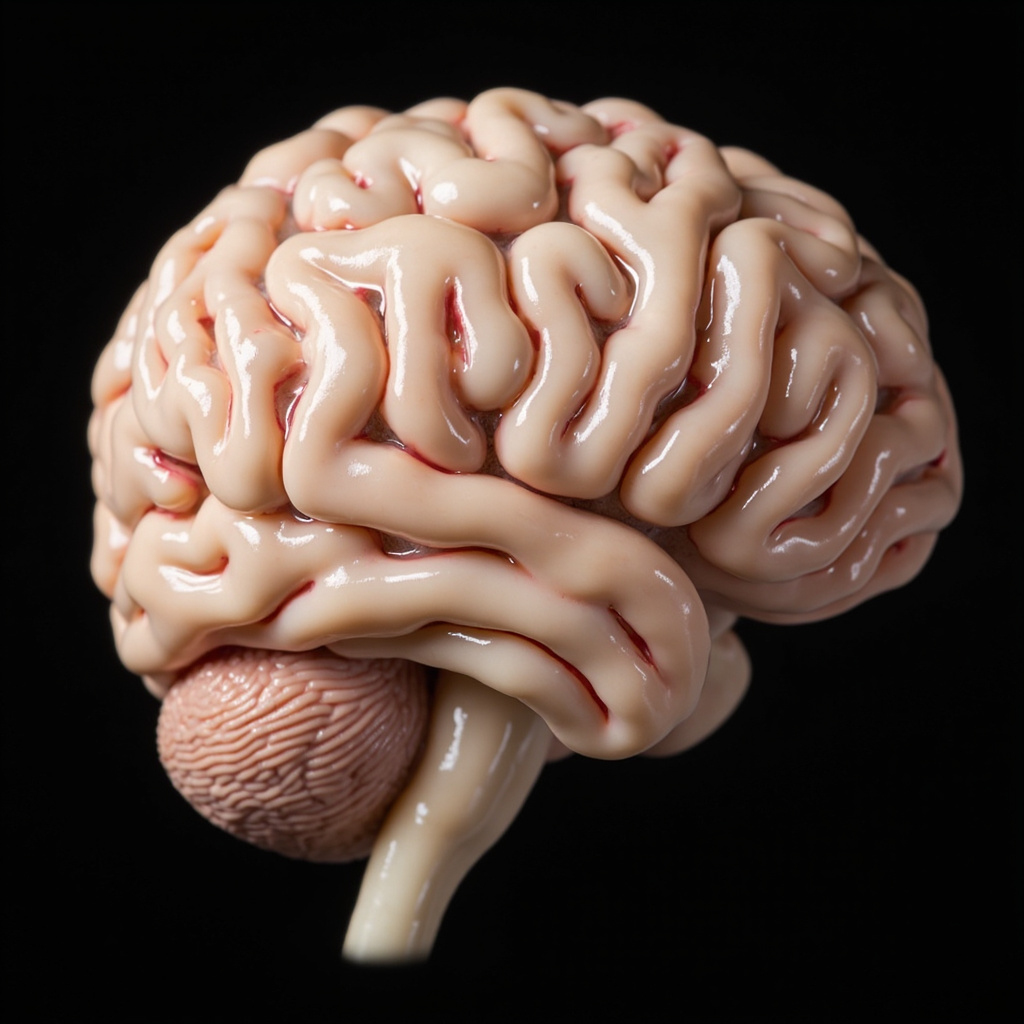
The Master Conductor at the Base of Your Brain
Deep within the center of your head, resting in a small, bony protective cradle, lies the pituitary gland. While it is often referred to as the master gland, its medial section plays a particularly vital role in how you experience life. This tiny area acts as a bridge, translating the signals from your brain into the hormonal messages that govern your growth, metabolism, and reproductive health.
From the perspective of heart and nervous system health, this structure is much more than a biological switch. It is a central hub that helps maintain the rhythm of your body. When this area is in balance, your system feels cohesive, responsive, and capable of handling life's demands. When it is out of alignment, you may feel as though your internal compass has lost its north.
The Emotional Weight of Control
In our work with heart rate variability and stress resilience, we often observe that physical imbalances are closely mirrored by emotional states. The medial pituitary is deeply connected to your internal sense of control.
Have you ever felt completely overwhelmed by responsibilities, or experienced a lingering, deep sense of powerlessness? These states are not just mental experiences; they are reflected in the electrical activity of your body. When you feel forced to grow too fast, or when the weight of your environment feels unmanageable, this core structure can become burdened. This is a common pattern we see when analyzing biomarkers: the body attempts to compensate for emotional stress by struggling to regulate its hormonal output.
Finding Balance Through Resonance
When we identify that this area needs support, we look at how to bring it back into a state of coherence. By using targeted frequencies, we can encourage this structure to return to its natural, optimal vibration. Think of this as tuning an instrument that has fallen slightly out of pitch.
When the medial pituitary is functioning as a resource rather than a point of tension, it provides a stabilizing effect on the rest of your organs. It sends clear, consistent signals that promote:
- Metabolic efficiency: Allowing your body to use energy more effectively.
- Emotional stability: Helping you shift from a state of feeling overwhelmed to a state of calm authority.
- Hormonal harmony: Supporting the delicate balance required for physical recovery and daily vitality.
Reclaiming Your Internal Rhythm
Supporting this area is about more than just physical health; it is about reclaiming your agency. When you work to balance this structure, you are essentially telling your body that it is safe to grow, safe to change, and safe to let go of the need to force outcomes.
If you have been feeling disconnected or as if your energy is scattered, it may be time to look inward at this central command center. Through focused attention and the use of harmonic support, you can help your system move away from the stress of being overwhelmed and toward a state of grounded, empowered presence.
By nurturing this connection, you allow your heart and brain to communicate more clearly, fostering a sense of flow that touches every aspect of your well-being. Remember, your body is a masterpiece of self-regulation. Sometimes, it just needs a little reminder of how to find its center again.
Related posts
Glossary
- Energy and mind Structures > Structure
- Energy and mind Structures > Mental
- Body zones > medial
- Body zones > head
- Body zones > hormonal
- Energy and mind Structures > Organs
- Energy and mind Structures > vitality
- Energy and mind Structures > Stress
- Stimuli > IGF1, Growth
- Binaural beats > Nervous System: A Program for Emotional Balance and Relaxation
- Stimuli > Reproductive
- Stimuli > Heart
- Stimuli > Brain
- Stimuli > GAPDH, Metabolism