


The T4 Vertebra: Your Anchor for Heart and Breath
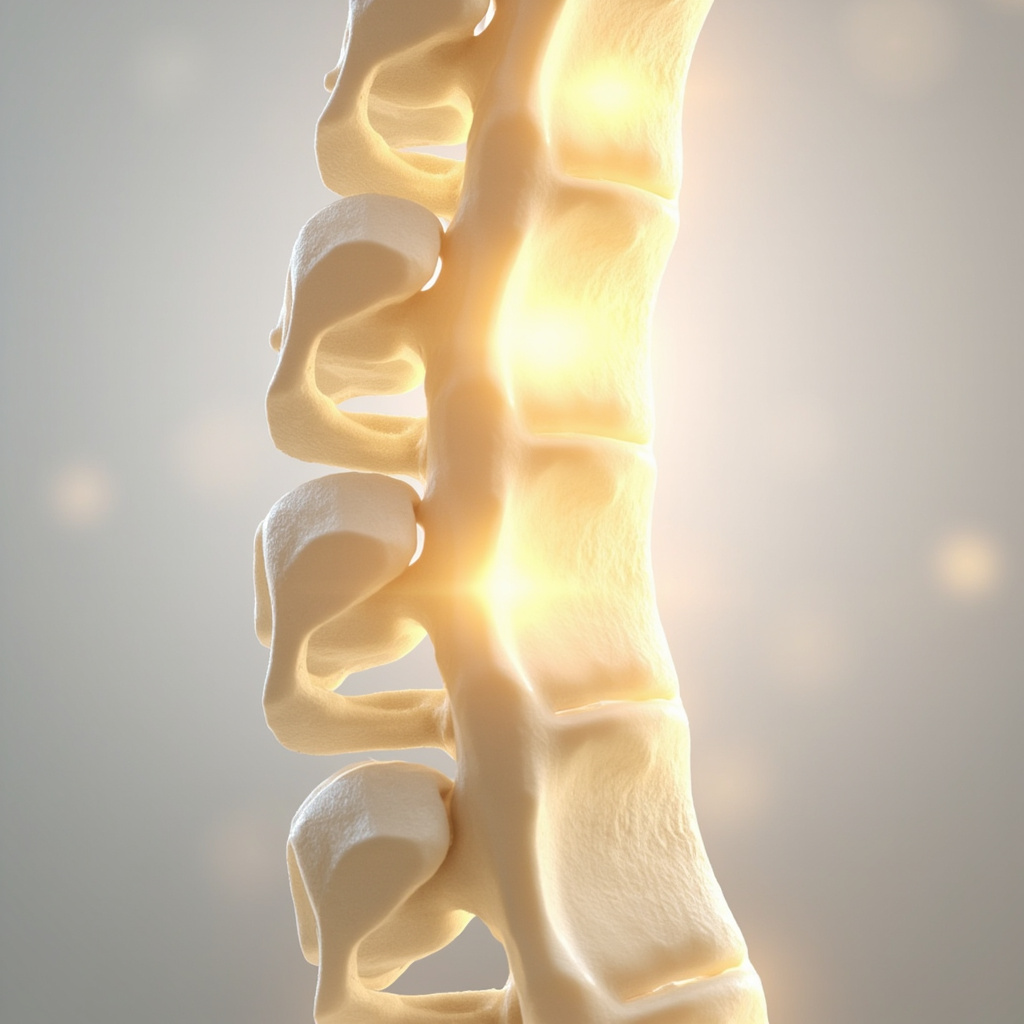
As a fitness coach, I often see how the body holds onto the stories of our lives. We tend to think of the spine simply as a structural pillar, but it is much more than that. It is a map of our resilience. Today, I want to highlight a specific part of your structure that often acts as a silent crossroads for both physical movement and emotional health: the T4 vertebra.
The Anchor of Your Upper Back
Located in the mid-back region, the T4 vertebra is a key player in your spinal health. It sits right at the level of the heart and lungs, providing essential support to the rib cage. When this area is balanced and stable, it allows for deep, effortless breathing and a sense of openness in the chest.
In my work with recovery and movement, I often look at how the spine supports our overall performance. If the T4 vertebra is under stress, it is not just about back pain. It can affect how well you breathe during a workout and how effectively your heart rate stabilizes after intense activity. Because it protects the spinal cord in this vital region, keeping it clear and energized is essential for maintaining good posture and fluid movement in your daily life.
Where Emotion Meets Physiology
What makes the T4 vertebra particularly interesting is its connection to our emotional landscape. In the context of energy and self-development, this area is frequently associated with how we process emotions related to the heart and lungs.
We have all felt the physical sensation of grief or sadness as a heaviness in the chest or a tightening in the upper back. When we carry unresolved feelings, they often manifest as tension in this specific part of the spine. It is as if the body is trying to protect the heart by creating a shield of tension. By focusing on the T4 vertebra, we are not just working on a bone; we are working on creating the space needed to release that stored emotional weight. When we address this, many people report a feeling of lightness and a renewed capacity to breathe deeply again.
Using T4 as a Resource for Recovery
When I analyze biomarkers to help clients reach their goals, I look for areas that can serve as a resource. The T4 vertebra is a powerful ally. When it is balanced, it supports the entire thoracic spine, which in turn improves your cardiovascular capacity and respiratory efficiency.
If you are feeling drained or limited in your movement, consider that your body might be signaling a need to support this specific area. By using personalized frequencies, you can direct energy to the T4 vertebra to encourage stability. This process helps the body let go of the tension associated with deep sadness or grief, allowing the nervous system to shift back into a state of recovery and calm.
Integrating Balance into Your Routine
To keep your T4 vertebra functioning at its best, focus on movements that encourage spinal rotation and chest expansion. However, physical movement is only one side of the coin. Integrating moments of stillness or guided focus can help you check in with how you are feeling in your chest and mid-back.
If you find that your recovery is slower than expected or that you feel a persistent tightness despite regular stretching, it might be time to look deeper at the energetic state of your T4. By tuning into this area, you are taking a proactive step toward better posture, improved breath, and a more resilient emotional foundation. Remember, your body is always communicating with you; it is just a matter of learning how to listen to the signals it provides.
Related posts
Glossary
- Energy and mind Structures > Focused Coherence; Focus
- Energy and mind Structures > Structure
- Energy and mind Structures > Sensation
- Energy and mind Structures > Sadness
- Energy and mind Structures > Grief
- Energy and mind Structures > Performance
- Body zones > lungs
- Body zones > respiratory
- Body zones > T4
- Body zones > chest
- Energy and mind Structures > movement
- Energy and mind Structures > Stress
- Stimuli > Moon - Nasal Passage, Breathing, Taste
- Stimuli > Pain
- Binaural beats > Spinal Cord Support: Enhance Wellness and Emotional Balance
- Binaural beats > Nervous System: A Program for Emotional Balance and Relaxation
- Stimuli > Heart