


The T10 Vertebra: Finding Your Center of Stability
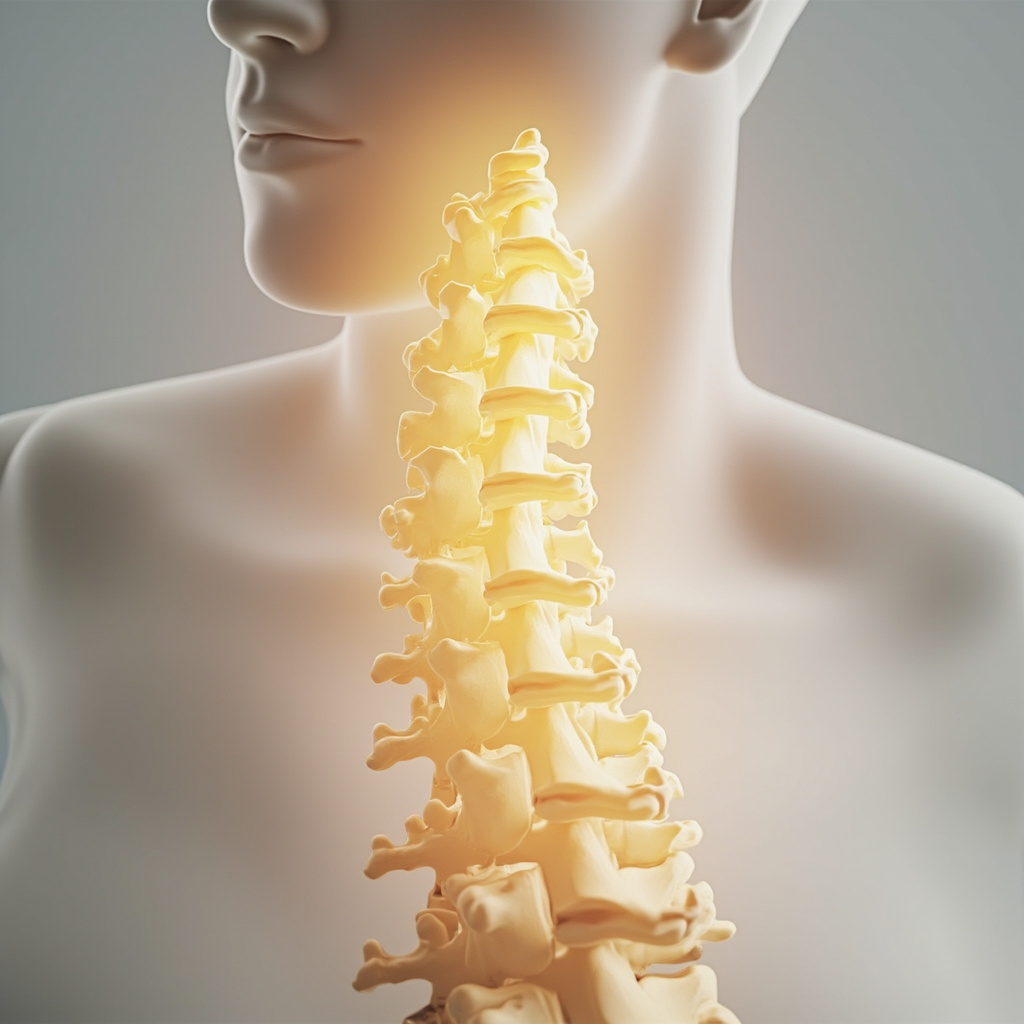
As a fitness coach, I often see how physical tension in the back is more than just a matter of tight muscles or poor posture. When we look at the body as an interconnected system, we often find that specific areas act as anchors for both our physical movement and our emotional state. Today, I want to shine a light on the T10 vertebra, a crucial point in your mid-back that often holds the key to greater stability and inner calm.
The Mid-Back Connection
The T10 vertebra is located in the middle of your thoracic spine. Think of it as a central pillar in the architecture of your torso. Because of its location, it does not just support your weight; it acts as a junction point where your upper body and lower body meet. When this area is clear and functioning well, you likely feel fluid, balanced, and capable of handling physical challenges with ease.
However, when we experience stress or physical strain, the T10 area can become a site of tension. In my work with biomarkers, I often observe that when the energy around the T10 is disrupted, it can manifest as stiffness in the mid-back, but also as a subtle sense of feeling 'off-center' or ungrounded.
The Emotional Link
What makes the T10 truly fascinating is its energetic connection to the kidneys. In many traditions, the kidneys are considered the seat of our deepest vitality and our sense of survival. When we feel overwhelmed, insecure, or unsupported by life's circumstances, that stress often travels along the nervous system and settles in the mid-back area, specifically around the T10.
If you have been feeling a persistent sense of unease, or if you find it difficult to stay calm during high-pressure situations, your body might be asking you to pay attention to this specific region. It is not just about the bone itself; it is about the emotional resilience that lives in that space. When we address tension here, we are often doing more than just 'fixing a backache'-we are inviting a sense of safety and existential stability back into our lives.
Turning Tension into a Resource
When we identify the T10 as a priority, we can use it as a powerful resource. By focusing our attention on this area, we can actively work to release the stored energy of past stresses.
I often tell my clients that you do not need to wait for pain to start caring for your spine. You can use targeted frequencies to help this area resonate at its natural, healthy state. When the T10 is balanced, it serves as a support system for your entire body, allowing you to breathe more deeply and move with more confidence.
Practical Steps for Your Daily Flow
If you feel that your mid-back is holding onto tension, try these simple approaches:
- Mindful Breath: Sit or stand tall, and visualize your breath moving specifically into the space between your shoulder blades. Imagine the T10 area softening with every exhale.
- Gentle Mobility: Incorporate slow, controlled rotations of your torso. This helps to 'wake up' the vertebrae in the thoracic region and improves the flow of movement.
- Emotional Check-in: Ask yourself if you are feeling supported in your current environment. Sometimes, simply acknowledging a feeling of insecurity allows the physical tension associated with it to begin to dissolve.
By tuning into the T10, you are essentially recalibrating your body's internal compass. Whether you are looking to improve your athletic performance or simply seeking a greater sense of peace in your daily life, honoring this central pillar of your spine is a wonderful place to start. You are building a foundation of strength that starts from within.
Related posts
Glossary
- Energy and mind Structures > Peace
- Energy and mind Structures > Performance
- Energy and mind Structures > Confidence
- Body zones > kidneys
- Body zones > muscles
- Body zones > T10
- Body zones > Vertebrae
- Energy and mind Structures > vitality
- Energy and mind Structures > movement
- Energy and mind Structures > Stress
- Stimuli > Pain
- Binaural beats > Nervous System: A Program for Emotional Balance and Relaxation
- Stimuli > Bone