


Th12: Yoga for Stability & Security
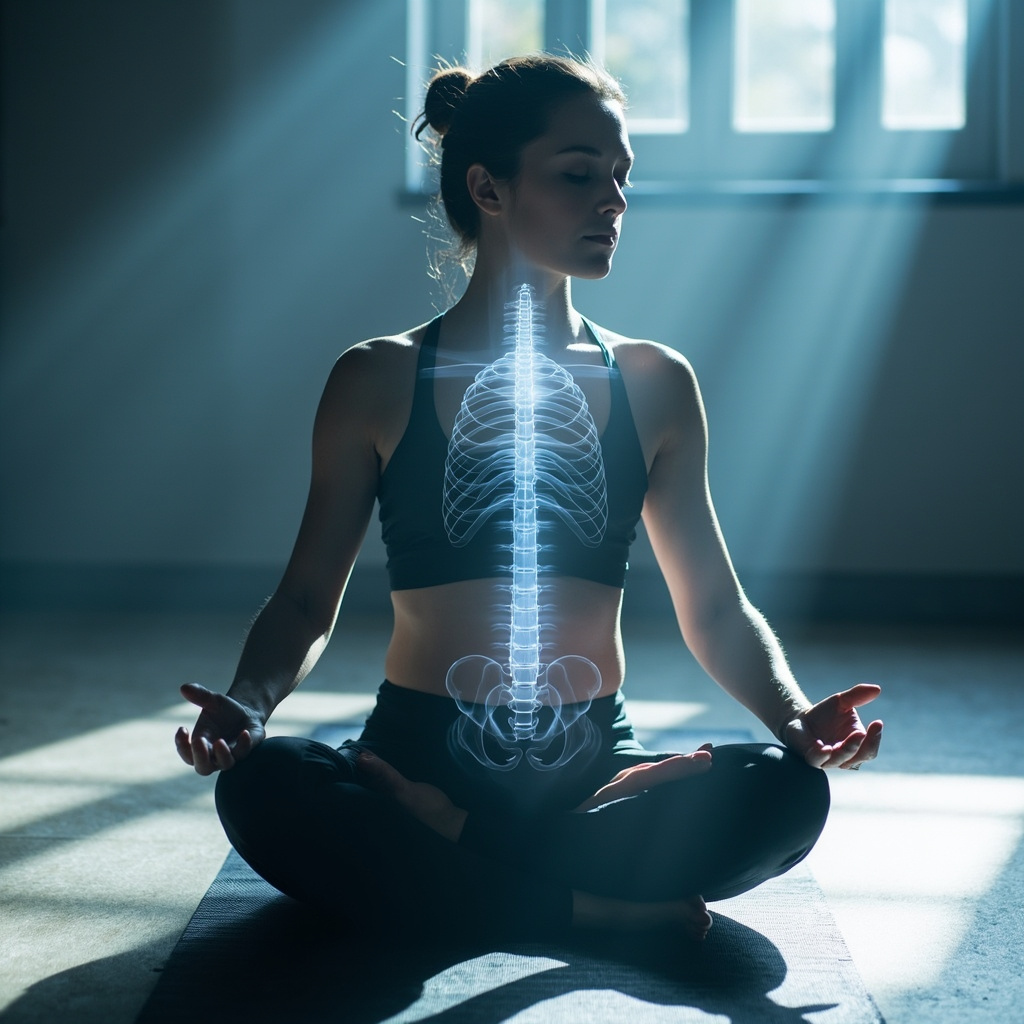
The Th12 vertebra, or 12th thoracic vertebra, sits in the lower part of your thoracic spine, right above the lumbar area. It plays a vital role in holding up your upper body while allowing smooth torso movements. For more details, see the glossary entry.
This area protects the spinal cord and supports flexibility. When healthy, it keeps you steady during daily activities and dynamic motions like twisting or bending.
Emotional Links to Th12
Beyond the physical, Th12 connects to deeper feelings. It often reflects insecurity and instability, like a fear of losing control or lacking support. Close to the adrenal glands, it can signal overload from stress or too many responsibilities. Survival worries, territorial tensions, or self-defense issues may show up here as physical discomfort.
Addressing Th12 helps release these patterns, fostering a sense of grounded security.
Signs of Th12 Imbalance
If Th12 is strained, you might notice:
- Back pain in the mid-to-lower area
- Limited bending or twisting
- Nerve-related problems like numbness or weakness in the legs
- Heightened stress, feeling overwhelmed
These can stem from poor posture, injury, or emotional buildup. Breathing becomes shallow, amplifying tension.
Th12 as Your Inner Resource
A balanced Th12 offers:
- Strong structural support for the torso
- Greater mobility and ease in movement
- Relief from stress-related emotional blocks
It promotes physical resilience and calm confidence, aiding overall well-being.
Breathing to Prepare
Start with deep belly breaths. Inhale for four counts, expanding ribs; exhale for six, softening the back. This calms the nervous system and prepares the thoracic area. Do 5-10 rounds.
Yoga Poses to Strengthen Th12
Practice these gently, 3-5 times weekly. Hold each for 5-10 breaths unless noted. Move with breath.
1. Cat-Cow Pose (Marjaryasana-Bitilasana)
Kneel on all fours, hands under shoulders, knees under hips. Inhale, arch back, lift tailbone and head (Cow). Exhale, round spine, tuck chin (Cat). Flow 8-10 times. Benefits: Warms thoracic spine, boosts mobility, eases stiffness around Th12.
2. Child's Pose (Balasana)
Kneel, sit heels, fold forward, arms extended. Forehead to floor or block. Benefits: Releases lower thoracic tension, supports emotional calm, restores stability.
3. Thread the Needle
From all fours, slide right arm under left, shoulder to floor, left hand stacks or extends. Switch sides. Benefits: Opens rotation in thoracic spine, targets lower area for pain relief and flexibility.
4. Locust Pose (Salabhasana)
Lie face down, arms at sides. Lift chest, arms, legs slightly, gaze down. Hold briefly, repeat 3-5 times. Benefits: Builds strength in back muscles supporting Th12, improves posture.
5. Bridge Pose (Setu Bandhasana)
Lie on back, feet hip-width, knees bent. Lift hips, clasp hands under back or arms at sides. Benefits: Stabilizes thoracolumbar junction (near Th12), counters slouching, enhances core support.
6. Seated Twist (Ardha Matsyendrasana)
Sit, right leg extended, left foot outside right knee. Twist right, left elbow to outside right knee. Benefits: Improves torso rotation, detoxes stress from Th12 area.
7. Gate Pose (Parighasana)
Kneel, right leg out straight, side bend left over right, right hand to calf. Benefits: Stretches side body, lateral flexibility for thoracic stability.
Integrating into Daily Life
Notice Th12 during practice: feel support at lower ribs. If stress rises, return to breath. Track ease in movement over weeks.
Combine with mindful walks, focusing on upright posture. This builds resilience, linking body awareness to emotional steadiness.
Regular yoga nurtures Th12, turning potential weakness into a pillar of strength.
- 1. spinemd.com
- 2. osha.gov
- 3. facebook.com
- 4. facebook.com
- 5. tummee.com
- 6. therapywisdom.com
- 7. persecution.org
- 8. m.dcvertebrae.com
- 9. hfe.co.uk
- 10. youtube.com
- 11. yinyoga.com
- 12. cms.nucleusnetwork.com
- 13. instagram.com
- 14. yogajournal.com
- 15. reddit.com
- 16. lispine.com
- 17. academic.oup.com
- 18. yogamedicine.com
- 19. yogatribebrooklyn.com
- 20. instagram.com
- 21. tallahassee.com
- 22. charlottewattshealth.com
- 23. facebook.com
- 24. yogauonline.com
- 25. youtube.com
- 26. aurawellnesscenter.com
- 27. racer.com
- 28. compspinecare.com
- 29. dynamicchiropractic.com
- 30. mdpi.com
- 31. healthline.com
- 32. youtube.com
- 33. scribd.com
- 34. aapc.com
- 35. yoga15.com
- 36. youtube.com
- 37. spinehealth.org
- 38. sattvaconnect.com
- 39. m.youtube.com
- 40. jasonyoga.com
- 41. mobilityboneandjoint.com
- 42. youtube.com
- 43. yogajournal.com
- 44. tummee.com
- 45. theyogipreneur.com
- 46. liforme.com
- 47. researchgate.net
- 48. pmc.ncbi.nlm.nih.gov
- 49. facebook.com
- 50. youtube.com
- 51. yogainternational.com
Related posts
Glossary
- Energy and mind Structures > Security
- Energy and mind Structures > Confidence
- Body zones > glands
- Body zones > head
- Body zones > muscles
- Body zones > Th12
- Body zones > chest
- Body zones > face
- Energy and mind Structures > TH12
- TCM Recipes > Pain Relief: Soothing Musculoskeletal Pain and Inflammation
- TCM Recipes > Adrenal Support: Remedies for Fatigue and Stress
- Energy and mind Structures > movement
- Energy and mind Structures > Stress
- Stimuli > Moon - Nasal Passage, Breathing, Taste
- Stimuli > Pain
- Binaural beats > Spinal Cord Support: Enhance Wellness and Emotional Balance
- Binaural beats > Nervous System: A Program for Emotional Balance and Relaxation
see also...
- Energy and mind Structures > HRV
- Energy and mind Structures > Body zones > thoracic
- Energy and mind Structures > TCM Recipes > Stress Relief: A Simple Recipe for Calm and Ease
- Testimonials > 61% Drop in Nausea and 58% in Headaches from Sound Therapy
- Binaural beats > Stimuli > Chakra 2 Solar Plexus
- Binaural beats > Transmutation: A Sound Journey for Personal Change