


Macracanthorhynchus: Psyche's Gut Echo
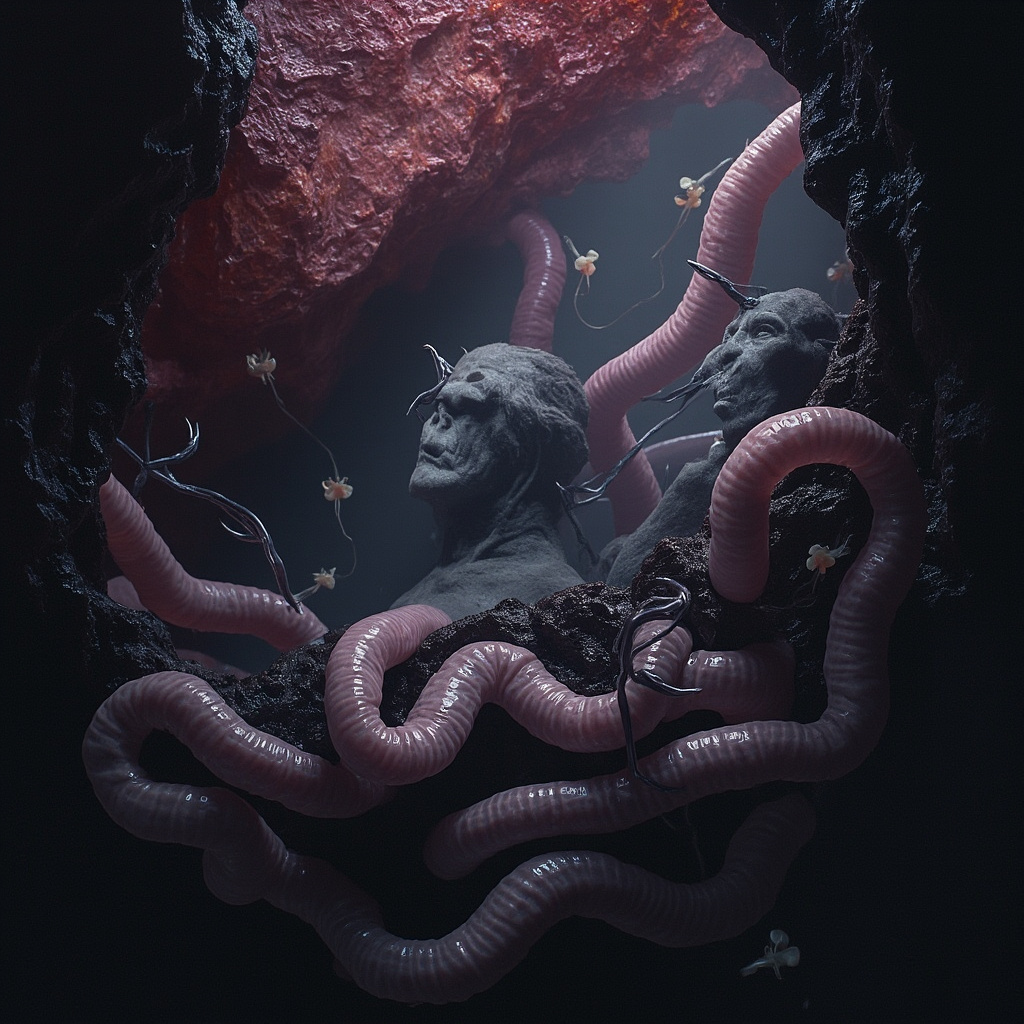
Shadows in the Gut
Deep within the intestines, where nourishment turns to life force, Macracanthorhynchus appears as a thorny-headed intruder. This rare parasite, often found in animals like pigs and raccoons, occasionally echoes in human bodies. It attaches firmly to the intestinal wall, drawing nutrients and stirring unrest. In the language of the body-psyche dialogue, it serves as a stark mirror to hidden distress and unbalanced energies.Learn more in the glossary
Physical Whispers of Discomfort
When active, Macracanthorhynchus brings clear bodily signals. The worm's spiny proboscis embeds into the gut lining, causing abdominal pain, nausea, bloating, and loss of appetite. Severe cases may lead to weight loss, diarrhea, or even intestinal blockage. These symptoms arise from mechanical irritation and inflammation, as the parasite absorbs vital resources meant for the host.
Such invasions disrupt digestion, the foundation of physical vitality. Recent insights show how gut dwellers like this can inflame the entire system, sending ripples far beyond the belly.
Emotional Currents: Anxiety's Hidden Source
The gut is more than a digestive organ; it is a second brain, producing much of our serotonin for mood regulation. Parasites disrupt this balance, releasing toxins that cross into the bloodstream and cloud mental clarity. This leads to restlessness, irritability, chronic worry, and waves of panic-hallmarks of anxiety.
From a Jungian lens, Macracanthorhynchus symbolizes parasitic shadow aspects: unconscious elements draining our energy, evoking frustration and helplessness. Just as the worm clings uninvited, repressed emotions or traumas may latch onto the psyche, manifesting as gut unease. Feelings of violation or loss of control surface, urging us to confront what we cannot easily expel.
Studies on gut invaders confirm this: inflammation triggers neuroinflammation, impairing focus and heightening dread. The gut-brain axis amplifies these echoes, turning physical symptoms into emotional storms.
The Biomarker as Psyche's Mirror
In assessments of electrical body activity, the Macracanthorhynchus biomarker (organism_150) reveals its energy levels, agitation, and connections to other systems. High agitation might signal acute distress, while low energy points to depletion. These patterns link gut turmoil to broader stress responses, offering a map to unconscious patterns.
For the Jungian psychotherapist, this data illuminates inner tension. Paired with dreams or active imagination, it uncovers symbolic meanings-perhaps the parasite as an unintegrated 'other' demanding dialogue.
Transforming the Intruder into Ally
Viewed as a resource, Macracanthorhynchus guides healing. It highlights pathways to restore gastrointestinal harmony, easing distress through targeted support like meridians or acupuncture points. Emotionally, addressing it fosters balance, dissolving anxiety by integrating shadows.
Imagine a client with persistent gut woes and vague fears. Biomarker insights reveal Macracanthorhynchus agitation tied to repressed anger. Through visualization-conversing with the 'worm' as a psyche messenger-they release helplessness, tracking shifts in energy for true individuation.
Steps Toward Inner Voyage
- Observe symptoms: Note gut pain alongside moods; journal connections.
- Support the gut: Favor fiber-rich foods, reduce sugars to starve invaders.
- Embrace shadow work: Use meditation to dialogue with discomfort.
- Monitor progress: Reassess biomarkers for harmony.
By honoring these echoes, we reclaim wholeness. Macracanthorhynchus teaches that even burdens hold wisdom for the unconscious journey.
- 1. academia.edu
- 2. news.umich.edu
- 3. researchgate.net
- 4. blogs.ucl.ac.uk
- 5. gbif.org
- 6. zookeys.pensoft.net
- 7. quizlet.com
- 8. pubmed.ncbi.nlm.nih.gov
- 9. internationalmedicalrelief.org
- 10. researchgate.net
- 11. cdc.gov
- 12. link.springer.com
- 13. reddit.com
- 14. pmc.ncbi.nlm.nih.gov
- 15. capcvet.org
- 16. health.harvard.edu
- 17. pmc.ncbi.nlm.nih.gov
- 18. mdpi.com
- 19. mdpi.com
- 20. academia.edu
- 21. malacards.org
- 22. ifm.org
- 23. mdpi.com
- 24. gideononline.com
- 25. austinholisticdr.com
- 26. askjpc.org
- 27. pmc.ncbi.nlm.nih.gov
- 28. cas.org
- 29. flockandherd.net.au
- 30. frontiersin.org
- 31. aacrjournals.org
- 32. sciencedirect.com
- 33. pmc.ncbi.nlm.nih.gov
- 34. cabidigitallibrary.org
- 35. academic.oup.com
- 36. linkedin.com
- 37. pmc.ncbi.nlm.nih.gov
- 38. download.rgd.mcw.edu
- 39. npr.org
- 40. link.springer.com
- 41. sciencedirect.com
- 42. m.facebook.com
Related posts
Glossary
- Energy and mind Structures > Focused Coherence; Focus
- Energy and mind Structures > Regulation
- Energy and mind Structures > Mental
- Energy and mind Structures > Meridians
- Energy and mind Structures > Macracanthorhynchus
- Energy and mind Structures > Acupuncture points
- TCM Recipes > Intestinal Harmony: A TCM Recipe for Digestive Relief
- TCM Recipes > Digestive Relief: A Simple Guide to Ease Bloating & Indigestion
- TCM Recipes > Brain Boost: Clear Fog, Improve Focus & Memory
- Energy and mind Structures > vitality
- Energy and mind Structures > toxins
- Energy and mind Structures > Digestion
- Energy and mind Structures > Theta; 4.31-6.97 Hz. Light sleep, meditation.
- Stimuli > Serotonin
- Stimuli > Adenovirus type 4, human
- Stimuli > Pain
- Binaural beats > Foundation of Security: Enhance Serenity and Well-Being
- Binaural beats > Inflammation Relief: Heal Faster with Binaural Beats
- Stimuli > Parasites
- Stimuli > Lead
- Stimuli > Harmony
see also...
- Energy and mind Structures > Theta; 4.31-6.97 Hz. Light sleep, meditation.
- Energy and mind Structures > TCM Recipes > Boost Energy: A Simple Remedy for Low Energy and Fatigue
- Testimonials > 61% Drop in Nausea and 58% in Headaches from Sound Therapy
- Binaural beats > Stimuli > Sacral, Zinc Etc
- Binaural beats > Desensitizer: Boost Your Energy and Focus Effectively