


ACTH: Psyche's Overwhelm Mirror
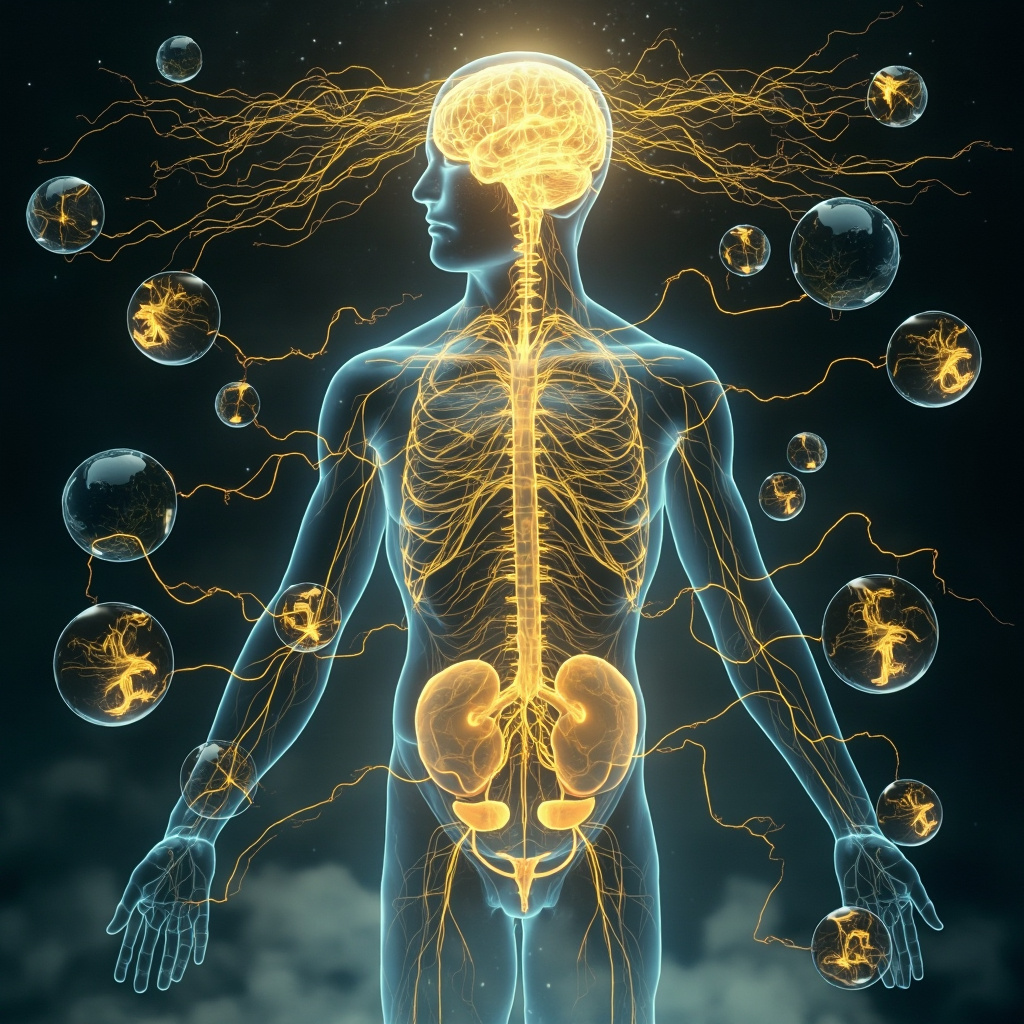
In the intricate dialogue between body and psyche, ACTH (Adrenocorticotropic Hormone) emerges as a profound messenger. Nestled in the pituitary gland at the base of the brain, ACTH sends signals to the adrenal glands atop the kidneys, prompting the release of cortisol. This process forms the core of our stress response, helping us navigate daily pressures and restore balance.
ACTH does more than react to immediate threats. It influences metabolism by mobilizing energy stores, bolsters immune defenses during challenges, and fine-tunes blood pressure. When harmony prevails, ACTH ensures we meet life's demands with resilience, adapting without exhaustion.
Physical Echoes of ACTH Imbalance
Disruptions in ACTH production ripple through the body:
- Low levels: Linked to Addison's disease, where insufficient cortisol leads to fatigue, weight loss, low blood pressure, and darkened skin. The body struggles to rally under stress.
- High levels: Associated with Cushing's syndrome, causing weight gain around the midsection and face, high blood pressure, muscle weakness, and fragile skin. Excess cortisol floods the system, wearing it down over time.
These shifts often stem from pituitary or adrenal issues, tumors, or prolonged stress, highlighting how unchecked pressures erode vitality.
The Psyche's Reflection in ACTH
From a Jungian lens, biomarkers like ACTH serve as mirrors to the unconscious. Elevated activity may echo chronic anxiety, a pervasive sense of threat, or helplessness against overwhelming demands. Imagine the psyche crying out through the body: "I feel engulfed, unable to cope." This is no mere biology-it's the shadow of repressed fears surfacing, demanding integration.
In clients grappling with persistent tension, ACTH patterns reveal inner conflicts. A hyperactive signal might point to unresolved trauma, where the ego battles archetypal forces of chaos. Conversely, subdued levels could signify emotional shutdown, a protective numbing against pain. These insights invite shadow work, uncovering hidden aspects for wholeness.
Dreams often amplify this mirror. Stress-laden nights with themes of pursuit or collapse correlate with ACTH agitation, guiding us toward active imagination-visualizing dialogues with inner figures to alchemize tension into growth.
ACTH in BioCoherence: A Window to Inner Energy
BioCoherence assesses ACTH through biomarkers derived from full-body electrical activity recordings. This reveals its energy levels, agitation, and interconnections with other systems. High agitation might flag psyche-body discord, while balanced flow signals resilience.
Calling Upon ACTH as a Resource
When attuned, ACTH becomes a steadfast ally:
- Regulates cortisol for steady energy and immune support.
- Enhances stress adaptation, fostering calm amid storms.
- Promotes metabolic harmony, aiding weight stability and vitality.
To invoke this resource, Jungian practices shine:
- Active imagination: Engage inner overwhelm in guided visualization, allowing ACTH to mirror resolution.
- Dream journaling: Track stress motifs, correlating with biomarker shifts for deeper insight.
- Body awareness meditations: Breathe into the pituitary-adrenal axis, affirming: "I meet demands with inner strength."
- Individuation rituals: Daily reflections on life's pressures, integrating shadow for emotional fortitude.
These approaches track progress through evolving biomarkers, confirming psyche's journey toward individuation-self-realization where body and soul align.
Toward Resilience and Inner Harmony
ACTH reminds us: stress is not the enemy, but a call to listen. By honoring its messages, we transform overwhelm into empowerment. In therapy, this biomarker guides trauma integration, emotional balance, and hidden capacities' unveiling. Embrace ACTH's echo; let it lead you home to the Self.
- 1. pubmed.ncbi.nlm.nih.gov
- 2. rupahealth.com
- 3. news.yale.edu
- 4. medlineplus.gov
- 5. sciencedaily.com
- 6. pmc.ncbi.nlm.nih.gov
- 7. sciencedirect.com
- 8. optimaldx.com
- 9. sciencedirect.com
- 10. pmc.ncbi.nlm.nih.gov
- 11. health.harvard.edu
- 12. pmc.ncbi.nlm.nih.gov
- 13. link.springer.com
- 14. pmc.ncbi.nlm.nih.gov
- 15. ncbi.nlm.nih.gov
- 16. blogs.oregonstate.edu
- 17. sciencedaily.com
- 18. healthcare-bulletin.co.uk
- 19. pubmed.ncbi.nlm.nih.gov
- 20. ncbi.nlm.nih.gov
- 21. sciencedirect.com
- 22. theguardian.com
- 23. psychiatrictimes.com
- 24. medicalxpress.com
- 25. pmc.ncbi.nlm.nih.gov
- 26. medicalnewstoday.com
- 27. pmc.ncbi.nlm.nih.gov
- 28. frontiersin.org
- 29. droracle.ai
- 30. my.clevelandclinic.org
- 31. rupahealth.com
- 32. pmc.ncbi.nlm.nih.gov
- 33. onlinelibrary.wiley.com
- 34. mdpi.com
- 35. pmc.ncbi.nlm.nih.gov
- 36. pmc.ncbi.nlm.nih.gov
- 37. ncbi.nlm.nih.gov
- 38. blogs.oregonstate.edu
Related posts
Glossary
- Energy and mind Structures > Exhaustion
- Body zones > glands
- Body zones > acth
- Body zones > kidneys
- Body zones > face
- TCM Recipes > Stress Relief for High Blood Pressure: A TCM Approach
- TCM Recipes > Emotional Balance: A TCM Guide to Calm Anxiety & Insomnia
- TCM Recipes > Skin Health: Remedies for Acne and Eczema
- TCM Recipes > Brain Boost: Clear Fog, Improve Focus & Memory
- TCM Recipes > Adrenal Support: Remedies for Fatigue and Stress
- TCM Recipes > Boost Your Energy: A TCM Recipe for Fatigue Relief
- Energy and mind Structures > vitality
- Energy and mind Structures > blood pressure
- Energy and mind Structures > Stress
- Stimuli > IGF1, Growth
- Stimuli > Cortisol
- Stimuli > Addison's Disease
- Stimuli > Pain
- Binaural beats > Trauma Healing: Binaural Beats for Emotional Balance
- Stimuli > Lead
- Stimuli > Harmony
- Stimuli > Blood
- Stimuli > GAPDH, Metabolism
see also...
- Energy and mind Structures > HRV
- Energy and mind Structures > Body zones > thoracic
- Energy and mind Structures > TCM Recipes > Tension Headache Relief: A Natural Approach to Ease Stress
- Testimonials > 61% Drop in Nausea and 58% in Headaches from Sound Therapy
- Binaural beats > Stimuli > Chakra Throat
- Binaural beats > Trauma Healing: Binaural Beats for Emotional Balance