


Nerves: Body's Signal Network for Calm
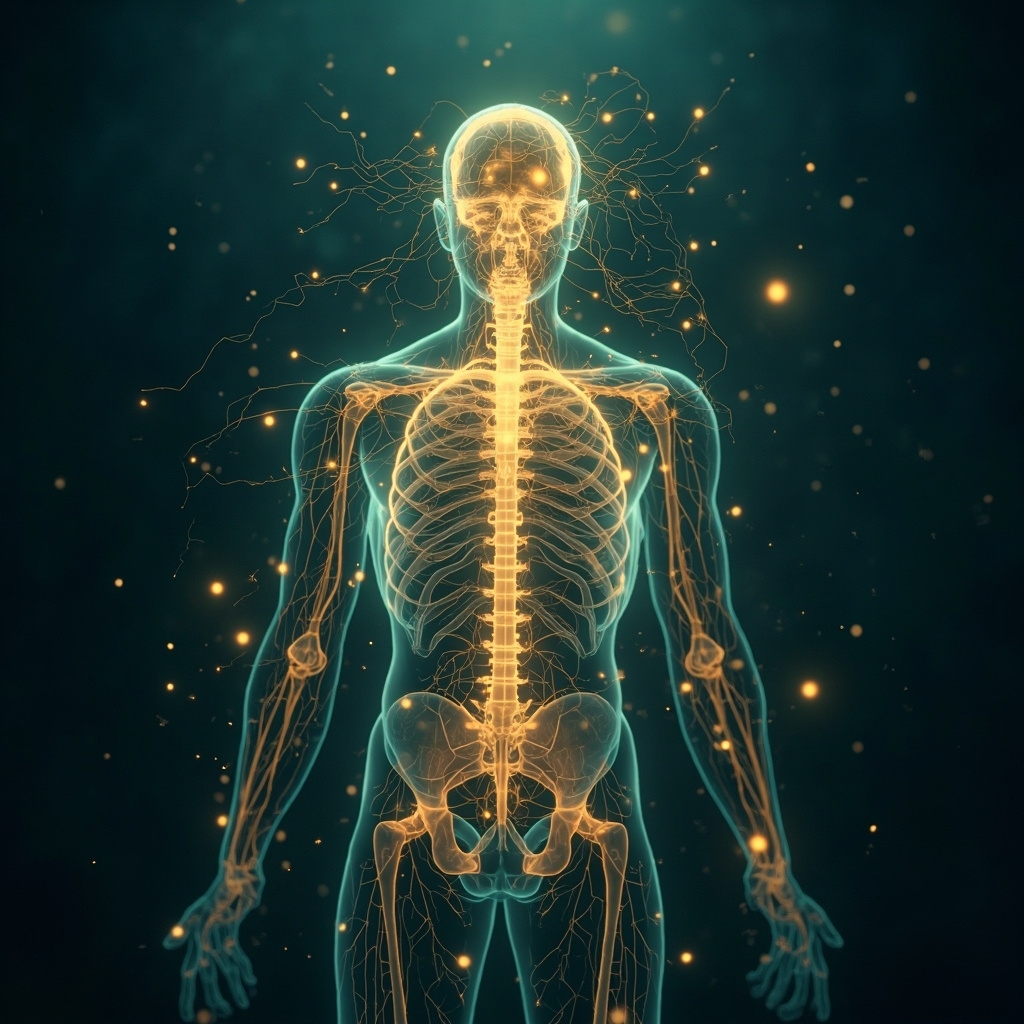
What Are Nerves?
Nerves form a vast network throughout your body. They are like bundles of tiny wires that carry electrical signals from your brain and spinal cord to muscles, skin, and organs. This peripheral nervous system helps you feel touch, move your limbs, and coordinate daily actions. When healthy, nerves ensure smooth communication, letting your body respond quickly to the world around you.
For a deeper look, check the nerves glossary.
Emotional Links to Nerve Health
Nerves do more than handle physical tasks. They reflect your inner emotional world. Deep stress, feelings of insecurity, or doubts about your self-worth can show up as nerve tension. Imagine your body as a team: if stress overwhelms the leader, messages get scrambled, leading to inner conflict.
Heart rate variability (HRV), a key measure of stress resilience, often ties to nerve function. Low HRV signals poor emotional regulation, where nerves struggle to adapt to pressures. This can make you feel on edge, as if external demands drown out your sense of place in the world.
Common Signs of Nerve Imbalance
When nerves falter, physical and emotional clues appear:
- Physical symptoms: Tingling, numbness, pain, or weakness in limbs.
- Emotional signs: Heightened anxiety, overwhelm, or a nagging sense of unresolved tension.
- Daily impacts: Trouble focusing, poor coordination, or fatigue from constant alertness.
These issues often stem from chronic stress, disrupting the body's communication pathways. As a psychologist, I see this pattern in clients with high agitation or trauma responses-nerves become a mirror of bottled-up emotions.
Nerves as Your Inner Resource
Strong nerves act as allies. They enhance coordination across your body, speeding up responses and promoting harmony. For example:
- They amplify other organs' work by relaying vital signals.
- Support balance during stress, helping you stay grounded.
- Boost overall resilience, turning challenges into growth opportunities.
In therapy, we view nerves as hubs for emotional regulation. When balanced, they foster clarity, reducing agitation and improving focus.
Psychology Meets Nerve Health
My work bridges mind and body. Biomarkers like nerve energy and agitation reveal psychological states. High stress patterns might prompt mindfulness or biofeedback to rebuild nerve pathways.
Consider a client with low HRV and nerve tension: We start with grounding exercises-deep breathing to activate calming nerves. Over time, HRV rises, emotions stabilize, and physical symptoms fade. This tracks real progress, blending emotional strategies with body awareness.
Simple Steps to Nurture Your Nerves
You can support nerves daily without special tools:
- Practice deep breathing: Slow inhales activate restful nerve signals, lifting HRV.
- Move mindfully: Gentle walks or yoga improve nerve flow and reduce tension.
- Ease stress: Journal unresolved feelings to release inner conflicts.
- Prioritize rest: Quality sleep repairs nerve fibers overnight.
- Build resilience: Short meditations focus on body sensations, strengthening emotional ties.
These habits address root causes like overwhelm, paving the way for self-development. Nerves thrive when you honor both body and mind.
Why Nerves Matter for Self-Development
Healthy nerves unlock hidden capacities. They enable sharper focus, steadier moods, and a stronger sense of self. In our fast world, tuning into this network builds resilience-key to personal growth.
As your guide in emotional health, I encourage exploring nerve signals. Notice tensions, breathe into them, and watch balance emerge. This path leads to vitality, clarity, and a deeper connection to your true potential.
- 1. sentaraproviderresources.com
- 2. innsightful.com
- 3. pmc.ncbi.nlm.nih.gov
- 4. neurosciencenews.com
- 5. nature.com
- 6. pantheonresearch.com
- 7. goodsky.com.au
- 8. pmc.ncbi.nlm.nih.gov
- 9. aimforwellbeing.org
- 10. larabriden.com
- 11. sciencedirect.com
- 12. med.stanford.edu
- 13. nature.com
- 14. youtube.com
- 15. bethechangewellnesscenter.com
- 16. pmc.ncbi.nlm.nih.gov
- 17. pubmed.ncbi.nlm.nih.gov
- 18. sallyspencerthomas.com
- 19. sciencedaily.com
- 20. darpa.mil
- 21. sciencealert.com
- 22. vibrant-wellness.com
- 23. my.clevelandclinic.org
- 24. researchgate.net
- 25. sciencedirect.com
- 26. physio-pedia.com
- 27. ieeexplore.ieee.org
- 28. neuropathycommons.org
- 29. news.yale.edu
- 30. pmc.ncbi.nlm.nih.gov
- 31. neuromodulationjournal.org
- 32. frequencyspecific.com
- 33. youtube.com
- 34. sciencedirect.com
- 35. frontiersin.org
- 36. pmc.ncbi.nlm.nih.gov
- 37. lifemovesmt.com
- 38. neurosity.co
- 39. blog.ultrahuman.com
- 40. nidcr.nih.gov
Related posts
Glossary
- Energy and mind Structures > Focused Coherence; Focus
- Energy and mind Structures > Regulation
- Energy and mind Structures > Communication
- Body zones > muscles
- Body zones > nerves
- Energy and mind Structures > Organs
- TCM Recipes > Skin Health: Remedies for Acne and Eczema
- TCM Recipes > Brain Boost: Clear Fog, Improve Focus & Memory
- TCM Recipes > Boost Your Energy: A TCM Recipe for Fatigue Relief
- Energy and mind Structures > sleep
- Energy and mind Structures > vitality
- Energy and mind Structures > Limbs, skin
- Energy and mind Structures > Stress
- Stimuli > IGF1, Growth
- Stimuli > Moon - Nasal Passage, Breathing, Taste
- Stimuli > Pain
- Binaural beats > Trauma Healing: Binaural Beats for Emotional Balance
- Binaural beats > Spinal Cord Support: Enhance Wellness and Emotional Balance
- Binaural beats > Nervous System: A Program for Emotional Balance and Relaxation
- Stimuli > Harmony
see also...
- Energy and mind Structures > HRV
- Energy and mind Structures > Body zones > plasma
- Energy and mind Structures > TCM Recipes > Tension Headache Relief: A Natural Approach to Ease Stress
- Testimonials > 61% Drop in Nausea and 58% in Headaches from Sound Therapy
- Binaural beats > Stimuli > Sacral, Zinc Etc
- Binaural beats > Transmutation: A Sound Journey for Personal Change