


Motor Neurons: Action for Deep Sleep
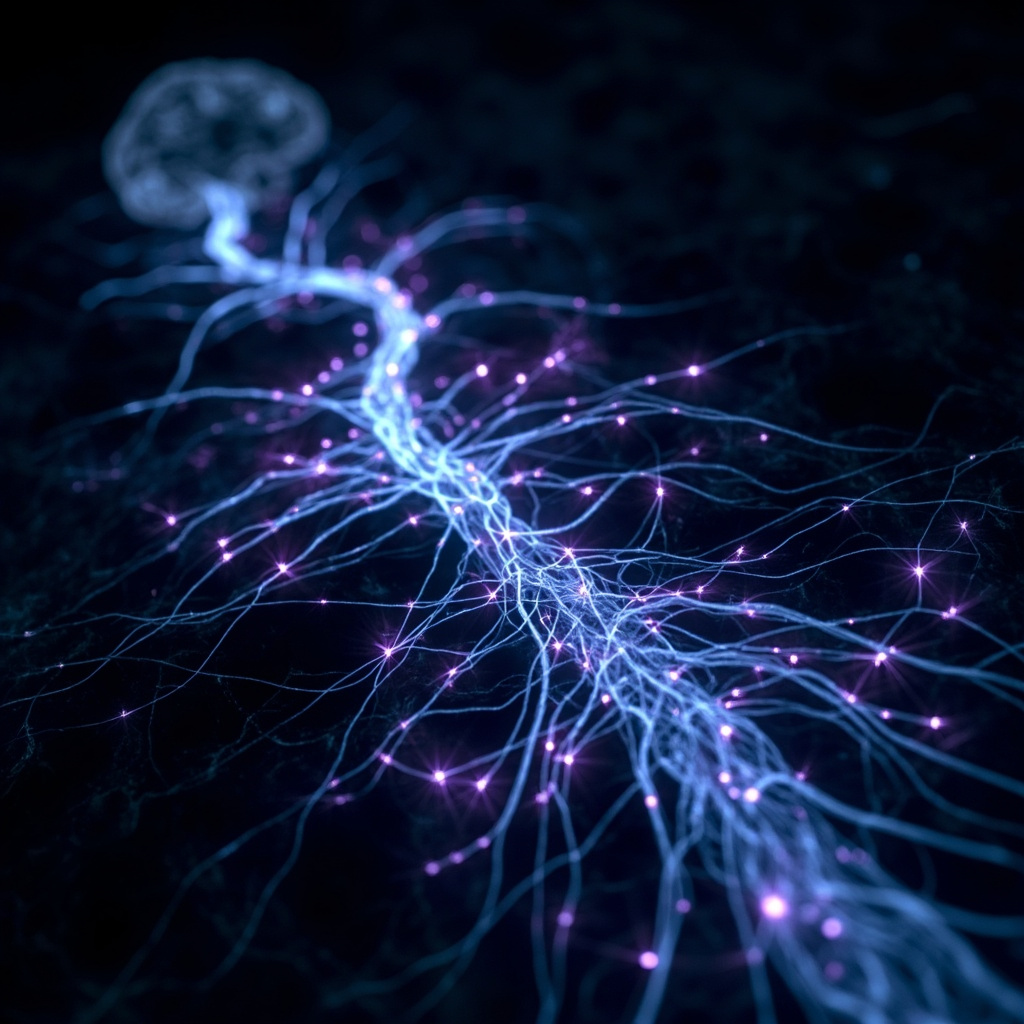
Motor neurons serve as the body's vital messengers. They carry signals from the brain and spinal cord through peripheral nerves to muscles, enabling every voluntary movement you make. When healthy, they ensure smooth coordination and responsiveness. Learn more in our glossary on motor.
Motor Neurons in Action
These specialized cells, found mainly in the brain, spinal cord, and nerves, activate to trigger muscle contractions. Think of grasping a cup or taking a step – that's motor neurons at work. Strong function supports daily vitality, physical performance, and even subtle adjustments like posture during rest.
If imbalanced, you might notice weakness, tremors, or coordination challenges. Over time, this can contribute to fatigue and reduced mobility, indirectly taxing your energy reserves needed for recovery.
Their Crucial Role in Sleep
Rest isn't just downtime for motor neurons; it's when they refine and recharge. A recent study published in Scientific Reports examined motor cortex neurons – the upper part of the motor system – in young rats. From early development, these neurons fire with precise timing during REM sleep twitches, spontaneous tiny movements that occur in deep sleep stages.
This activity sharpens over weeks, becoming more focused before each twitch. It lags slightly behind deeper brain areas like the red nucleus but plays a key role in building motor skills. Such processes during sleep help consolidate learning and movements from the day, leading to better performance upon waking.
Other research shows a two-way street: poor sleep quality correlates with lower motor performance, like grip strength and walking endurance. In large cohorts, better sleep duration and efficiency tied to stronger physical tasks, especially in younger adults.
Disrupted sleep hinders motor recovery, creating a cycle of fatigue.
Emotional Ties to Motor Balance
Motor neurons connect deeply to emotions. Imbalances often reflect a sense of being trapped or powerless – unable to move away from stress or threats. This helplessness or frustration stirs anger and inaction, ramping up stress hormones like cortisol.
High cortisol disrupts circadian rhythms, lowers HRV, and blocks entry into restorative deep sleep. Emotional stress can even jolt you awake from non-REM stages via specific neuron pathways, worsening insomnia.
Motor Neurons as Allies in Recovery
When viewed as a resource, motor neurons promote energy distribution through coordinated action. They enable physical release of tension, supporting breathing patterns and mobility that calm the nervous system.
In sleep coaching:
- Monitor for motor agitation signaling stress spikes.
- Track HRV improvements with gentle evening walks or stretches to engage motor pathways.
- Align bedtime routines with circadian cues, like dim lights, to foster neuron rest.
Balanced motor function aids vitality restoration, reduces nighttime restlessness, and enhances deep sleep phases where twitches rebuild strength.
Prioritizing motor health unlocks profound recovery. Small steps toward movement and emotional release pave the way for biologically aligned rest.
- 1. sip2sleep.com
- 2. cell.com
- 3. pmc.ncbi.nlm.nih.gov
- 4. pubmed.ncbi.nlm.nih.gov
- 5. pubmed.ncbi.nlm.nih.gov
- 6. aasm.org
- 7. pmc.ncbi.nlm.nih.gov
- 8. quantumclinic.com
- 9. biorxiv.org
- 10. alsnewstoday.com
- 11. youtube.com
- 12. frontiersin.org
- 13. youtube.com
- 14. frontiersin.org
- 15. sciencedirect.com
- 16. pubmed.ncbi.nlm.nih.gov
- 17. journals.sagepub.com
- 18. smart.org.cn
- 19. aggieresearch.tamu.edu
- 20. pmc.ncbi.nlm.nih.gov
- 21. purposedrivenchiro.com
- 22. lluh.org
- 23. uclahealth.org
- 24. ubiehealth.com
- 25. globalrph.com
- 26. medicalxpress.com
- 27. nature.com
- 28. nature.com
- 29. pennmedicine.org
- 30. sciopen.com
- 31. pubmed.ncbi.nlm.nih.gov
- 32. pubmed.ncbi.nlm.nih.gov
- 33. ahajournals.org
- 34. sciencedirect.com
- 35. my.clevelandclinic.org
- 36. med.stanford.edu
- 37. pubmed.ncbi.nlm.nih.gov
- 38. mdpi.com
- 39. pmc.ncbi.nlm.nih.gov
- 40. pubmed.ncbi.nlm.nih.gov
- 41. pubmed.ncbi.nlm.nih.gov
- 42. nature.com
- 43. sciencedaily.com
- 44. mndaustralia.org.au
- 45. otservices.wustl.edu
- 46. pubmed.ncbi.nlm.nih.gov
- 47. pmc.ncbi.nlm.nih.gov
- 48. neurosciencenews.com
- 49. psneurology.com
- 50. pmc.ncbi.nlm.nih.gov
- 51. youtube.com
- 52. researchgate.net
- 53. pmc.ncbi.nlm.nih.gov
- 54. pubmed.ncbi.nlm.nih.gov
- 55. mayoclinic.org
- 56. medicalxpress.com
- 57. sleepfoundation.org
- 58. neurosciencenews.com
- 59. sleepfoundation.org
Related posts
Glossary
- Energy and mind Structures > Fire
- Energy and mind Structures > Performance
- Body zones > hormones
- Body zones > muscles
- Body zones > nerves
- Body zones > motor
- TCM Recipes > Brain Boost: Clear Fog, Improve Focus & Memory
- TCM Recipes > Boost Your Energy: A TCM Recipe for Fatigue Relief
- Energy and mind Structures > sleep
- Energy and mind Structures > vitality
- Energy and mind Structures > movement
- Energy and mind Structures > Stress
- Stimuli > SHH, Development
- Stimuli > Cortisol
- Stimuli > AIDS
- Binaural beats > Spinal Cord Support: Enhance Wellness and Emotional Balance
- Binaural beats > Nervous System: A Program for Emotional Balance and Relaxation
see also...
- Energy and mind Structures > HRV
- Energy and mind Structures > Body zones > motor
- Energy and mind Structures > TCM Recipes > Tension Headache Relief: A Natural Approach to Ease Stress
- Testimonials > 61% Drop in Nausea and 58% in Headaches from Sound Therapy
- Binaural beats > Stimuli > Moon - Nasal Passage, Breathing, Taste
- Binaural beats > Transmutation: A Sound Journey for Personal Change