


Nerves: Linking Sleep, Pain, and Recovery
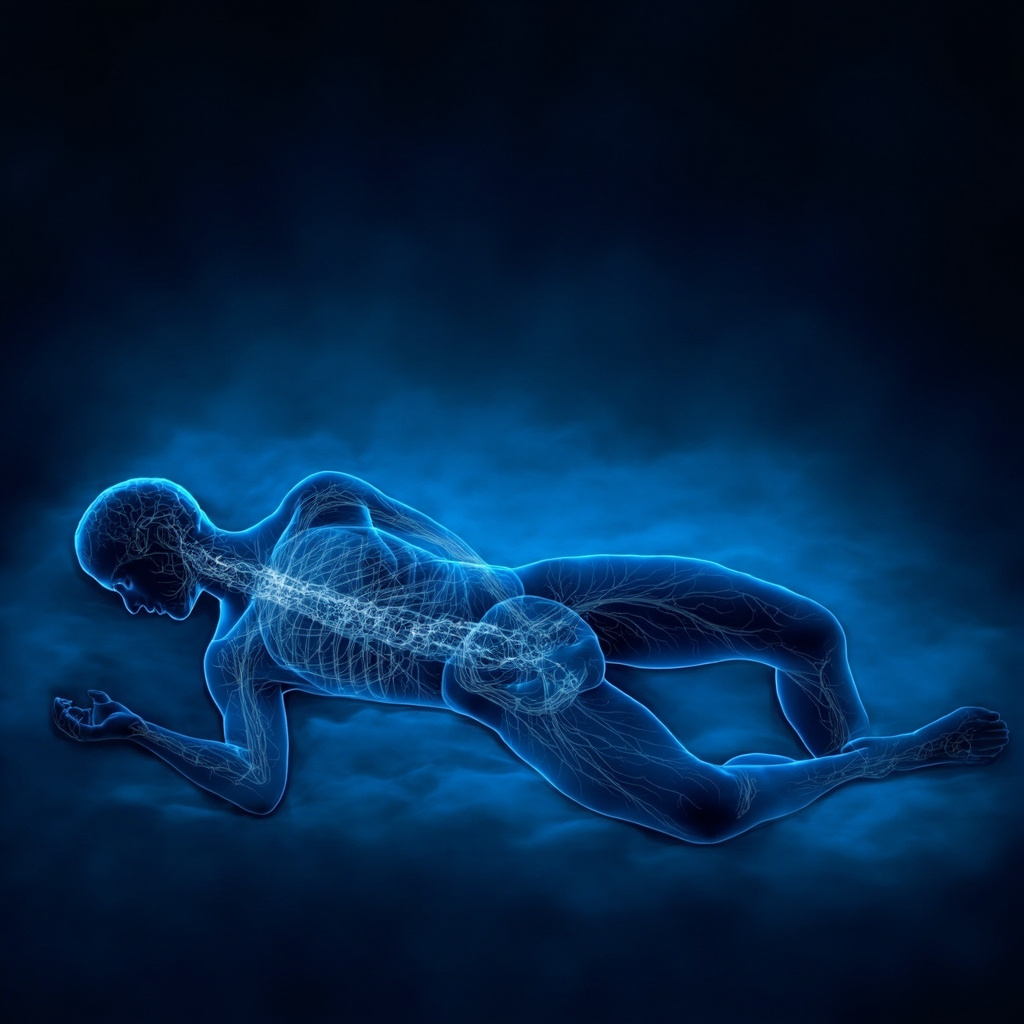
What Are Nerves?
Nerves are like the body's wiring system. They form bundles of fibers spread throughout your body as part of the peripheral nervous system. These fibers carry electrical signals from your brain and spinal cord to every part of you.
When working well, nerves let you feel touch, move your muscles, and coordinate actions smoothly. They help you sense the world and respond to it. Learn more about nerves.
Nerves and Deep Sleep: A Crucial Connection
During sleep, your nerves quiet down to support recovery. They help regulate heart rate variability (HRV), a sign of how well your body handles stress. Good HRV during rest means your nervous system shifts to a calm state, promoting energy restoration.
Circadian rhythms rely on nerve signals too. They sync your body clock for quality sleep. Balanced nerves reduce nighttime awakenings and deepen restorative phases. Poor nerve function, however, can spike cortisol, the stress hormone, keeping you alert when you should be resting.
Signs of Nerve Imbalance
If nerves are strained, you might feel pain, numbness, or weakness. These issues often worsen at night, turning bed into a battleground. Tingling limbs or aches can jolt you awake, cutting into deep sleep cycles.
Emotionally, nerve strain links to deep stress, feelings of insecurity, or overwhelm. It reflects inner tension, like unresolved conflicts about your worth or place in life. This disrupts the body's communication, blocking relaxation.
New Insights from Research
A 2025 study from Aalborg University shows how poor sleep heightens pain sensitivity through the nervous system. Researchers disrupted sleep in healthy people for three days with awakenings and simple tasks. Results? Lower pain thresholds, especially in women.
Poor sleep changes how nerves interpret signals, making minor discomfort feel intense. This cycle feeds chronic pain, anxiety, and low mood. Lead researcher Kristian Kjær-Staal Petersen notes: improving sleep could ease pain, boost mental health, and cut inflammation – all without drugs.
Women, who face chronic pain more often, saw stronger effects. Their nerves reacted more to sleep loss, explaining higher vulnerability.
Using Nerves as a Resource
Healthy nerves support other body parts by speeding communication. They enhance coordination during recovery, helping organs respond better. In sleep, they promote balance, carrying calming signals for vitality restoration.
Call on your nerves as allies. Visualize them as steady pathways guiding energy flow, easing tension for deeper rest.
Breathing Patterns to Calm Nerves
Simple practices tune your nerves for sleep:
- Deep belly breathing: Inhale for 4 counts, exhale for 6. This boosts parasympathetic activity, improving HRV.
- Evening wind-down: Dim lights 1 hour before bed to align circadian cues.
- Gentle stretches: Release nerve tension in neck and shoulders.
Track your rest. Notice if pain eases with better sleep – a sign nerves are recovering.
Toward Restorative Nights
Prioritize nerve health for profound sleep gains. Balanced nerves quiet stress, steady HRV, and unlock recovery. Small changes in routines build resilience, turning nights into true recharge.
As your sleep coach, I see nerves as gateways to circadian harmony. Tune them, and watch vitality return.
- 1. sciencenews.dk
- 2. youtube.com
- 3. frontiersin.org
- 4. blog.ultrahuman.com
- 5. mdpi.com
- 6. medcentral.com
- 7. researchgate.net
- 8. journals.lww.com
- 9. ahajournals.org
- 10. pmc.ncbi.nlm.nih.gov
- 11. sciencedirect.com
- 12. hero.epa.gov
- 13. frontiersin.org
- 14. verywellmind.com
- 15. apm.amegroups.org
- 16. now.aapmr.org
- 17. geelongbowen.com.au
- 18. pubmed.ncbi.nlm.nih.gov
- 19. youtube.com
- 20. pmc.ncbi.nlm.nih.gov
- 21. sleepsurvey.resmed.com
- 22. surrey.ac.uk
- 23. psychiatry.ucsf.edu
- 24. sciencedirect.com
- 25. sciencedirect.com
- 26. healio.com
- 27. ncbi.nlm.nih.gov
- 28. sciencedirect.com
- 29. semanticscholar.org
- 30. youtube.com
- 31. youtube.com
- 32. jneurosci.org
- 33. frontiersin.org
- 34. pmc.ncbi.nlm.nih.gov
- 35. linkedin.com
- 36. pmc.ncbi.nlm.nih.gov
- 37. eneuro.org
- 38. pmc.ncbi.nlm.nih.gov
- 39. mdpi.com
- 40. instagram.com
- 41. youtube.com
- 42. facebook.com
- 43. ncbi.nlm.nih.gov
Related posts
Glossary
- Energy and mind Structures > Communication
- Energy and mind Structures > Mental
- Energy and mind Structures > Clock
- Body zones > muscles
- Body zones > nerves
- Body zones > parasympathetic
- Body zones > face
- Energy and mind Structures > Organs
- TCM Recipes > Brain Boost: Clear Fog, Improve Focus & Memory
- Energy and mind Structures > sleep
- Energy and mind Structures > vitality
- Energy and mind Structures > Limbs, skin
- Energy and mind Structures > Stress
- Stimuli > Moon - Nasal Passage, Breathing, Taste
- Stimuli > Pain
- Binaural beats > Inflammation Relief: Heal Faster with Binaural Beats
- Binaural beats > Spinal Cord Support: Enhance Wellness and Emotional Balance
- Binaural beats > Nervous System: A Program for Emotional Balance and Relaxation
- Stimuli > Lead
- Stimuli > Harmony
see also...
- Energy and mind Structures > HRV
- Energy and mind Structures > Body zones > thoracic
- Energy and mind Structures > TCM Recipes > Boost Energy: A Simple Remedy for Low Energy and Fatigue
- Testimonials > 61% Drop in Nausea and 58% in Headaches from Sound Therapy
- Binaural beats > Stimuli > Sacral, Zinc Etc
- Binaural beats > Transmutation: A Sound Journey for Personal Change