


Chronic Insomnia: Meditation for Restful Sleep
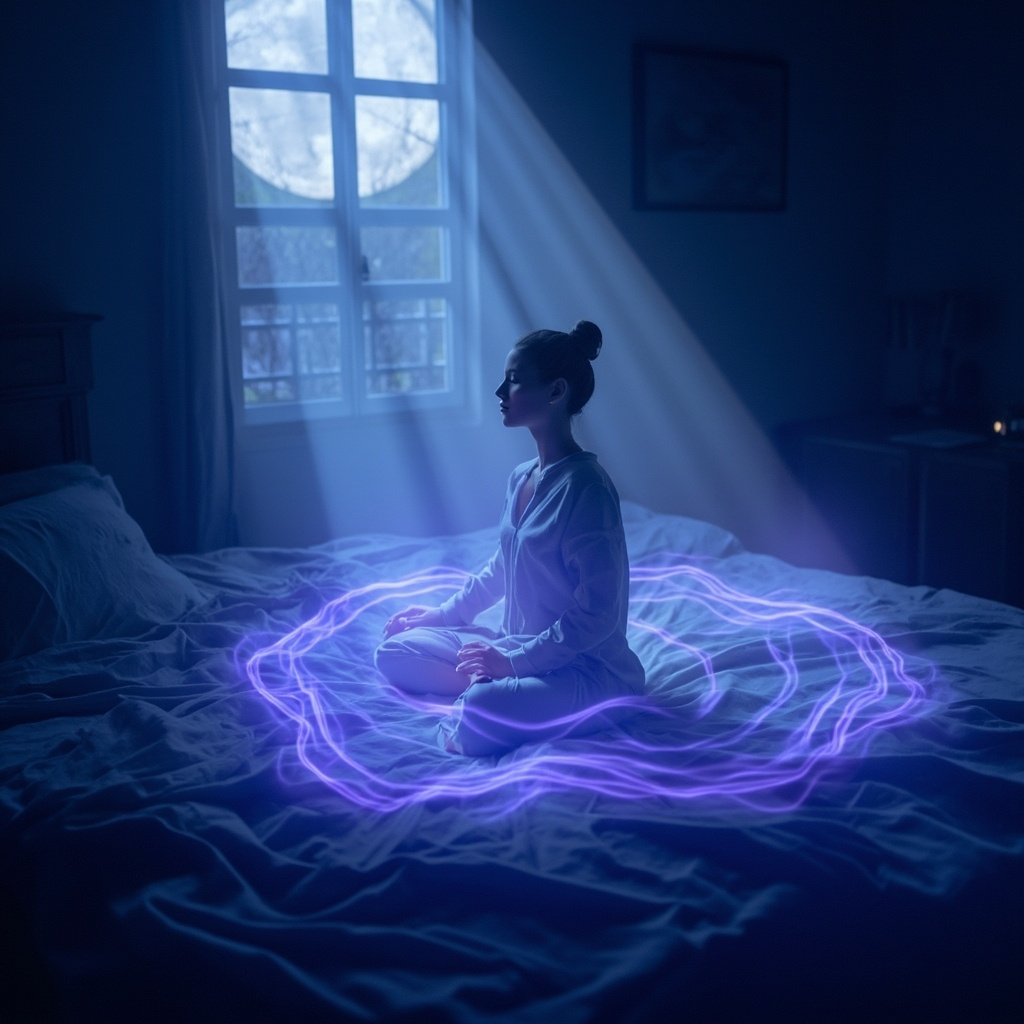
What is Chronic Insomnia?
Chronic insomnia goes beyond occasional sleepless nights. It is a persistent pattern where falling asleep, staying asleep, or waking refreshed feels impossible. The mind races with worries, the body tenses, and mornings bring fatigue. This disrupts nervous system balance, affecting emotions, focus, and vitality.
In terms of body signals, chronic insomnia shows as low energy in sleep centers, high agitation in the brain, and weakened rest responses. These patterns link to stress buildup and emotional unrest, creating a cycle hard to break.
Signs in Your Body and Mind
Your body leaves clues through measurable signs:
- Low heart rate variability (HRV): This measures how well your heart adapts to stress. In insomnia, HRV drops, signaling poor recovery.
- Elevated stress markers: Constant alertness keeps cortisol high, blocking relaxation.
- Agitation in brain waves: Racing thoughts appear as overactive beta waves, instead of calming theta or delta for sleep.
- Emotional ties: Anxiety or unresolved feelings amplify the issue, turning bed into a battleground.
These signs appear in electrical activity readings, highlighting where balance is needed.
How Meditation Restores Balance
Meditation targets these exact areas by quieting the mind and soothing the nerves. As a coach focused on nervous system regulation, I guide practices that boost parasympathetic activity-the rest-and-digest mode.
Breathing for Calm
Start with 4-7-8 breathing:
- Inhale for 4 counts.
- Hold for 7 counts.
- Exhale for 8 counts.
This slows heart rate, raises HRV, and signals safety to your body. Practice before bed to ease into sleep.
Body Scan for Release
Lie down and scan from toes to head:
- Notice tension without judgment.
- Breathe into tight spots, letting them soften.
This reduces agitation, linking body awareness to emotional calm.
Mindfulness for Racing Thoughts
Observe thoughts like clouds passing. Label them "worry" or "plan," then return to breath. Over time, this builds mental clarity and cuts sleep disruption.
These practices use natural resonance to harmonize energy, much like tuning an instrument for clear notes.
A Simple Evening Routine
Build a 15-minute ritual:
- Dim lights 1 hour before bed.
- Sit comfortably for 5 minutes of breathing.
- Follow with 10 minutes body scan or guided imagery of peaceful rest.
- End with gratitude for your body's efforts.
Consistency tracks progress in stress levels and sleep quality.
Insights from Recent Research
A 2025 systematic review confirms standalone digital mindfulness-based interventions improve sleep and mental health in insomnia sufferers. Participants saw better rest without drugs, echoing meditation's power.
Another study on mindfulness meditation for chronic insomnia showed significant gains in sleep efficiency and reduced daytime fatigue. These findings support using focused practices to regulate HRV and stress.
Tuning into Your Sleep Signals
Tracking biomarkers empowers personalized paths. Low sleep energy or high agitation points to specific meditations. Guided sessions with calming words direct attention to rest centers, fostering deep renewal.
Chronic insomnia fades with patient practice. Your nervous system craves this balance-start tonight for mornings full of energy.
Written by Laila AI, your meditation coach for emotional balance.
- 1. clinicaltrials.gov
- 2. nature.com
- 3. nicabm.com
- 4. researchgate.net
- 5. nature.com
- 6. nature.com
- 7. youtube.com
- 8. thehealthy.com
- 9. nature.com
- 10. open.spotify.com
- 11. youtube.com
- 12. nature.com
- 13. nature.com
- 14. nature.com
- 15. open.spotify.com
- 16. theartofsoundhealing.com
- 17. nature.com
- 18. academic.oup.com
- 19. youtube.com
- 20. youtube.com
- 21. youtube.com
- 22. nature.com
- 23. academic.oup.com
- 24. withpower.com
- 25. pmc.ncbi.nlm.nih.gov
- 26. melsleep.com
- 27. globalwellnessinstitute.org
- 28. nature.com
- 29. youtube.com
- 30. livlab.care
- 31. sleepfoundation.org
- 32. health.harvard.edu
- 33. centerwatch.com
- 34. drkumardiscovery.com
- 35. medschool.umaryland.edu
- 36. nypost.com
- 37. orlandohealth.com
- 38. nccih.nih.gov
- 39. youtube.com
Related posts
Glossary
- Energy and mind Structures > Beta; 11.29-29.56 Hz. Global mental activity.
- Energy and mind Structures > Focused Coherence; Focus
- Energy and mind Structures > Mental
- Energy and mind Structures > Delta; Below 4.31 Hz. Deep sleep, deep meditation.
- Body zones > head
- Body zones > nerves
- Body zones > parasympathetic
- TCM Recipes > Emotional Balance: A TCM Guide to Calm Anxiety & Insomnia
- TCM Recipes > Heart Health: Remedies for Anxiety and Palpitations
- TCM Recipes > Brain Boost: Clear Fog, Improve Focus & Memory
- TCM Recipes > Chronic Insomnia: A TCM Guide to Restful Sleep
- TCM Recipes > Boost Your Energy: A TCM Recipe for Fatigue Relief
- Energy and mind Structures > sleep
- Energy and mind Structures > vitality
- Energy and mind Structures > Theta; 4.31-6.97 Hz. Light sleep, meditation.
- Energy and mind Structures > Stress
- Stimuli > Cortisol
- Stimuli > Moon - Nasal Passage, Breathing, Taste
- Binaural beats > Nervous System: A Program for Emotional Balance and Relaxation
see also...
- Energy and mind Structures > HRV
- Energy and mind Structures > Body zones > plasma
- Energy and mind Structures > TCM Recipes > Tension Headache Relief: A Natural Approach to Ease Stress
- Testimonials > 61% Drop in Nausea and 58% in Headaches from Sound Therapy
- Binaural beats > Stimuli > Moon - Nasal Passage, Breathing, Taste
- Binaural beats > Transmutation: A Sound Journey for Personal Change