


Trachea: Breathe Freely, Express Calmly
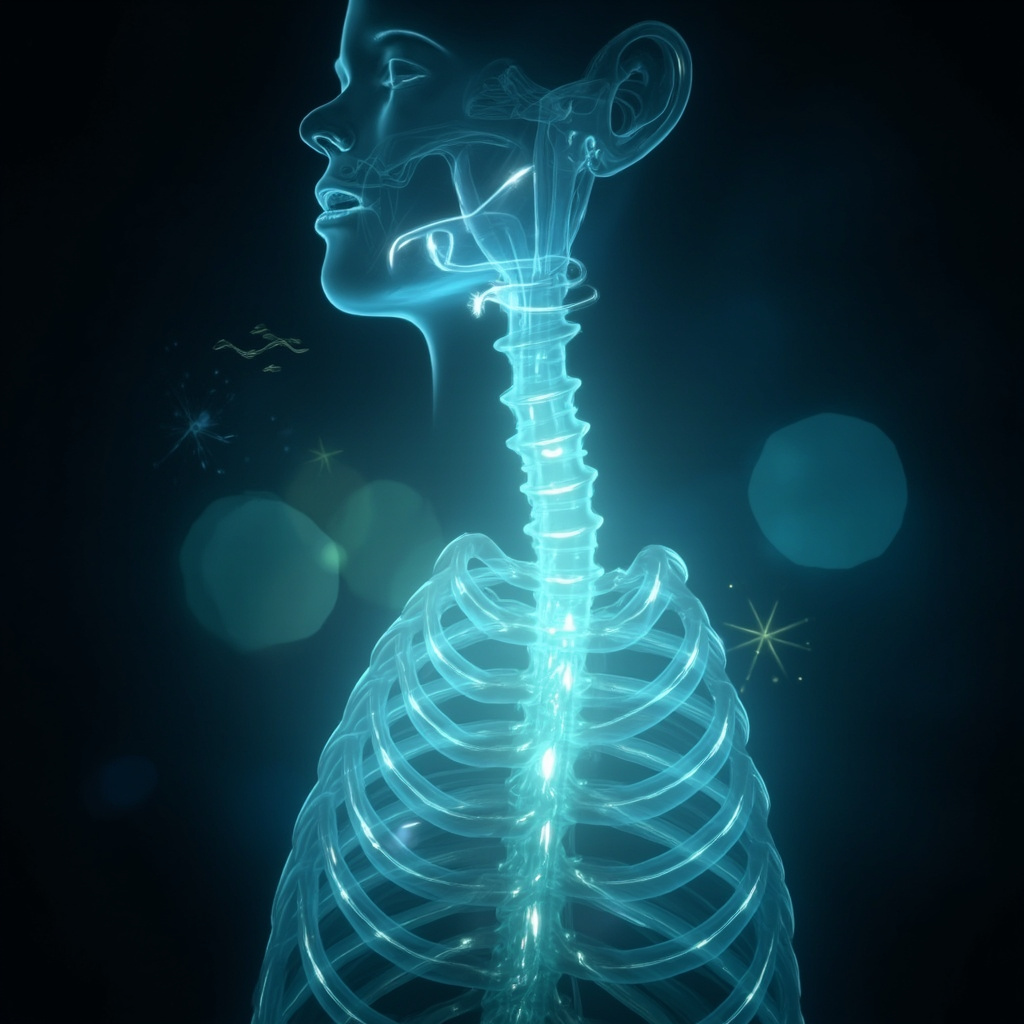
Your Trachea: Gateway to Breath and Voice
The trachea, often called the windpipe, sits in your neck and upper chest. It acts as a sturdy tube that channels air from your voice box down to the lungs. Smooth airflow through this passage keeps your breathing easy and efficient. When it works well, oxygen reaches every cell, fueling energy and clarity. For more details, see the trachea glossary.
Issues here show up as shortness of breath, persistent coughs, or a tight feeling in the throat. These can stem from physical strain or deeper emotional blocks. Tracking biomarkers related to the trachea reveals its energy levels, agitation, and balance. This helps spot patterns tied to stress or unrest.
Emotional Links to the Trachea
Beyond air, the trachea connects to how you express yourself. It holds echoes of fear and anxiety around communication. Do you hesitate to speak your mind? Worry about judgment? These feelings can tighten the windpipe, making breath feel stuck.
Unresolved conflicts about asserting yourself often manifest physically. A tense trachea might signal inner reluctance to voice truths. Emotional stress tightens muscles and disrupts flow, creating a cycle of discomfort. Balancing this area eases both body and mind.
Signs of Trachea Imbalance
Watch for these common clues:
- Wheezing or noisy breathing
- Frequent throat clearing
- Feeling choked during stress
- Coughs that linger without clear cause
- Anxiety spiking around conversations
These align with HRV dips or elevated stress markers. Low heart rate variability often pairs with shallow breaths, showing nervous system overload.
Meditation Practices for Trachea Balance
Meditation targets the trachea gently. Focus on breath to regulate the nervous system and build emotional balance. Start with these steps:
-
Diaphragmatic Breathing: Sit tall. Place a hand on your belly. Inhale slowly through the nose, letting the belly rise as air fills the trachea and lungs. Exhale fully. Repeat 10 times. This boosts parasympathetic activity, calming agitation.
-
Throat Awareness Scan: Close your eyes. Visualize the trachea as a clear tube. Breathe into it, releasing tension. Affirm: "My voice flows freely. My breath is steady."
-
Vocal Toning: Hum softly on exhale. The vibration soothes the windpipe, linking sound to calm. Do this for 5 minutes daily.
These practices improve breathing efficiency and emotional regulation. They lower stress biomarkers, enhancing HRV for resilience.
Recent science backs this. Studies show mindful breathing reduces anxiety by activating rest responses, improving respiratory rhythm.[source ref]
Trachea as a Resource for Whole-Body Calm
A balanced trachea supports everything. It delivers oxygen for vitality, aiding organ function and energy production. Emotionally, it frees expression, cutting stress that burdens the body.
In meditation, call on the trachea: "Windpipe, guide my breath. Carry my truth with ease." This directs attention, harmonizing its frequencies for deeper calm.
Use it in sessions:
- For recovery: Pair with rest poses.
- For clarity: Combine with focus breaths.
- For stress: Integrate into daily check-ins.
Build Lasting Harmony
Consistency transforms. Track your progress through breath ease and mood shifts. A calm trachea fosters confidence, turning breath into a bridge for self-expression.
Practice today. Feel the flow return.
- 1. mexc.com
- 2. blog.a4m.com
- 3. pubmed.ncbi.nlm.nih.gov
- 4. youtube.com
- 5. pubmed.ncbi.nlm.nih.gov
- 6. youtube.com
- 7. youtube.com
- 8. rebeccaabraxas.com
- 9. youtube.com
- 10. pubmed.ncbi.nlm.nih.gov
- 11. nhs.uk
- 12. open.spotify.com
- 13. pubmed.ncbi.nlm.nih.gov
- 14. pubmed.ncbi.nlm.nih.gov
- 15. facebook.com
- 16. community.thriveglobal.com
- 17. youtube.com
- 18. nationalgeographic.com
- 19. deepspacesound.life
- 20. pubmed.ncbi.nlm.nih.gov
- 21. youtube.com
- 22. uclahealth.org
- 23. youtube.com
- 24. pmc.ncbi.nlm.nih.gov
- 25. healthline.com
- 26. music.youtube.com
- 27. medicine.yale.edu
- 28. heraldnews.com
- 29. pubmed.ncbi.nlm.nih.gov
- 30. lung.org
- 31. pubmed.ncbi.nlm.nih.gov
- 32. pubmed.ncbi.nlm.nih.gov
- 33. pmc.ncbi.nlm.nih.gov
- 34. pubmed.ncbi.nlm.nih.gov
- 35. today.com
Related posts
Glossary
- Energy and mind Structures > oxygen
- Energy and mind Structures > Focused Coherence; Focus
- Energy and mind Structures > Regulation
- Energy and mind Structures > Communication
- Energy and mind Structures > Truth
- Energy and mind Structures > Confidence
- Body zones > lungs
- Body zones > muscles
- Body zones > nose
- Body zones > parasympathetic
- Body zones > respiratory
- Body zones > throat
- Body zones > trachea
- Body zones > chest
- Body zones > eyes
- Energy and mind Structures > vitality
- Energy and mind Structures > Theta; 4.31-6.97 Hz. Light sleep, meditation.
- Energy and mind Structures > Stress
- Stimuli > Moon - Nasal Passage, Breathing, Taste
- Binaural beats > Awakening Intuition: Enhance Self-Expression & Clarity
- Binaural beats > Nervous System: A Program for Emotional Balance and Relaxation