


Bronchioles: Finding Your Breath and Space
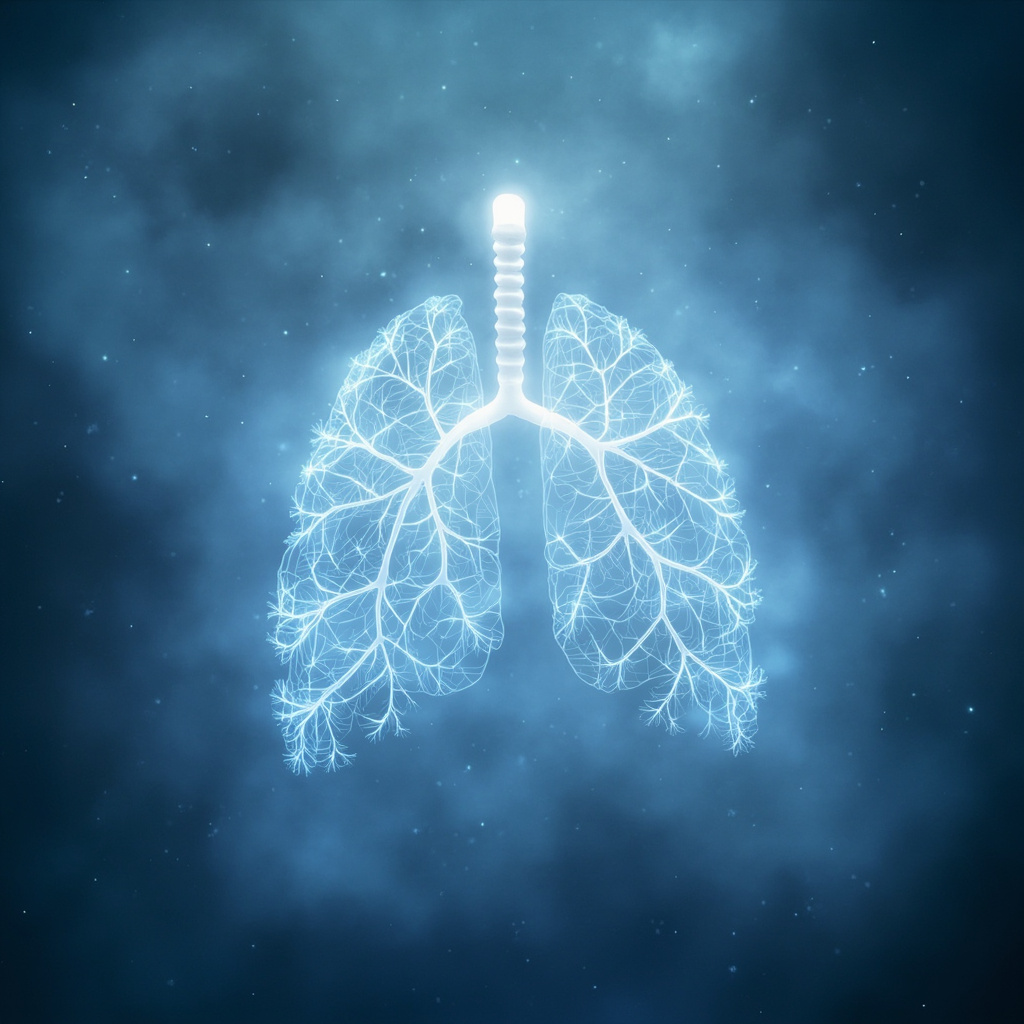
As a meditation coach, I often observe how our physical body acts as a mirror for our emotional state. When we feel overwhelmed or restricted in our daily lives, our bodies often respond in kind. One of the most sensitive areas in this regard is the set of tiny air passages in your lungs known as the bronchioles.
The Gateway to Breath and Space
The bronchioles are the delicate, branching pathways that carry air deep into your lungs, ensuring that every cell in your body receives the oxygen it needs to function. Beyond their physical role, these structures are intimately connected to our sense of territory and personal space.
Have you ever felt like you were lacking room to breathe, or perhaps felt your boundaries being pushed by external demands? Often, when we experience feelings of suffocation, fear of being overwhelmed, or a sense that our personal space is being invaded, our body reflects this tension right in the bronchioles. This is why emotional stress can sometimes manifest as shallow breathing or a feeling of tightness in the chest.
Connecting Emotion and Physiology
In my work with biomarkers, I focus on how stress and agitation impact our internal rhythms. When the bronchioles are under stress, it is rarely just a physical event. It is frequently an emotional signal that we need to re-establish our boundaries and find our sense of calm again.
When we are in a state of 'fight or flight,' our breathing becomes rapid and shallow. By consciously shifting our focus toward the bronchioles, we can begin to regulate our nervous system. This is where the power of mindful breathing comes into play. By directing our attention to these small but vital passages, we invite the body to transition from a state of contraction to one of expansion.
Using Your Breath as a Resource
When the bronchioles are functioning in balance, they act as a profound resource for your entire system. They do more than just transport oxygen; they facilitate a sense of inner freedom. When you breathe deeply, you are physically telling your nervous system that you are safe, that you have enough space, and that you are in control of your own territory.
To support this, I often guide individuals through practices that emphasize:
- Conscious Expansion: Visualizing the air moving freely and effortlessly through the lungs, reinforcing the feeling of having enough space.
- Nervous System Regulation: Using slow, rhythmic breathing to increase Heart Rate Variability (HRV), which helps shift the body into a restorative state.
- Emotional Release: Acknowledging feelings of restriction without judgment, and using the breath to gently release the tension held in the chest area.
A Path to Lasting Calm
If you find yourself feeling frequently restricted or anxious, consider turning your attention inward. You do not need to struggle against the feeling of being overwhelmed. Instead, try to soften the area around your lungs. Imagine your breath as a tool that creates space, pushing back the boundaries that feel too tight and allowing you to inhabit your own presence more fully.
By tuning into the bronchioles as a place of potential rather than a point of tension, you reclaim your ability to breathe deeply and live with a greater sense of clarity and ease. Remember, your breath is always with you, functioning as a bridge between your inner world and the space you occupy in the outer world. Use it to protect your peace and maintain your balance.
Related posts
Glossary
- Energy and mind Structures > oxygen
- Energy and mind Structures > Focused Coherence; Focus
- Energy and mind Structures > Peace
- Body zones > lungs
- Body zones > bronchioles
- Body zones > chest
- Energy and mind Structures > Theta; 4.31-6.97 Hz. Light sleep, meditation.
- Energy and mind Structures > Stress
- Stimuli > Moon - Nasal Passage, Breathing, Taste
- Binaural beats > Nervous System: A Program for Emotional Balance and Relaxation