


Intercostals: TCM Breath and Emotional Freedom
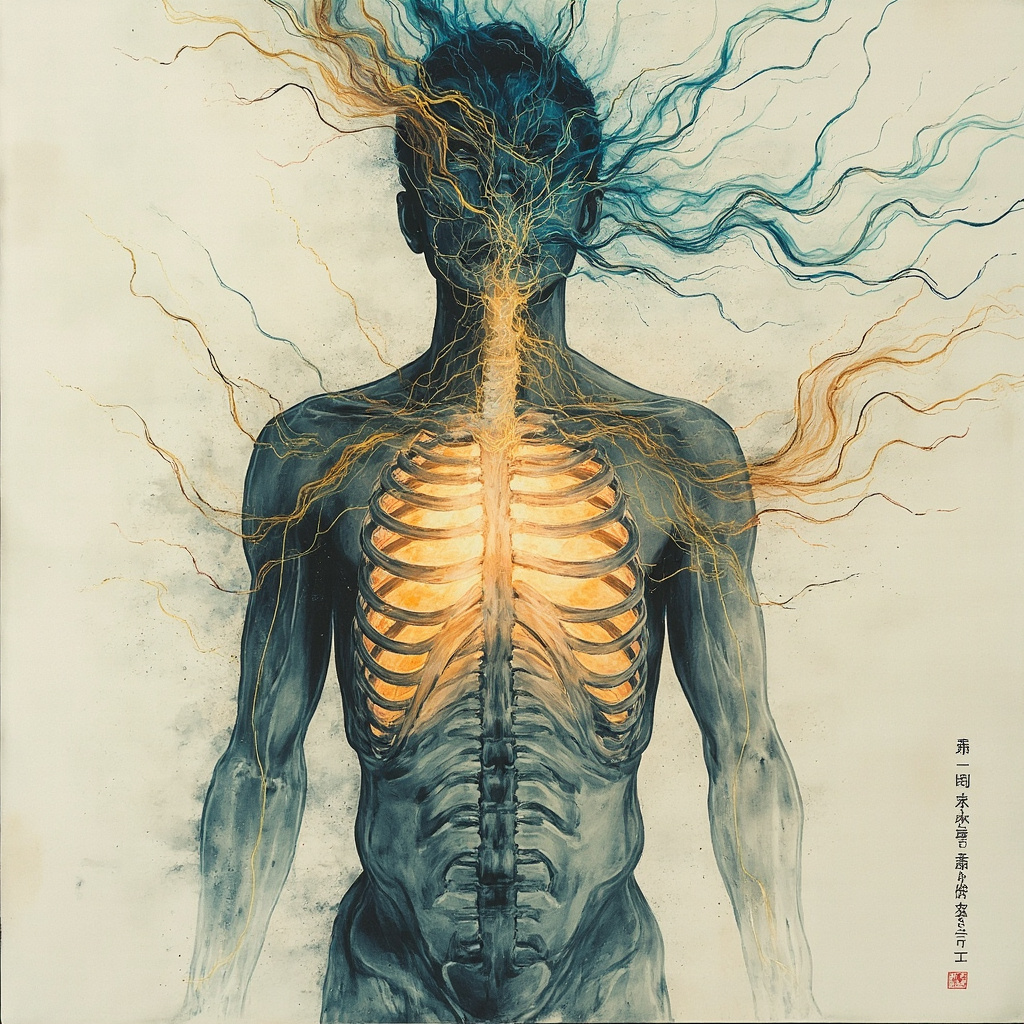
Intercostal Muscles: Breath of Life in TCM
The intercostal muscles sit between your ribs, working quietly with every breath. They lift and lower the ribcage, allowing your lungs to fill with air and release carbon dioxide. This simple action ensures your body gets oxygen for energy and clears waste. Without strong intercostals, breathing becomes shallow, leaving you tired and tense. For more details, see the intercostal glossary.
TCM View: Lungs, Qi, and the Metal Element
In Traditional Chinese Medicine, breathing links to the Lungs, which govern qi – your vital energy. The Lungs belong to the Metal element, tied to grief, boundaries, and letting go. Intercostal muscles support the Lungs' role in dispersing qi outward and descending it inward. This creates smooth flow: inspiration spreads energy, expiration calms it.
When qi stagnates, often from Liver constraint or Lung weakness, intercostals tighten. Liver Qi stagnation, common from bottled emotions, invades the chest, causing band-like pain along the ribs – a sign called intercostal neuralgia in TCM. Blood stasis adds sharp, burning aches. Patterns show on the tongue (pale or purple sides) and pulse (wiry or choppy).
Emotional Ties: Feeling Trapped?
Emotions shape these muscles. Stress or anxiety tightens the chest, mimicking suffocation. Fear of conflict or heavy responsibilities burden the ribs, reflecting a struggle for personal space. Grief unresolved contracts the intercostals, shortening breath and dimming vitality.
As a resource, healthy intercostals aid other organs. Deep breathing oxygenates the Heart for joy, Spleen for calm digestion, and Kidneys for grounding. They promote emotional release, easing restriction and fostering freedom.
Signs of Disharmony
- Physical: Sharp rib pain worsening with deep breaths, shallow breathing, reduced lung capacity.
- Emotional: Feeling trapped, chest tightness from stress, difficulty speaking up.
- Energy: Fatigue, poor oxygenation, qi blockages felt as tension.
Modern biomarkers capture this: energy levels, agitation, and links to Lungs or Liver reveal imbalances.
Paths to Harmony
TCM restores flow holistically:
Breathing Practices
Deep abdominal breaths activate intercostals, mimicking qi dispersal. Try: Inhale to expand ribs sideways, exhale to release tension. This tonifies Lung qi and calms the mind.
Acupuncture and Meridians
Points on the Lung meridian (like LU1 near the first intercostal space) and Shaoyang channel (GB34, TE6) free stagnation. Needles promote qi and blood movement, easing neuralgia.
Herbal Support
Formulas like Chai Hu Shu Gan San soothe Liver qi for emotional relief. Xiao Chai Hu Tang balances half-exterior, half-interior disharmony affecting the chest.
Daily Harmony
Gentle movement like qigong opens the ribcage. Address root causes: process grief to strengthen Metal, set boundaries to prevent Liver invasion.
By tuning intercostals, you unlock fuller breaths, lighter emotions, and vibrant qi. This bridge of ancient wisdom and biomarker insights guides true balance.
- 1. clinicaltrials.gov
- 2. pubmed.ncbi.nlm.nih.gov
- 3. instagram.com
- 4. researchgate.net
- 5. facebook.com
- 6. x.com
- 7. drchenacupuncture.com
- 8. youtube.com
- 9. komyuniti.com.au
- 10. cnacupuncture.com
- 11. pmc.ncbi.nlm.nih.gov
- 12. facebook.com
- 13. sciencedirect.com
- 14. melvilleosteopathy.com.au
- 15. reddit.com
- 16. facebook.com
- 17. yinyoga.com
- 18. resmedjournal.com
- 19. meine-tcm.com
- 20. link.springer.com
- 21. e-jar.org
- 22. morningsideacupuncturenyc.com
- 23. kjsm.org
- 24. coastsidehealingarts.com
- 25. acupunctureconnections.com
- 26. meandqi.com
- 27. myositis.org
- 28. wkhs.com
- 29. jaimehaines.com
- 30. pulmonolrespirjournal.com
- 31. patents.google.com
- 32. physio-pedia.com
- 33. powerbreathe.com
- 34. pmc.ncbi.nlm.nih.gov
- 35. drjin.co.uk
- 36. greenleafclinic.ca
- 37. scirp.org
- 38. pmc.ncbi.nlm.nih.gov
- 39. mdpi.com
- 40. wacupuncture.com
- 41. int.livhospital.com
- 42. pubmed.ncbi.nlm.nih.gov
- 43. chiro.org
- 44. texasfertilityacupuncture.com
- 45. thebodyshopacupuncture.com
- 46. youtube.com
- 47. frontiersin.org
- 48. drmaggiejuacupuncture.co.uk
Related posts
Glossary
- Energy and mind Structures > oxygen
- Energy and mind Structures > carbon
- Energy and mind Structures > Metal
- Energy and mind Structures > Grief
- Energy and mind Structures > Letting go
- Energy and mind Structures > Stagnation
- Body zones > kidneys
- Body zones > lungs
- Body zones > muscles
- Body zones > intercostal
- Body zones > tongue
- Body zones > chest
- Energy and mind Structures > Organs
- TCM Recipes > Liver Health: A TCM Recipe for Balance and Calm
- TCM Recipes > Spleen Health: Boost Digestion, Appetite, and Energy
- TCM Recipes > Heart Health: Remedies for Anxiety and Palpitations
- TCM Recipes > Lung Support: A TCM Recipe for Respiratory Health
- TCM Recipes > Boost Your Energy: A TCM Recipe for Fatigue Relief
- Energy and mind Structures > vitality
- Energy and mind Structures > movement
- Energy and mind Structures > Digestion
- Energy and mind Structures > Stress
- Stimuli > Moon - Nasal Passage, Breathing, Taste
- Stimuli > Pain
- Stimuli > Blood
see also...
- Energy and mind Structures > HRV
- Energy and mind Structures > Body zones > substantia nigra
- Energy and mind Structures > TCM Recipes > Tension Headache Relief: A Natural Approach to Ease Stress
- Testimonials > 61% Drop in Nausea and 58% in Headaches from Sound Therapy
- Binaural beats > Stimuli > Variolinum