


Why Does Your Lower Back Ache? The Hidden L2 Vertebra Link
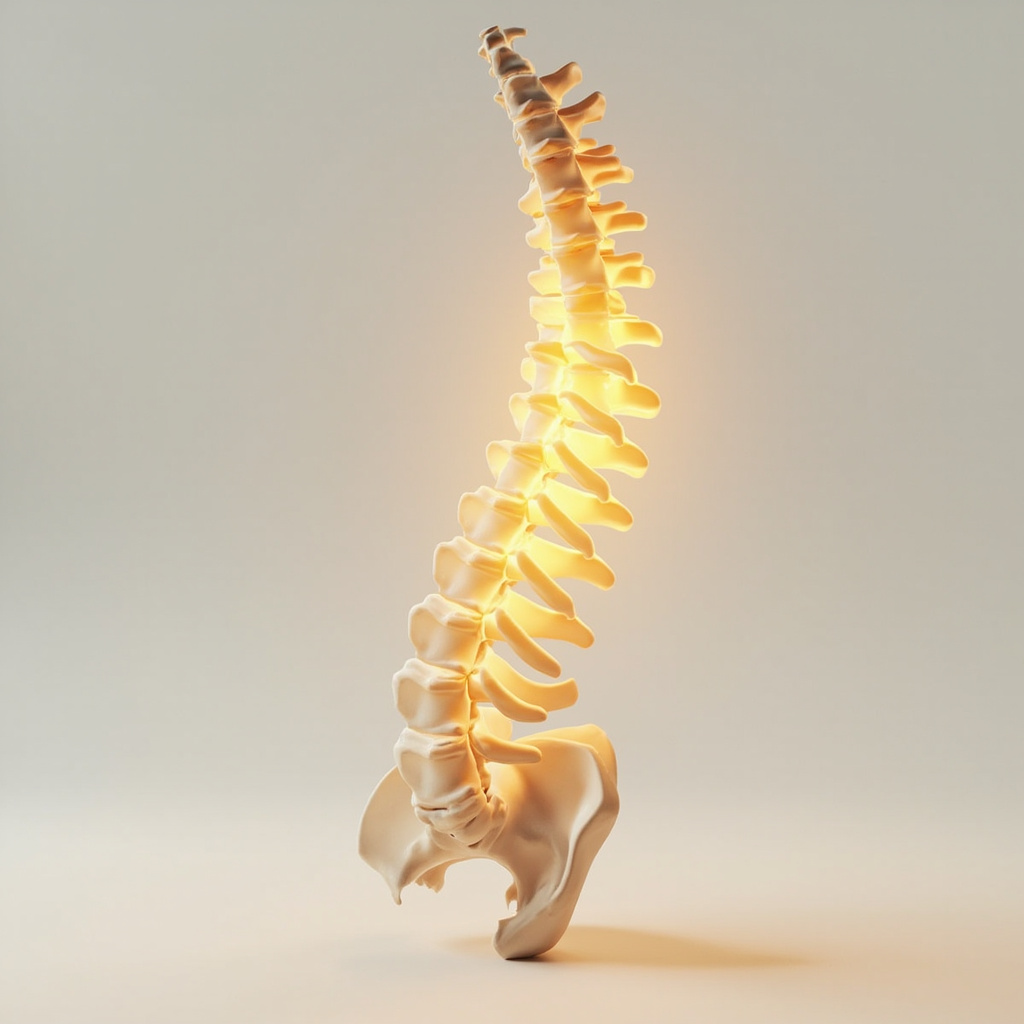
Is Your Lower Back Pain Really Just About Your Muscles?
If you have been dealing with a nagging ache in your lower back, you have likely tried everything. You have stretched, you have visited massage therapists, and you have perhaps even invested in ergonomic chairs or specialized pillows. Yet, the tightness returns. It feels like a constant, low-level weight that drags down your energy and limits your movement. You might have been told it is just poor posture or simple muscle fatigue, but what if the true source is deeper?
Many people struggle with this exact cycle. You feel stiff, you try to fix it, you feel temporary relief, and then the stiffness creeps back in. This is not because you are doing anything wrong. It is simply because most traditional approaches focus on the surface, ignoring the structural and energetic foundations of the spine.
The Hidden Role of the L2 Vertebra
In the world of fitness and structural health, we often overlook the specific vertebrae that act as the pillars of our body. The L2 vertebra, located in the mid-to-lower lumbar region, is a critical junction. It does not just hold weight; it is a hub for nerve pathways and energy flow that dictate how your lower body feels and functions. When this area is compromised, your body often compensates by tightening the surrounding muscles, creating that persistent, locked-up sensation.
Beyond the physical, there is an emotional layer. We see in practice that the L2 vertebra is frequently connected to feelings of instability, insecurity, and a deep-seated fear of lacking resources. When you are under chronic stress, your body often reflects this tension in the lumbar spine. If you feel unsupported in your daily life, your body may be physically manifesting that lack of support through your L2.
Why Traditional Methods Often Fall Short
Most recovery routines focus on broad muscle groups. While movement is essential, targeting the muscles without addressing the specific structural and energetic resonance of the L2 vertebra is like trying to fix a flickering light by changing the bulb when the wiring in the wall is loose. To truly find relief, we must look at the body as an integrated system of electrical activity, structure, and emotion.
Restoring Balance with BioCoherence
At BioCoherence, we approach this differently. Instead of guessing, we use an ECG Sensor to record your body's electrical activity. This allows us to compute over 1500 biomarkers, identifying exactly where your energy is blocked or where your structure needs support.
When the L2 vertebra is identified as a priority, we use our specialized tools to bring it back into harmony:
- Harmonic Boosts: These use targeted audio frequencies to help the L2 structure resonate at its optimal frequency. By providing these specific stimuli, we guide the body toward better stability and structural integrity.
- Personal Guide: This 21-day program uses your unique biomarker data to provide daily meditations and text-based insights. It helps you address the emotional connections to your lower back pain, such as feelings of instability or lack of support, effectively calming the nervous system.
- Harmonizer: By using micro-currents tuned to your specific needs, we can provide direct physical support to the lumbar region, helping to release tension that traditional stretching simply cannot reach.
By integrating these methods, you are not just masking the pain; you are providing your body with the exact information it needs to self-repair. Many of our users report that after focusing on their specific structural priorities, they feel a significant increase in mobility and a reduction in that chronic, heavy sensation in their lower back. You can learn more about how this works by visiting our L2 resource page.
Related posts
Glossary
- Energy and mind Structures > Focused Coherence; Focus
- Energy and mind Structures > Structure
- Energy and mind Structures > Sensation
- Body zones > muscles
- Body zones > L2
- Body zones > Vertebrae
- Energy and mind Structures > movement
- Energy and mind Structures > Stress
- Stimuli > Pain
- Binaural beats > Nervous System: A Program for Emotional Balance and Relaxation
- Stimuli > Harmony