


Sympathetic Overdrive: Tired After Sleep?
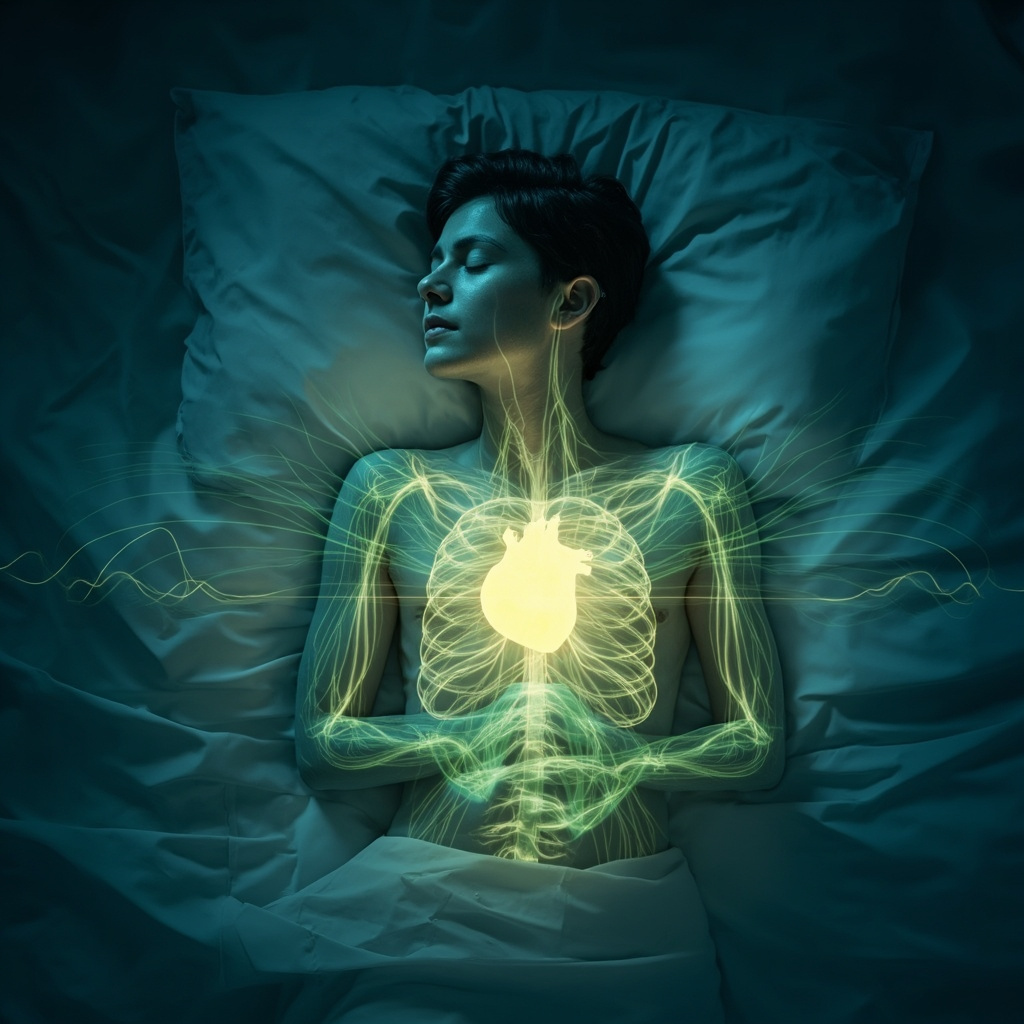
Feel Seen: The Exhaustion That Follows a Full Night's Sleep
You go to bed early, aim for eight hours, and wake up feeling like you never rested. Your body aches, your mind races, and that midday crash hits hard. Maybe you toss and turn, or you sleep straight through but still drag yourself out of bed. Fatigue after sleep is more common than you think, affecting millions who chase better rest without finding it.
This isn't just 'poor sleep hygiene.' It's a deeper issue where your body stays wired, even in slumber. Heart rate variability (HRV) stays low, cortisol lingers high, and true recovery slips away.
You've Tried It All, Yet the Tiredness Lingers
Magnesium supplements, blue-light blockers, herbal teas, even melatonin-nothing sticks. You track steps, cut caffeine, follow bedtime routines from apps and books. Friends swear by weighted blankets or white noise machines, but your mornings remain foggy.
These fixes help surface symptoms but miss the root. You've built trust in trial-and-error, yet the cycle repeats. What if the problem hides in plain sight, beyond habits?
A New Perspective: Meet Your Sympathetic Nervous System
Your sympathetic nervous system is your body's alarm system. It ramps up for danger: heart pounds, blood rushes to muscles, energy surges. Great for sprints or deadlines, but problematic when it won't downshift.
At night, it should yield to the parasympathetic side-rest, digest, repair. Instead, sympathetic dominance keeps you in low-level alert. Sleep becomes shallow; restoration fails. Wake tired? This could be why.
Curious? The real cause often ties to unseen stressors, from daily pressures to hidden imbalances in circadian rhythms.
Understanding the Mechanism: Why Sleep Fails to Recharge You
During deep sleep, your body rebuilds. Tissues heal, hormones balance, brain clears toxins. But sympathetic overdrive disrupts this.
HRV, the variation in heartbeat intervals, drops. High HRV signals parasympathetic calm; low means sympathetic grip. Studies link low nighttime HRV to next-day fatigue.
Cortisol, your stress hormone, should dip at night. Sympathetic activity keeps it elevated, mimicking constant threat. Result: fragmented sleep stages, poor energy restoration.
Why Past Efforts Fell Short
Pills and routines target symptoms, not the switchboard: your autonomic nervous system. Supplements can't flip sympathetic off if daily life reignites it. No blame-you lacked the full picture.
Evidence from Research
A 2022 review in the American Journal of Physiology showed sympathetic overactivity across sleep disorders like insomnia and deprivation worsens cardiovascular strain and fatigue.
In chronic fatigue, sympathetic 'fight-or-flight' dominates, blocking recovery-even after eight hours.
2024-2026 studies confirm: insomnia ties to HRV drops from sympathetic bias; regulating it improves sleep quality.
The Urgency: What Happens If Unchecked?
Chronic sympathetic dominance raises heart risks, weakens immunity, fuels anxiety. Fatigue builds; vitality fades. Act now to break the loop before it deepens.
Solution Categories: Beyond Pills and Routines
Generic sleep aids fall short. Consider wearables tracking HRV or therapy recalibrating nerves-but they cost thousands yearly, demand constant monitoring.
Enter frequency-based balancing: non-invasive tools using sound waves and micro-currents to nudge systems toward harmony. Cheaper, home-based, targeted.
How These Work
Frequencies resonate with body structures, like tuning forks calming overactive nerves. Micro-currents mimic natural signals; guided audio shifts mindset.
Anticipation builds: what if a scan revealed your sympathetic state, delivering personalized fixes?
Introducing BioCoherence: Science-Backed Balance
Balance Your Sympathetic System with BioCoherence
BioCoherence scans your body's electrical activity via a simple ECG sensor. It computes 1500+ biomarkers, spotlighting sympathetic energy, agitation, and links.
Sympathetic System Glossary: Your fight-or-flight network. As a resource, it boosts resilience, circulation. When priority, guides calm it.
Three Ways to Restore Sleep
-
Harmonic Boosts: Audio frequencies target sympathetic structures. Post-scan or from Basic Programs library. Structures resonate; stimuli guide toward rest.
-
Personal Guide: 21-day daily meditations, tailored to your biomarkers. Texts invoke sympathetic as ally or soothe as priority. Changes focus inner voyage to recovery.
-
Harmonizer: Micro-currents via device, real-time app-driven. Custom from scan or 10,000+ catalog programs.
Learn more: Tutorials on Balancing cover sensor use, program building.
Expert Insights and Value
Pros use it for clients; sleep coaches like me see HRV rise, cortisol normalize. Costs far less than ongoing therapy-sensor one-time, sessions affordable.
Risk-free: Try Basic Programs free; scans confirm progress.
Real Stories
"After weeks, I slept better, more energy, less fog." - Mike N., USA.
"Quality of sleep improving, less tired." - Raymond, France.
"Customer slept well after years-frequencies worked fast." - TJ's client, USA.
Reclaim restorative sleep. Your sympathetic system, balanced, supports vitality. Start with a scan; feel the shift.
- 1. sciencedirect.com
- 2. pmc.ncbi.nlm.nih.gov
- 3. researchgate.net
- 4. researchgate.net
- 5. iienstitu.com
- 6. healthrising.org
- 7. mdpi.com
- 8. hillarylinmd.com
- 9. sleepdoctor.com
- 10. firststepschiropractic.com
- 11. lonestarneurology.net
- 12. adler-resorts.com
- 13. pmc.ncbi.nlm.nih.gov
- 14. newhopehealthtn.com
- 15. sciencedirect.com
- 16. pubmed.ncbi.nlm.nih.gov
- 17. pubmed.ncbi.nlm.nih.gov
- 18. sleepdoctor.com
- 19. worldsleepsociety.org
- 20. sciencedirect.com
- 21. mdpi.com
- 22. ahajournals.org
- 23. en.wikipedia.org
- 24. pmc.ncbi.nlm.nih.gov
- 25. mdpi.com
- 26. rex.libraries.wsu.edu
- 27. biocoherence.net
- 28. biocoherence.net
- 29. researchgate.net
- 30. nature.com
- 31. biocoherence.net
- 32. facebook.com
- 33. biostrap.com
- 34. biocoherence.net
- 35. frontiersin.org
- 36. biocoherence.eu
- 37. patientsmedical.com
- 38. pmc.ncbi.nlm.nih.gov
- 39. pmc.ncbi.nlm.nih.gov
- 40. journals.physiology.org
- 41. linkedin.com
- 42. pmc.ncbi.nlm.nih.gov
- 43. bu.edu
- 44. biocoherence.eu
- 45. anf.care
- 46. pubmed.ncbi.nlm.nih.gov
- 47. researchgate.net
- 48. pmc.ncbi.nlm.nih.gov
- 49. sciencedirect.com
- 50. healthrising.org
- 51. apa.org
- 52. azchironeuro.com
- 53. sciencedirect.com
- 54. academic.oup.com
- 55. link.springer.com
- 56. biocoherence.net
- 57. ubiehealth.com
Related posts
Glossary
- Energy and mind Structures > Focused Coherence; Focus
- Energy and mind Structures > Exhaustion
- Energy and mind Structures > Immunity
- Body zones > hormones
- Body zones > muscles
- Body zones > nerves
- Body zones > parasympathetic
- Body zones > tissues
- TCM Recipes > Chronic Fatigue Relief: Natural Remedies for Energy
- TCM Recipes > Circulation: Boost Energy and Warm Your Extremities
- TCM Recipes > Heart Health: Remedies for Anxiety and Palpitations
- TCM Recipes > Brain Boost: Clear Fog, Improve Focus & Memory
- TCM Recipes > Boost Your Energy: A TCM Recipe for Fatigue Relief
- Energy and mind Structures > sleep
- Energy and mind Structures > vitality
- Energy and mind Structures > blood pressure
- Energy and mind Structures > toxins
- Energy and mind Structures > VLF; Sympathetic activity
- Energy and mind Structures > Stress
- Stimuli > Cortisol
- Stimuli > AIDS
- Binaural beats > Nervous System: A Program for Emotional Balance and Relaxation
- Stimuli > Apnea
- Stimuli > Harmony
- Stimuli > Blood
see also...
- Energy and mind Structures > HRV
- Energy and mind Structures > Body zones > bones
- Energy and mind Structures > TCM Recipes > Tension Headache Relief: A Natural Approach to Ease Stress
- Testimonials > 61% Drop in Nausea and 58% in Headaches from Sound Therapy
- Binaural beats > Stimuli > Variolinum
- Binaural beats > Transmutation: A Sound Journey for Personal Change