


Body zones
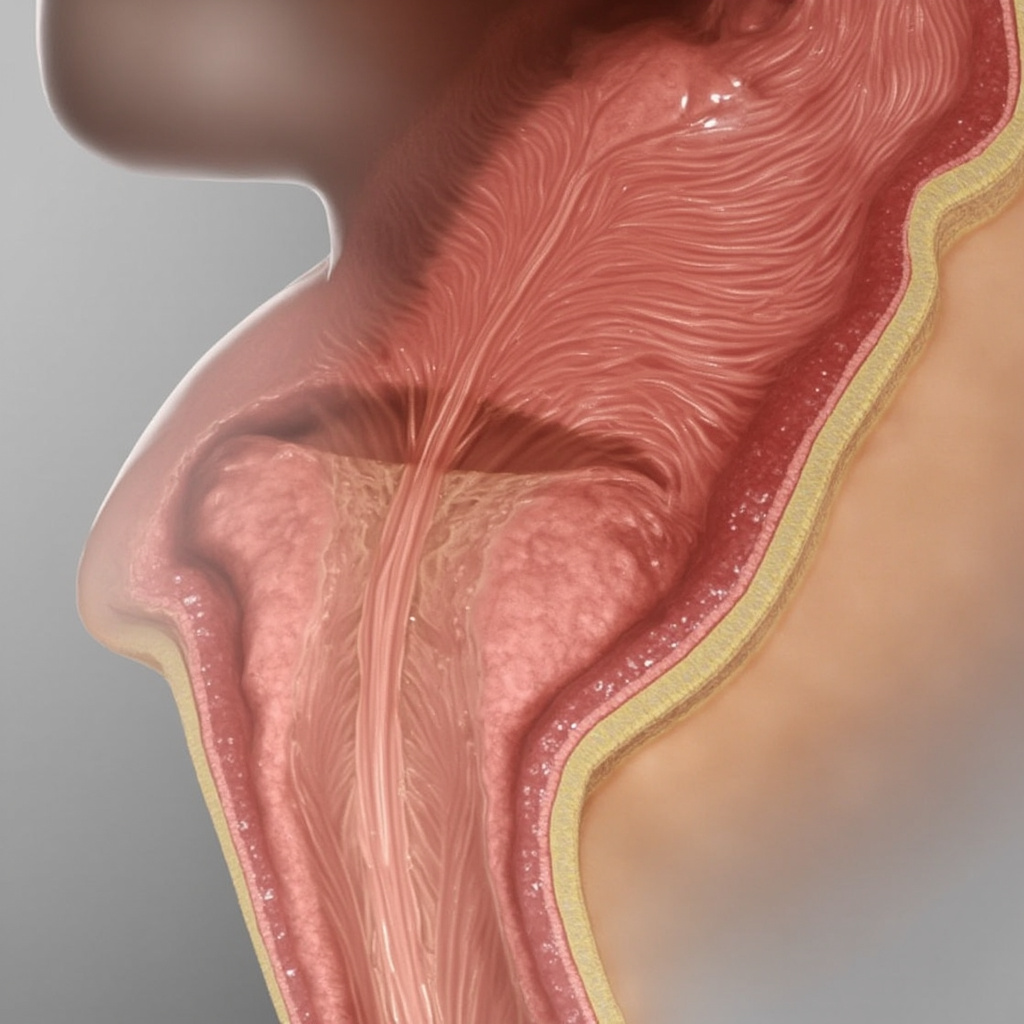
Esophagus: Tube connecting throat to stomach
(digestive.esophagus)The esophagus is a muscular tube located between the throat (pharynx) and the stomach. It functions by contracting rhythmically to propel swallowed food and liquids from the mouth to the stomach. When functioning properly, it ensures efficient and safe passage of ingested materials. Malfunctioning of the esophagus can lead to conditions such as acid reflux, difficulty swallowing (dysphagia), or esophagitis, potentially causing pain, discomfort, and nutritional deficiencies.
The esophagus can help other organs by facilitating the efficient transport of nutrients to the stomach, thus supporting overall digestion and energy supply while also reflecting emotional states that may influence appetite and digestive health.
The esophagus is often linked to emotions and feelings related to difficulty or resistance in accepting and processing situations or experiences. Issues with the esophagus may indicate a struggle with swallowing or digesting certain events or truths, leading to feelings of irritation, frustration, or rejection. This organ's malfunctioning might be connected to unexpressed emotions or the inability to properly communicate one's needs and desires.
The esophagus is a vital muscular conduit that plays a crucial role in the digestive system by transporting food and liquids from the throat to the stomach. It operates through coordinated contractions known as peristalsis, ensuring the smooth passage of ingested materials. A healthy esophagus is integral to overall physical well-being, as it facilitates effective digestion and nutrient absorption, directly influencing energy levels and vitality. Moreover, the esophagus interacts closely with the stomach, pharynx, and nervous system, regulating digestive reflexes and contributing to the body's homeostasis. Emotionally, the esophagus can reflect unresolved feelings or difficulties in communication, as issues in this area may indicate a struggle with accepting or processing experiences. This connection emphasizes the importance of emotional health in maintaining physical well-being; tension or stress can manifest as esophageal discomfort or dysfunction. Thus, nurturing the esophagus through mindful eating and emotional awareness can enhance resilience and foster a sense of balance, ultimately supporting holistic health and energy.
In BioCoherence, find the organ biomarkers and structures in Analyze > Body > Organs maps.
To comment, subscribe to the newsletter and get exclusive BioCoherence offers, please create a free account
Legal page
Website (c) 2026 Coherence Labs; contents (c) their respective authors.
Disclaimer BioCoherence provides both an academic analysis and an energetic and experimental analysis.
The information displayed may or may not be correlated with the physical state of the systems.
Calculations are based on individual measurements and experimental algorithms.
All computed results like energy levels, entropy levels and coherent systems are designed to provide useful information for personal development, not for medical purposes. The usage of all results are under the sole responsibility or the user. In case of doubt, it is important to consult a medical doctor. Please check our EULA before deciding your use of the software.