


Body zones
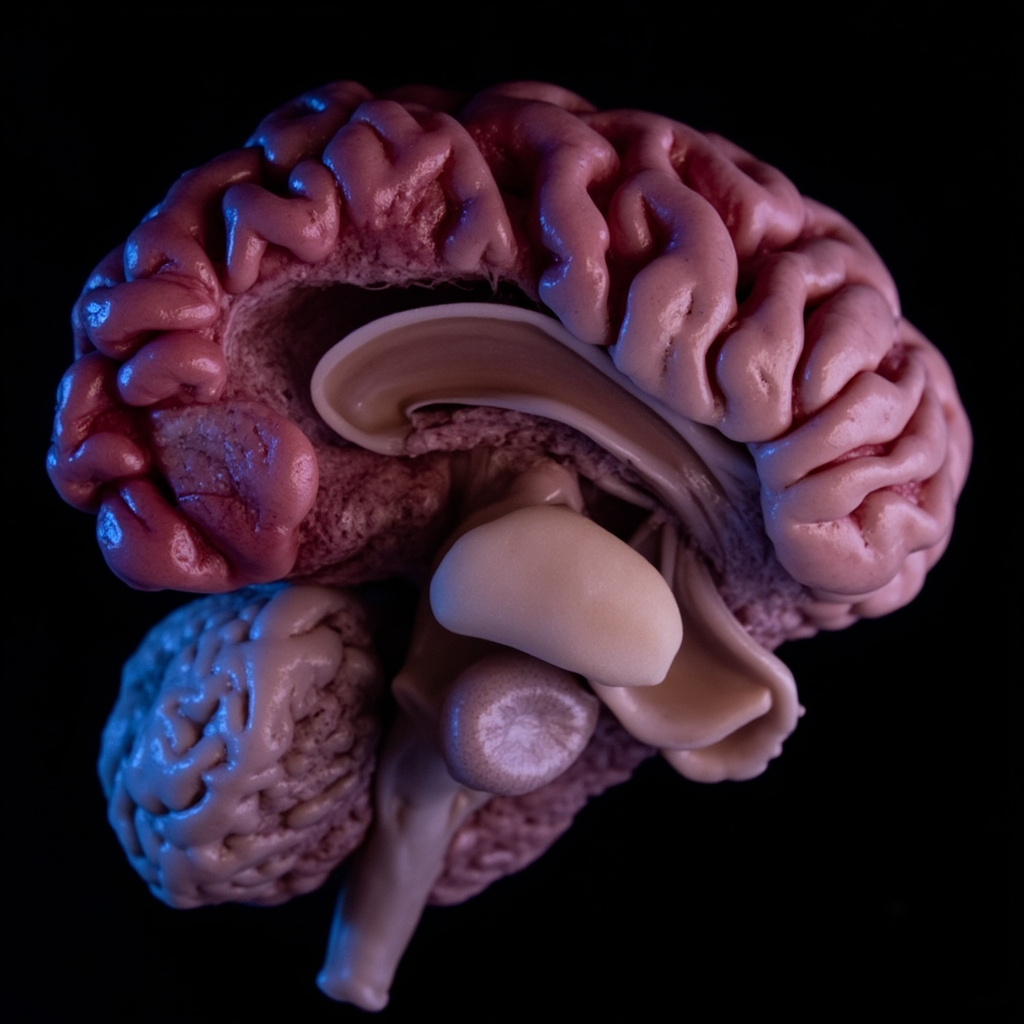
Hindbrain: Lower part of the brain controlling basic functions
(brain.hindbrain)The hindbrain, located at the lower back part of the brain, includes the medulla oblongata, pons, and cerebellum. It is responsible for regulating vital functions such as heart rate, breathing, and coordination of movement. Proper functioning ensures smooth execution of these critical activities. Malfunctioning can lead to severe issues like loss of motor control, difficulty in breathing, or cardiovascular problems.
The hindbrain can help other organs by regulating vital functions, providing essential signals for heart rate and breathing, and maintaining coordination, thus ensuring overall stability and response to physical and emotional stressors.
The hindbrain is associated with survival instincts and basic functions like heartbeat, breathing, and motor skills. Emotional and psychological stress linked to feelings of insecurity, fear for survival, or lack of support can impact its functioning. Such stress can manifest as physical symptoms, potentially causing issues like dizziness, balance problems, or difficulties in coordination. Addressing these emotional roots may help alleviate the physical symptoms.
The hindbrain is a critical structure at the lower back of the brain, comprising the medulla oblongata, pons, and cerebellum. Its primary functions include regulating essential life-sustaining processes such as heart rate, breathing, and motor coordination, which are vital for maintaining overall physical health and energetic vitality. The hindbrain interacts closely with other body systems; for example, it communicates with the autonomic nervous system to modulate responses to stress and emotional stimuli, thereby influencing both physical and mental resilience. Furthermore, the hindbrain plays a key role in processing sensory information, which aids in balance and spatial awareness, directly impacting a person's ability to navigate their environment confidently. Emotionally, the hindbrain is linked to instinctual responses and survival mechanisms, and chronic stress related to feelings of insecurity can disrupt its functions, leading to symptoms like dizziness or coordination difficulties. By fostering a balance in emotional health, one can support the hindbrain's function, promoting energy, vitality, and overall well-being, making it essential for holistic health approaches.
In BioCoherence, find the organ biomarkers and structures in Analyze > Body > Organs maps.
To comment, subscribe to the newsletter and get exclusive BioCoherence offers, please create a free account
Legal page
Website (c) 2026 Coherence Labs; contents (c) their respective authors.
Disclaimer BioCoherence provides both an academic analysis and an energetic and experimental analysis.
The information displayed may or may not be correlated with the physical state of the systems.
Calculations are based on individual measurements and experimental algorithms.
All computed results like energy levels, entropy levels and coherent systems are designed to provide useful information for personal development, not for medical purposes. The usage of all results are under the sole responsibility or the user. In case of doubt, it is important to consult a medical doctor. Please check our EULA before deciding your use of the software.