


Body zones
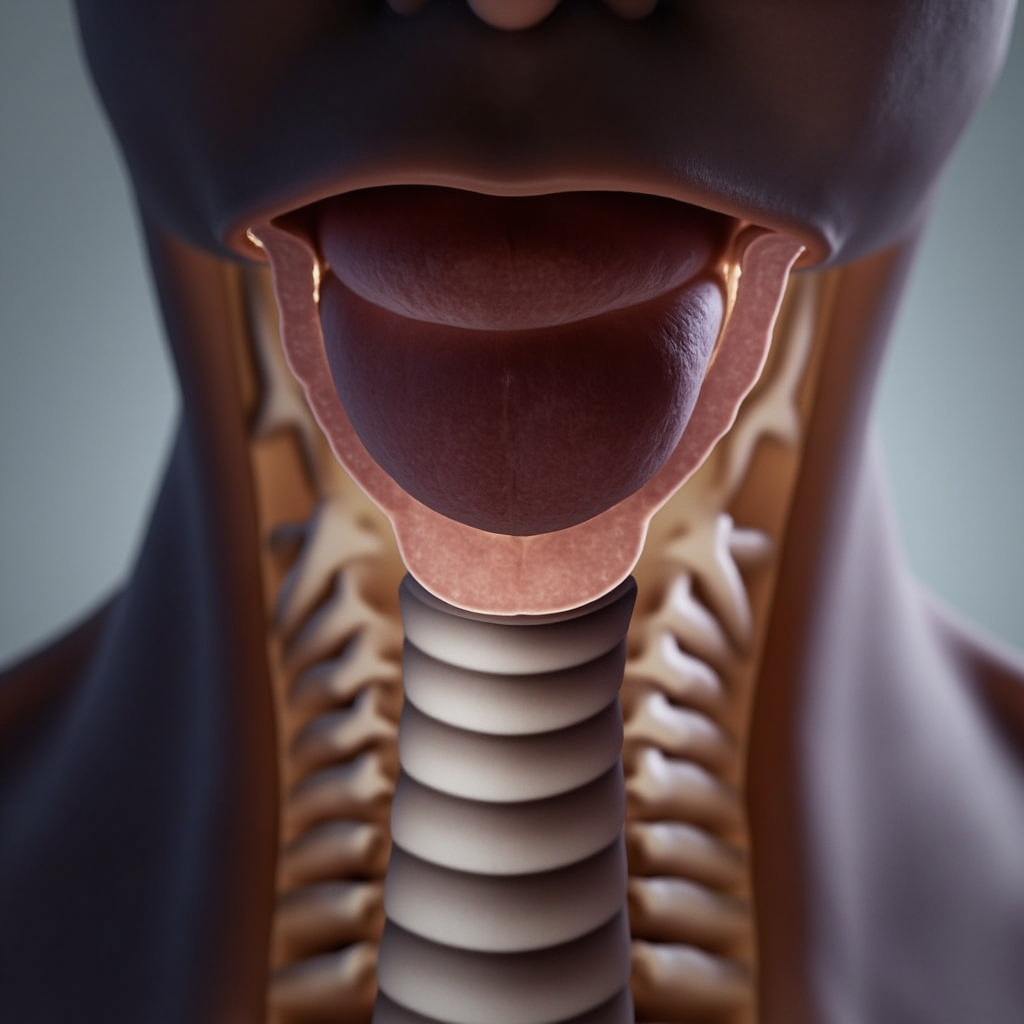
Trachea: Windpipe connecting throat to lungs
(trachea)The trachea, or windpipe, is a tube located in the neck and chest, extending from the larynx to the bronchi. It functions as an air passageway, delivering air to and from the lungs. When it functions properly, it ensures efficient airflow for breathing. If malfunctioning, it can lead to breathing difficulties, coughing, wheezing, or obstruction, potentially resulting in respiratory distress or infection.
The trachea can support other organs by ensuring adequate airflow for efficient oxygen delivery, which is essential for energy production and overall organ function, while also facilitating communication and self-expression, thereby alleviating emotional stress that may impact physical health.
The trachea is linked to feelings of fear and anxiety related to communication and expression. Malfunctions in this organ may indicate unresolved conflicts about speaking out, asserting oneself, or fear of criticism and judgment. Emotional stress related to these issues can manifest physically in the trachea.
The trachea, or windpipe, is a crucial tubular structure that connects the larynx to the bronchi, facilitating the passage of air to and from the lungs. Its primary function is to ensure efficient airflow, which is vital for optimal oxygen delivery to the bloodstream, supporting cellular respiration and energy production. Proper tracheal function is essential for overall physical health, as it directly influences respiratory efficiency and can affect energy levels, vitality, and resilience. The trachea interacts closely with the lungs and the diaphragm, forming part of the respiratory system that is integral to emotional well-being, as effective breathing patterns can alleviate stress and anxiety. Notably, the trachea is associated with the throat chakra, which relates to communication and self-expression; disruptions may indicate emotional blockages such as fear of speaking out or asserting oneself. Addressing these emotional aspects can improve not only respiratory function but also enhance one's overall sense of well-being, fostering a deeper connection between physical health and emotional resilience.
In BioCoherence, find the organ biomarkers and structures in Analyze > Body > Organs maps.
To comment, subscribe to the newsletter and get exclusive BioCoherence offers, please create a free account
Legal page
Website (c) 2026 Coherence Labs; contents (c) their respective authors.
Disclaimer BioCoherence provides both an academic analysis and an energetic and experimental analysis.
The information displayed may or may not be correlated with the physical state of the systems.
Calculations are based on individual measurements and experimental algorithms.
All computed results like energy levels, entropy levels and coherent systems are designed to provide useful information for personal development, not for medical purposes. The usage of all results are under the sole responsibility or the user. In case of doubt, it is important to consult a medical doctor. Please check our EULA before deciding your use of the software.