


Body zones
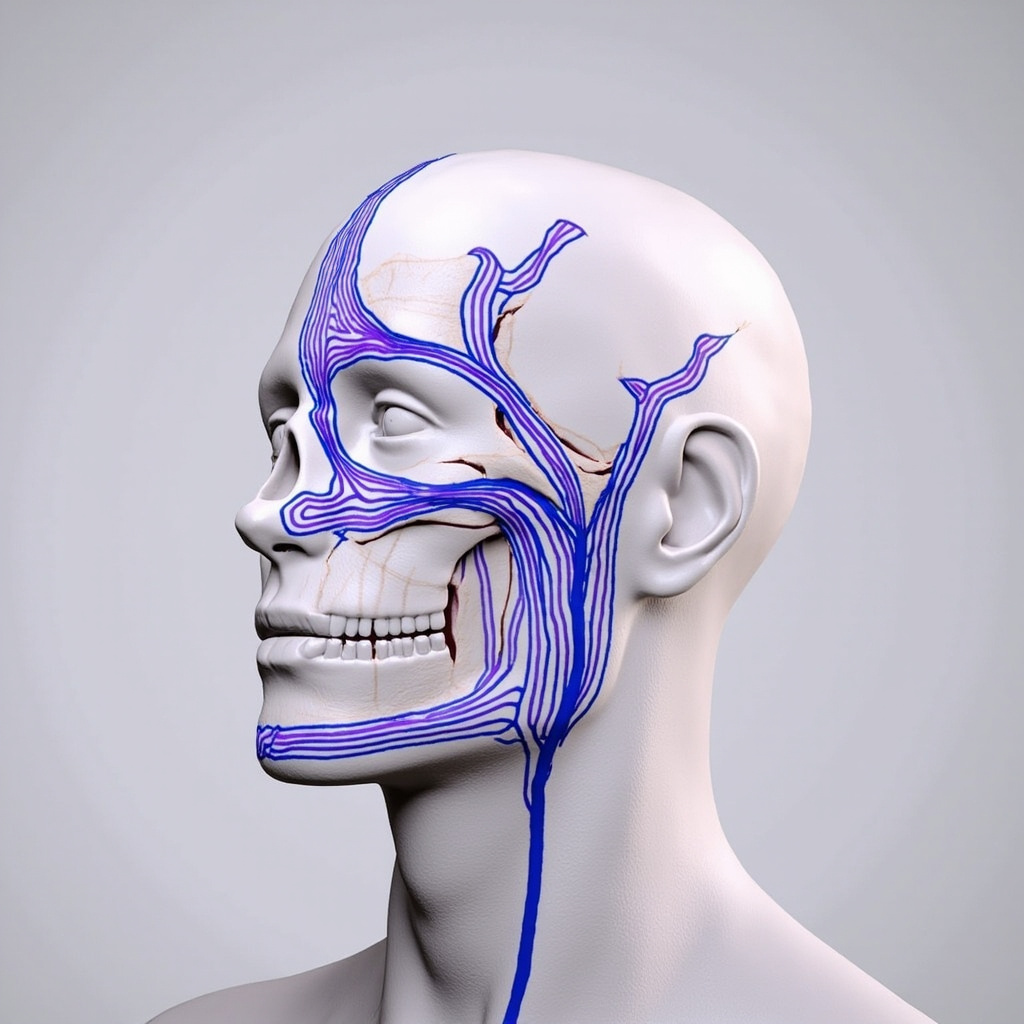
Trigeminal Nerve: Main Sensory Nerve of the Face
(nerves.trigeminal)The trigeminal nerve is the fifth cranial nerve located in the head. It has three branches: ophthalmic, maxillary, and mandibular, which provide sensation to the face and control the muscles involved in chewing. When functioning properly, it allows for facial sensations and motor functions like biting and chewing. If malfunctioning, it can cause severe facial pain, loss of sensation, and difficulties with chewing, commonly seen in conditions like trigeminal neuralgia.
The trigeminal nerve can help other organs by facilitating communication and coordination, allowing for better facial sensations, motor control, and emotional processing, which can alleviate stress and promote overall well-being.
The trigeminal nerve is linked to feelings of deep emotional pain, distress, and unresolved conflicts. Issues with this nerve may symbolize an internal struggle, often associated with intense stress or a sense of being attacked or devalued. The malfunctioning of the trigeminal nerve may be a result of suppressed anger, feelings of helplessness, or a lack of support and protection in one's environment. It may reflect a need to confront and resolve emotional conflicts and to release pent-up emotions.
The trigeminal nerve, the fifth cranial nerve, plays a crucial role in the sensation and motor control of the face. It consists of three branches-ophthalmic, maxillary, and mandibular-that provide sensory input from the forehead, cheeks, and jaw, while also controlling the muscles responsible for chewing. This nerve is essential for physical health, as it facilitates facial expression and communication, which are vital for social interactions and emotional well-being. Its interactions with the central nervous system and other cranial nerves enable it to influence emotional processing, linking physical sensations to psychological states. Dysfunction of the trigeminal nerve can lead to conditions like trigeminal neuralgia, resulting in debilitating pain and loss of sensory functions, which can profoundly impact mental health by increasing stress and anxiety. Moreover, the nerve's association with emotional states underscores its role in energy and vitality; unresolved emotional conflicts may manifest as physical symptoms, highlighting the importance of addressing both physical and emotional health for overall resilience and well-being. Maintaining the health of the trigeminal nerve supports not only facial sensations but also enhances life quality through improved emotional balance and social engagement.
In BioCoherence, find the organ biomarkers and structures in Analyze > Body > Organs maps.
BioCoherence Personal Guide Meditation
Imagine, if you will, the trigeminal nerve, a vital part of your body's intricate system, located within your head. Picture it as a complex network of pathways, branching out from deep within your brain. This nerve has three main branches, each extending to different parts of your face. One branch reaches up towards your forehead, another moves towards your cheeks, and the third travels down to your jaw.
As you focus on this nerve, visualize it as a highway of signals, carrying important messages between your brain and your face. It allows you to feel sensations like warmth, cold, and the gentle touch of a breeze. It also plays a crucial role in movements, enabling you to chew, bite, and speak.
Feel the interconnectedness of the trigeminal nerve with other parts of your body. It works in harmony with your muscles and skin, creating a seamless flow of communication. Appreciate the intricate design and the essential functions it performs daily, often without your conscious awareness.
Allow yourself to acknowledge the presence and importance of this nerve, appreciating its role in your sensory and motor experiences. Embrace a sense of gratitude for the trigeminal nerve, recognizing its contribution to your well-being and your ability to interact with the world around you.
BioCoherence Personal Guide Resource Meditation
Focus your awareness on the trigeminal nerve, a vital resource located in the middle region of your face, branching out to your forehead, cheeks, and jaw. Imagine this nerve as a radiant network of light, a powerful conduit of energy and information. Visualize it glowing with a soothing, golden light, pulsating gently with each breath you take.
The trigeminal nerve is your ally, seamlessly interacting with other parts of your body, sending energy and balance to areas that need support. It helps in communication between your sensory systems and your brain, providing clarity and harmony. Envision it as a guardian, ensuring smooth and efficient passage of information throughout your being.
Take a deep breath in, drawing energy from the core of your body and channeling it into the trigeminal nerve. Feel this energy amplify within the nerve, becoming stronger and more vibrant. With each exhale, imagine this energy spreading out, reaching every branch and illuminating your face.
Now, with each inhalation, gather energy from the universe around you, and with each exhalation, send this concentrated energy to the trigeminal nerve. Feel it build, becoming a beacon of strength and balance. Allow this energy to grow, becoming a reservoir that can be tapped into to support other priorities within your body.
When you feel ready, visualize the energy flowing from the trigeminal nerve to different areas that need assistance. Imagine this energy as a gentle, healing wave, moving effortlessly to organs, meridians, emotions, or acupuncture points that require attention. See it nourishing and balancing, providing exactly what is needed.
Prepare to direct this abundant energy to the priorities that will follow, knowing that the trigeminal nerve is a powerful resource ready to support and heal.