


Body zones
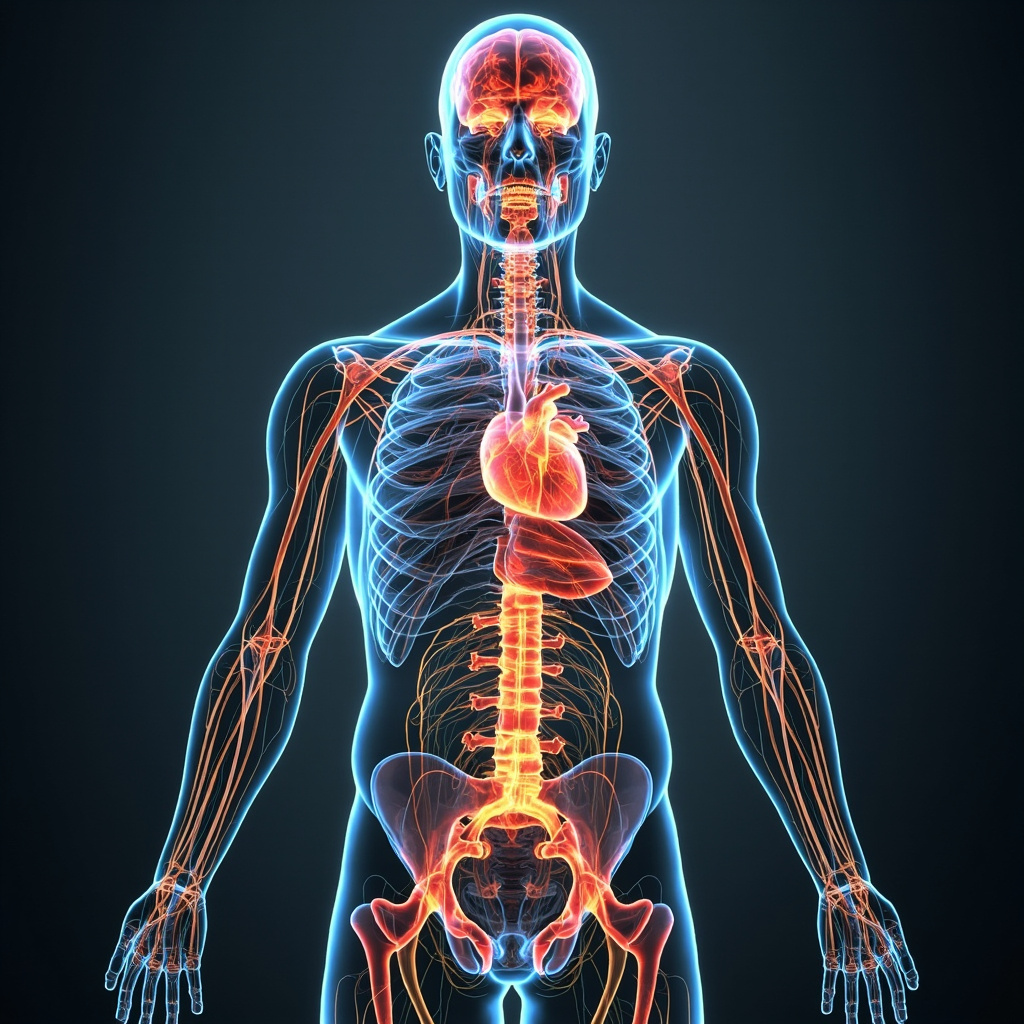
Autonomic Nerves: Control of Involuntary Functions
(nerves.autonomic)The autonomic nervous system (ANS) is localized in various parts of the body, including the brain, spinal cord, and peripheral nerves. It regulates involuntary physiological functions such as heart rate, digestion, respiratory rate, and blood pressure. When functioning properly, the ANS maintains homeostasis and responds to stress by activating the sympathetic (fight or flight) or parasympathetic (rest and digest) systems. Malfunctioning of the ANS can lead to disorders such as hypertension, digestive problems, heart arrhythmias, and conditions like autonomic neuropathy or dysautonomia.
The autonomic nervous system can help prioritize and balance the functions of other organs by regulating heart rate, digestion, and respiratory rate, thereby promoting overall homeostasis and enabling a coordinated response to stress.
The autonomic nervous system is often linked to deep-seated emotions such as fear, insecurity, and the need for control. Malfunctioning in this system may indicate unresolved stress, chronic anxiety, or an inability to cope with significant life changes. These emotional conflicts can disrupt the balance of the autonomic nerves, leading to various physical symptoms and conditions.
The autonomic nervous system (ANS) is a crucial component of the peripheral nervous system that governs involuntary bodily functions, playing a vital role in maintaining homeostasis. It consists of two main branches: the sympathetic and parasympathetic systems, which work in tandem to regulate processes such as heart rate, digestion, and respiratory rate. By responding to external stimuli and internal needs, the ANS ensures that the body can adapt to stressors, thereby influencing overall physical and mental health. For instance, the sympathetic system stimulates the "fight or flight" response, elevating heart rate and energy levels during stress, while the parasympathetic system promotes relaxation and recovery. This intricate balance is essential for energy, vitality, and resilience, as chronic dysregulation can lead to conditions like hypertension or anxiety. Furthermore, the ANS is deeply interconnected with emotional well-being; unresolved stress and emotional conflicts can disrupt its function, manifesting as physical symptoms. Understanding the ANS empowers individuals to cultivate practices that enhance their energetic health and emotional stability, fostering a holistic approach to well-being.
In BioCoherence, find the organ biomarkers and structures in Analyze > Body > Organs maps.
To comment, subscribe to the newsletter and get exclusive BioCoherence offers, please create a free account
Legal page
Website (c) 2026 Coherence Labs; contents (c) their respective authors.
Disclaimer BioCoherence provides both an academic analysis and an energetic and experimental analysis.
The information displayed may or may not be correlated with the physical state of the systems.
Calculations are based on individual measurements and experimental algorithms.
All computed results like energy levels, entropy levels and coherent systems are designed to provide useful information for personal development, not for medical purposes. The usage of all results are under the sole responsibility or the user. In case of doubt, it is important to consult a medical doctor. Please check our EULA before deciding your use of the software.