


Body zones
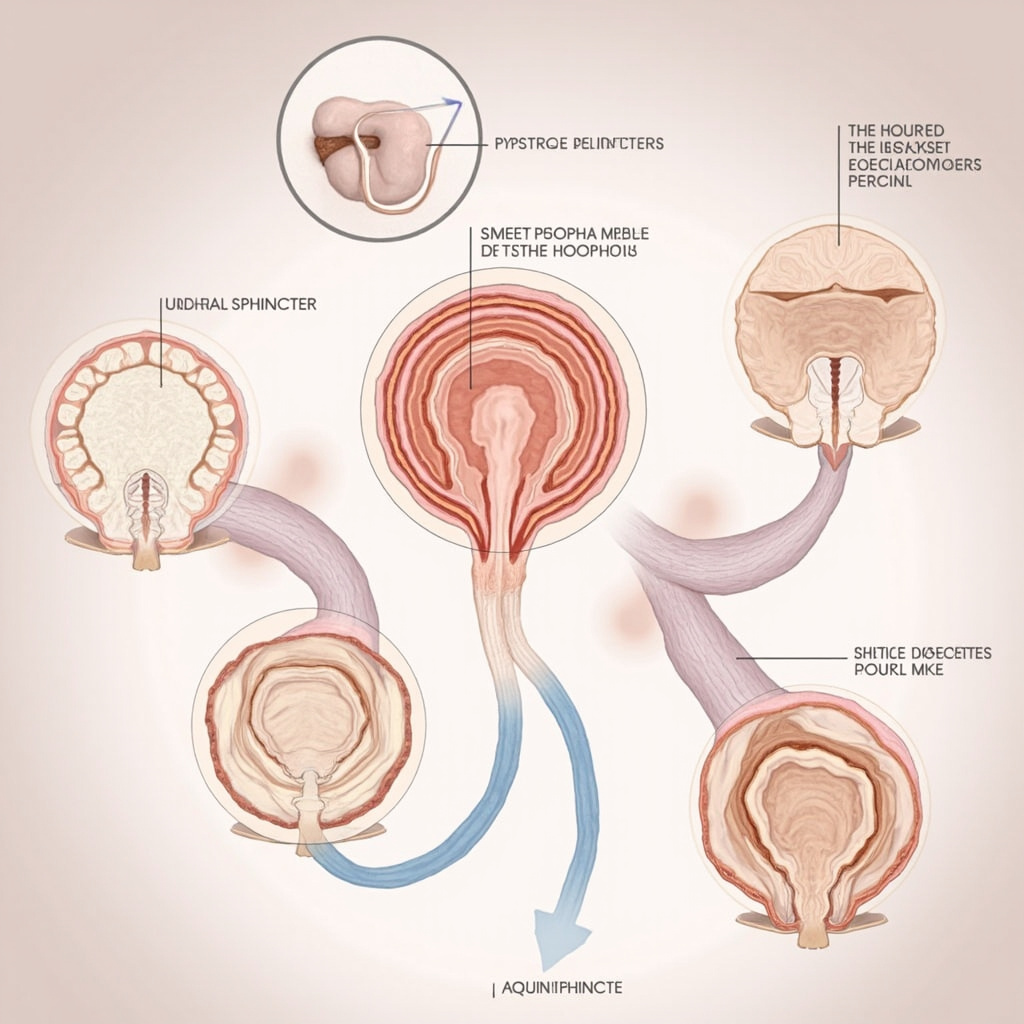
Sphincter Muscles: Control of Body Openings
(muscles.sphincters)Sphincters are circular muscles found throughout the body, including the digestive tract (e.g., the lower esophageal sphincter, pyloric sphincter), urinary system (e.g., urethral sphincter), and the anus (anal sphincter). When functioning properly, sphincters regulate the passage of substances by contracting and relaxing, maintaining control over the flow of contents. Malfunctioning sphincters can lead to various issues such as acid reflux (if the lower esophageal sphincter fails), urinary incontinence (if the urethral sphincter is compromised), or fecal incontinence (if the anal sphincter doesn't function correctly).
Sphincters can help other organs by ensuring proper regulation of substance passage, thus maintaining digestive and urinary health, while also providing a psychological release by alleviating stress related to control and boundaries through their physiological function.
Sphincters are associated with control and boundary issues. Malfunctions in these muscles may indicate emotions related to fear of losing control, inability to set boundaries, or feeling trapped. Psychological stress around these themes can manifest as physical symptoms in the sphincters.
Sphincters are specialized circular muscles that play a critical role in regulating bodily functions by controlling the passage of substances through various openings within the body. Their primary functions include maintaining digestive health by preventing reflux and ensuring proper waste elimination. Sphincters interact closely with organs such as the stomach, bladder, and intestines, forming a complex network that supports overall physical well-being. When sphincters operate effectively, they contribute to energy and vitality by promoting efficient nutrient absorption and waste excretion, which are essential for metabolic health. Additionally, these muscles are linked to emotional and psychological well-being; dysfunction can reflect deeper issues such as anxiety or a struggle with personal boundaries. For instance, the inability to control sphincter function may indicate feelings of losing control in life, manifesting as physical symptoms. By maintaining optimal sphincter function, individuals can enhance their resilience, reduce stress, and foster a sense of well-being, ultimately supporting a vibrant, energetic lifestyle.
In BioCoherence, find the organ biomarkers and structures in Analyze > Body > Organs maps.
To comment, subscribe to the newsletter and get exclusive BioCoherence offers, please create a free account
Legal page
Website (c) 2026 Coherence Labs; contents (c) their respective authors.
Disclaimer BioCoherence provides both an academic analysis and an energetic and experimental analysis.
The information displayed may or may not be correlated with the physical state of the systems.
Calculations are based on individual measurements and experimental algorithms.
All computed results like energy levels, entropy levels and coherent systems are designed to provide useful information for personal development, not for medical purposes. The usage of all results are under the sole responsibility or the user. In case of doubt, it is important to consult a medical doctor. Please check our EULA before deciding your use of the software.