


Body zones
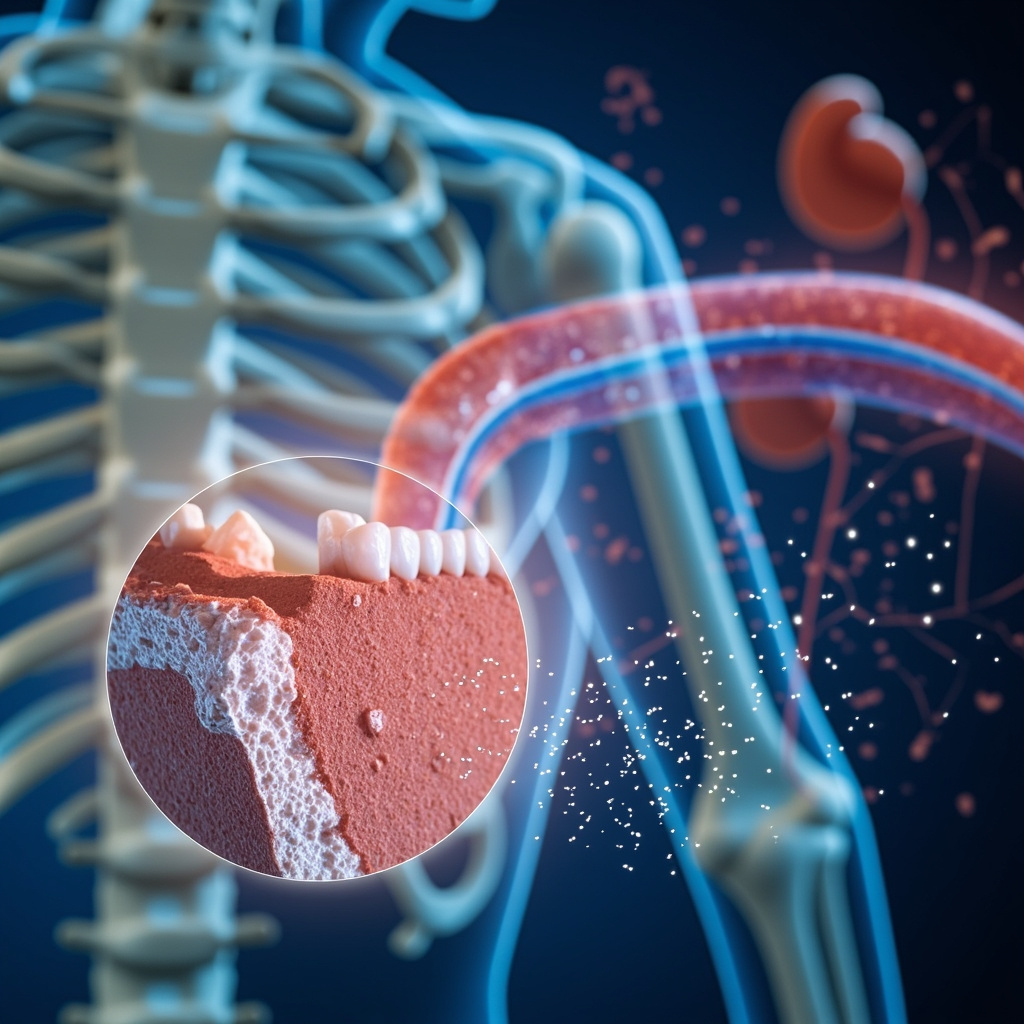
Calcium Metabolism: The Role of Bones in Health
(bones.calciummetabolism)Calcium metabolism involves the regulation of calcium levels in the body, primarily affecting bones, teeth, and blood. Proper functioning ensures strong bone formation, blood clotting, nerve transmission, and muscle contraction. If calcium metabolism malfunctions, it can lead to conditions like osteoporosis, weakened bones, kidney stones, or abnormal heart rhythms.
Calcium metabolism can help other organs by ensuring optimal calcium levels for critical functions such as muscle contraction, nerve transmission, and blood clotting, thereby supporting overall physical stability and function.
Calcium metabolism involves the regulation of calcium levels in the body, primarily affecting bones, teeth, and blood. Proper functioning ensures strong bone formation, blood clotting, nerve transmission, and muscle contraction. If calcium metabolism malfunctions, it can lead to conditions like osteoporosis, weakened bones, kidney stones, or abnormal heart rhythms. Emotionally, issues with calcium metabolism may be linked to feelings of instability, insecurity, or a lack of support. These feelings might manifest physically as the body struggles to maintain structural integrity and proper function in the affected areas.
Calcium metabolism is a crucial physiological process that regulates calcium levels, significantly impacting bone health, muscle function, and nerve transmission. The bones serve as the primary reservoir for calcium, releasing it into the bloodstream as needed, which plays a vital role in maintaining structural integrity and supporting overall physical well-being. Calcium interacts closely with organs like the kidneys, which filter and regulate its excretion, and the parathyroid glands, which release hormones to manage calcium homeostasis. Disruptions in calcium metabolism can lead to conditions such as osteoporosis, which not only affect physical strength but may also be associated with emotional states of anxiety or insecurity, reflecting a deeper connection between physical health and mental well-being. Adequate calcium levels are essential for energy production, as they facilitate signal transduction in muscle contractions and neuronal activity, enhancing vitality and resilience. Thus, maintaining optimal calcium metabolism is integral to promoting overall health, ensuring robust energy levels, and fostering a sense of stability and support in both body and mind.
In BioCoherence, find the organ biomarkers and structures in Analyze > Body > Organs maps.
To comment, subscribe to the newsletter and get exclusive BioCoherence offers, please create a free account
Legal page
Website (c) 2026 Coherence Labs; contents (c) their respective authors.
Disclaimer BioCoherence provides both an academic analysis and an energetic and experimental analysis.
The information displayed may or may not be correlated with the physical state of the systems.
Calculations are based on individual measurements and experimental algorithms.
All computed results like energy levels, entropy levels and coherent systems are designed to provide useful information for personal development, not for medical purposes. The usage of all results are under the sole responsibility or the user. In case of doubt, it is important to consult a medical doctor. Please check our EULA before deciding your use of the software.