


Body zones
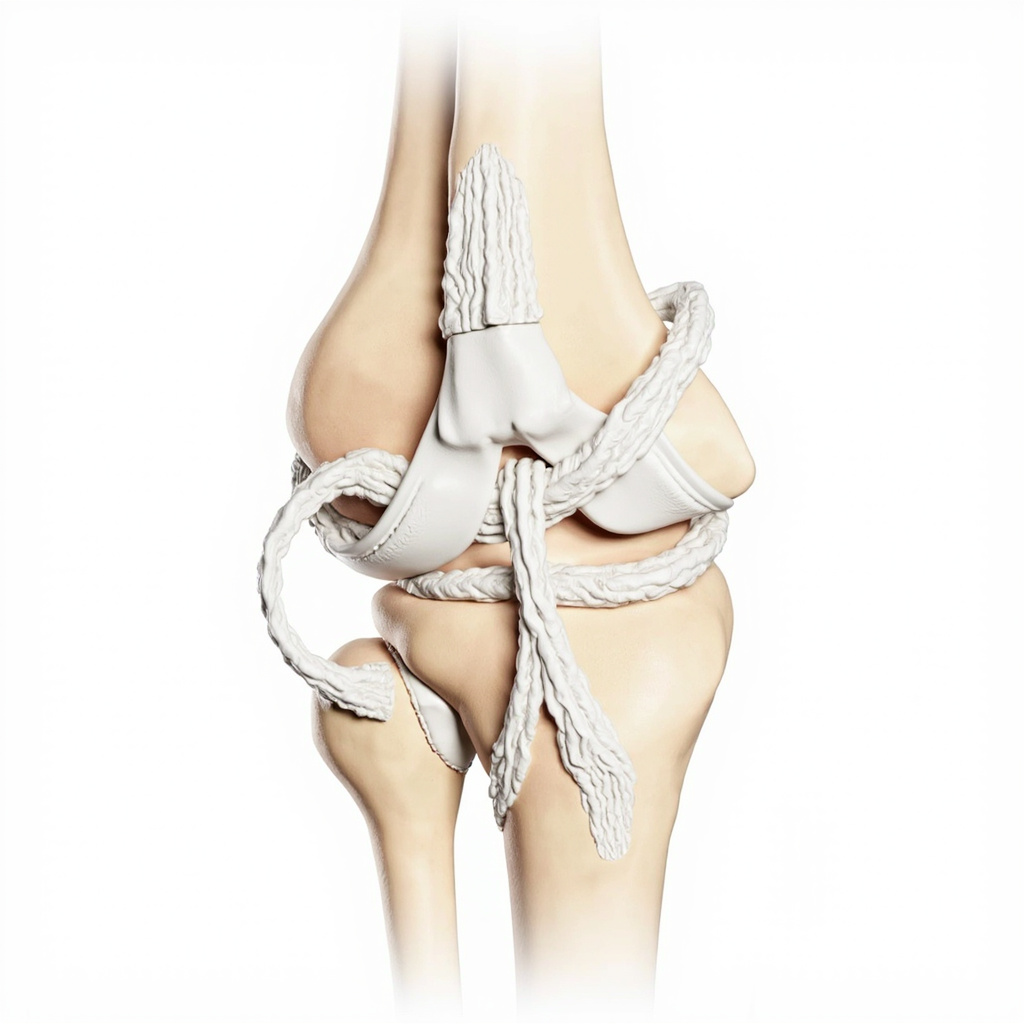
Ligaments: Connective Tissues Supporting Joints
(locomotor.ligaments)Ligaments are tough, fibrous connective tissues that connect bones to other bones at joints. They are primarily located in joints such as the knees, elbows, shoulders, and ankles. When functioning properly, ligaments stabilize joints, allowing for smooth and controlled movement while preventing excessive motion that could lead to injury. If ligaments malfunction due to injury or disease, it can result in joint instability, pain, and an increased risk of dislocations or further injuries.
Ligaments can help other priority organs by facilitating stability and support during movement, ensuring proper alignment and function, which contributes to overall physical health and coordination, while also promoting emotional well-being by addressing feelings of insecurity and adaptability.
Ligament issues may be linked to feelings of instability, insecurity, or a sense of not being supported. Emotional conflicts involving flexibility, adaptability, or feeling torn in different directions can manifest as ligament problems. A possible cause of malfunctioning could be an inability to move forward in life or feeling restricted in one's actions and decisions.
Ligaments are essential connective tissues that play a critical role in maintaining the stability and integrity of joints throughout the body. By connecting bones at joints such as the knees, elbows, and shoulders, ligaments enable smooth movement while preventing excessive motion that could lead to injuries. Their primary function is to provide mechanical support, which is vital for physical activities and overall mobility. Ligaments also interact closely with muscles and tendons, creating a system that ensures coordinated movement and balance. When ligaments are healthy, they contribute to physical vitality and resilience, allowing for active lifestyles and reducing the risk of injury. Conversely, ligament dysfunction can lead to feelings of instability and emotional distress, often manifesting as anxiety or insecurity. This connection highlights the importance of ligaments not just in physical health but also in mental and energetic well-being. The stability they provide allows for a sense of groundedness, fostering emotional adaptability and resilience. Therefore, maintaining ligament health is crucial for enhancing overall well-being, energy levels, and the ability to navigate life's challenges effectively.
In BioCoherence, find the organ biomarkers and structures in Analyze > Body > Organs maps.
BioCoherence Personal Guide Meditation
Imagine, if You will, the ligaments within Your body. These remarkable structures are akin to strong, flexible cords that connect Your bones together. Picture them as sturdy bridges, securely holding the joints in place while allowing for smooth, controlled movements.
Visualize their location: they are found at all of Your major joints, such as the knees, elbows, shoulders, and ankles. Each ligament is designed to stabilize and support these joints, preventing excessive movement that could lead to injury.
Consider their interactions: ligaments work closely with muscles and tendons, forming a harmonious trio that ensures Your body's mobility and stability. When You move, these ligaments stretch and contract, providing the necessary tension to keep Your joints aligned and functioning properly.
Envision their purpose: they are the silent guardians of Your body's structure, enabling You to walk, run, lift, and twist with confidence. They are essential for maintaining balance and posture, and they protect Your joints from dislocating or overextending.
Feel a sense of gratitude for these often-overlooked components of Your anatomy. Appreciate how they silently perform their duty, contributing to every movement You make.
BioCoherence Personal Guide Resource Meditation
Visualize the ligaments within your body. These strong, flexible bands connect your bones and provide stability to your joints. The ligaments are spread throughout your body, holding everything together, supporting movement, and protecting from injury. They are the silent anchors that allow you to stand, walk, and engage in all physical activities.
Imagine the ligaments as radiant bands of light, each glowing with a steady, vibrant energy. Feel their presence in your knees, elbows, shoulders, and all other joints. They are resilient, capable of stretching and bending to accommodate every motion you make.
As you continue to focus, envision a warm, golden light gathering in your ligaments. This light is the essence of balance and strength. Feel it growing brighter, spreading through each ligament, filling them with a powerful, soothing energy. This energy is abundant and limitless, ready to be shared.
Now, draw this energy from your ligaments into a central point within your body, like the core of a sun. Allow this energy to build, becoming stronger and more concentrated. Feel its warmth and radiance, knowing that it is a source of healing and support for every part of your being.
With each breath, gather more of this luminous energy, feeling it intensify and expand. When you are ready, guide this energy to flow from the central point to the areas in need, sending it to all priorities that require balance, nourishment, or support.
Hold this intention, allowing the energy from your ligaments to flow freely and generously, reaching every organ, meridian, emotion, or acupuncture point that calls for assistance.
Prepare to transition to the next part of your meditation, where these priorities will be addressed individually, each receiving the healing energy cultivated from your ligaments.