


Body zones
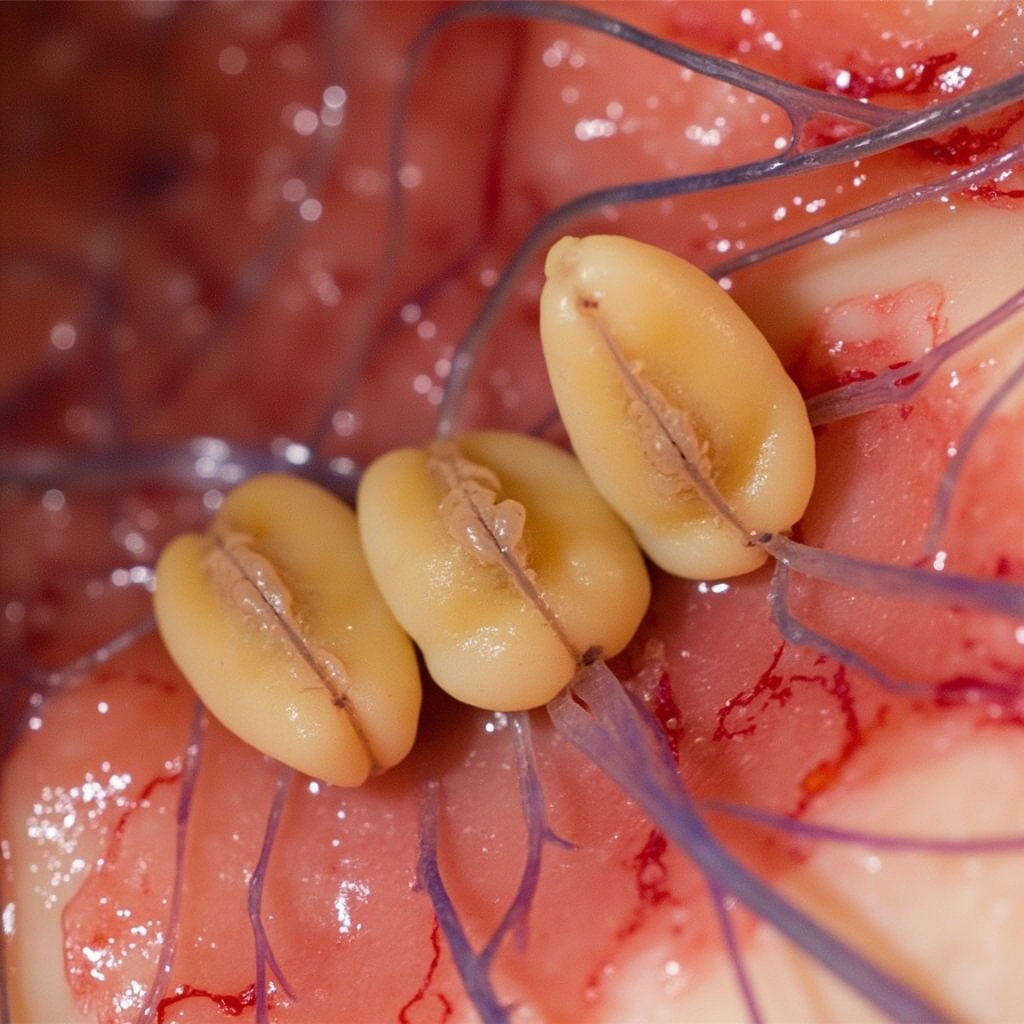
Parathyroid Glands: Hormone Regulators of Calcium
(glands.parathyroid)The parathyroid glands are four small glands located on the back of the thyroid gland in the neck. They regulate calcium levels in the blood by secreting parathyroid hormone (PTH), which increases calcium absorption from the gut, reabsorption in the kidneys, and release from bones. Proper functioning ensures stable calcium levels, vital for muscle function, nerve signaling, and bone health. Malfunctioning can lead to hyperparathyroidism, causing high calcium levels, kidney stones, and bone loss, or hypoparathyroidism, leading to low calcium levels, muscle cramps, and seizures.
The parathyroid glands can help other organs by ensuring stable calcium levels, which are crucial for proper muscle function, nerve signaling, and bone health, thereby enhancing overall physiological balance and emotional well-being.
The parathyroid glands are linked to emotions and feelings of self-devaluation, particularly in relation to a perceived inability to adequately control or manage one's environment. Malfunctioning of these glands may indicate unresolved conflicts involving a sense of inadequacy or failure in maintaining balance or stability in life.
The parathyroid glands, four small endocrine glands located behind the thyroid, play a crucial role in maintaining calcium homeostasis in the body through the secretion of parathyroid hormone (PTH). PTH regulates calcium levels by enhancing absorption in the intestines, reabsorption in the kidneys, and mobilization from bones, which is essential for muscle contraction, nerve function, and bone integrity. This regulation directly interacts with other organs, particularly the kidneys and intestines, creating a systemic network that supports overall physiological balance. When parathyroid function is impaired, it can lead to conditions such as hyperparathyroidism or hypoparathyroidism, affecting not only physical health but also emotional well-being, as imbalances may trigger feelings of inadequacy or anxiety related to control over one's environment. On an energetic level, optimal parathyroid function contributes to vitality, resilience, and a sense of stability, reinforcing the body's ability to adapt to stressors. For those seeking to enhance their overall well-being, understanding the role of the parathyroid glands is vital in fostering both physical and emotional health.
In BioCoherence, find the organ biomarkers and structures in Analyze > Body > Organs maps.
To comment, subscribe to the newsletter and get exclusive BioCoherence offers, please create a free account
Legal page
Website (c) 2026 Coherence Labs; contents (c) their respective authors.
Disclaimer BioCoherence provides both an academic analysis and an energetic and experimental analysis.
The information displayed may or may not be correlated with the physical state of the systems.
Calculations are based on individual measurements and experimental algorithms.
All computed results like energy levels, entropy levels and coherent systems are designed to provide useful information for personal development, not for medical purposes. The usage of all results are under the sole responsibility or the user. In case of doubt, it is important to consult a medical doctor. Please check our EULA before deciding your use of the software.