


Body zones
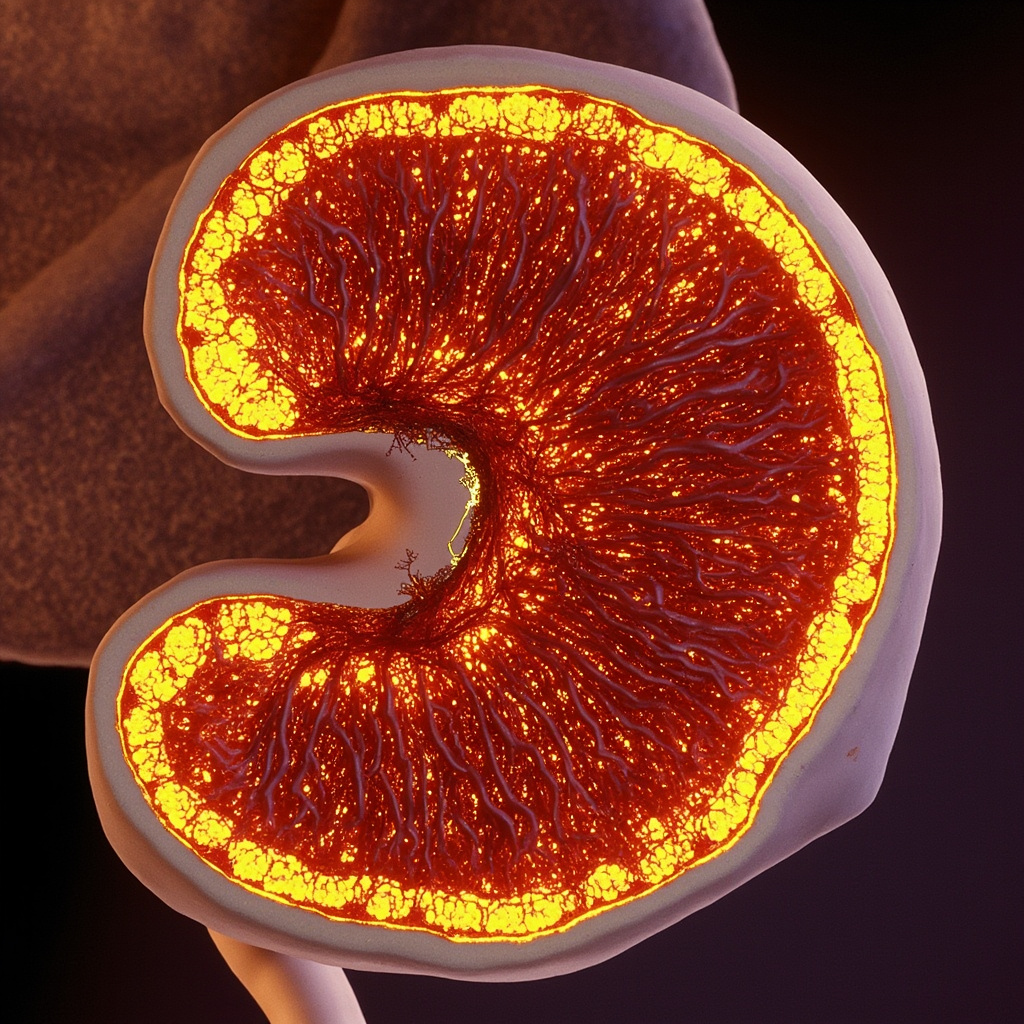
Adrenal Medulla: Inner Part of the Adrenal Gland
(glands.adrenal.medulla)The adrenal medulla is located in the center of the adrenal glands, which sit atop the kidneys. When functioning properly, it produces and secretes adrenaline (epinephrine) and noradrenaline (norepinephrine), hormones that help manage stress by increasing heart rate, blood pressure, and energy levels. If the adrenal medulla malfunctions, it can lead to conditions like pheochromocytoma, resulting in excessive hormone release, causing high blood pressure, rapid heart rate, and severe headaches.
The adrenal medulla can help other priority organs by releasing adrenaline and noradrenaline to enhance energy levels, increase heart rate, and boost blood pressure, thereby optimizing the body's response to stress and supporting overall physiological balance during challenging situations.
The adrenal medulla is associated with the fight-or-flight response, releasing adrenaline and noradrenaline. Malfunctioning of this organ can indicate emotions and feelings linked to intense stress, fear, or perceived danger. It may be a response to situations where one feels threatened, unable to escape, or in a state of constant alertness. This stress response can lead to conditions like anxiety, hypervigilance, and chronic stress, potentially causing the adrenal medulla to become overactive or exhausted.
The adrenal medulla, the inner region of the adrenal glands, plays a crucial role in the body's response to stress by producing adrenaline (epinephrine) and noradrenaline (norepinephrine). These hormones are key in regulating the fight-or-flight response, enhancing physical performance by increasing heart rate, blood pressure, and metabolic energy, thereby contributing to overall vitality and resilience. The adrenal medulla works closely with other systems, particularly the autonomic nervous system and the hypothalamus, to modulate the body's reaction to stressors and maintain homeostasis. When the medulla functions optimally, it supports mental clarity and emotional balance, but dysfunction can lead to heightened stress responses, anxiety, and fatigue. This imbalance can manifest physically as chronic fatigue or hypertension, while emotionally it may result in feelings of overwhelm or hypervigilance. By promoting healthy adrenal function, individuals can enhance their energy levels and overall well-being, fostering a greater sense of stability and emotional resilience in the face of life's challenges.
In BioCoherence, find the organ biomarkers and structures in Analyze > Body > Organs maps.
To comment, subscribe to the newsletter and get exclusive BioCoherence offers, please create a free account
Legal page
Website (c) 2026 Coherence Labs; contents (c) their respective authors.
Disclaimer BioCoherence provides both an academic analysis and an energetic and experimental analysis.
The information displayed may or may not be correlated with the physical state of the systems.
Calculations are based on individual measurements and experimental algorithms.
All computed results like energy levels, entropy levels and coherent systems are designed to provide useful information for personal development, not for medical purposes. The usage of all results are under the sole responsibility or the user. In case of doubt, it is important to consult a medical doctor. Please check our EULA before deciding your use of the software.