


Yoga für Stabilität und Freiheit im unteren Rücken
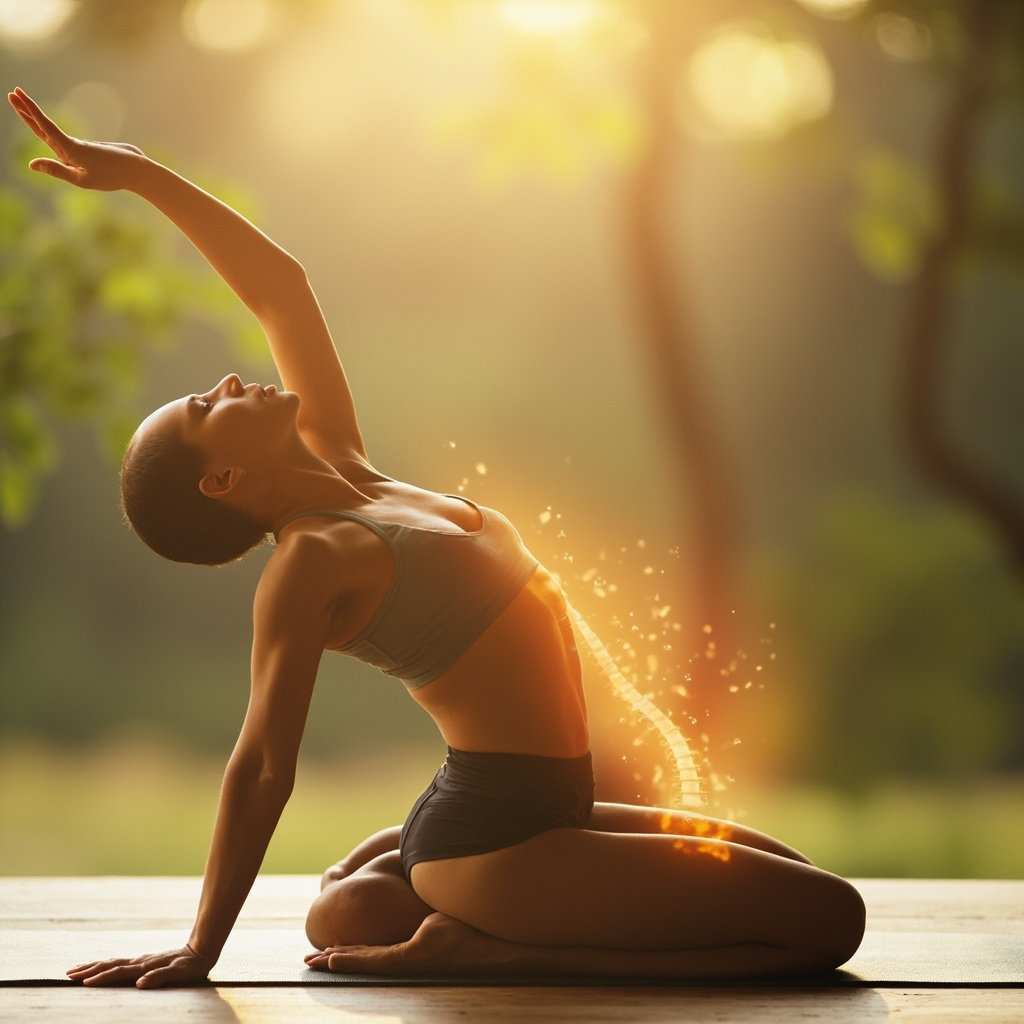
Understanding the L1 Vertebra
The L1 vertebra is the first of the five lumbar bones in your lower back. It sits just below the rib cage, bearing much of your upper body's weight while allowing the torso to bend, twist, and flex. Explore the L1 glossary for a deeper view.
A healthy L1 promotes a stable yet mobile spine. It connects to nerves that influence the hips, legs, and lower abdomen, supporting daily actions like walking or lifting. When balanced, it fosters confidence in movement and a sense of grounded freedom.
Signs of L1 Imbalance
Tension or weakness in L1 often appears as:
- Lower back pain or stiffness, especially after prolonged sitting or standing.
- Limited bending or twisting, making simple tasks challenging.
- Numbness, tingling, or weakness in the legs or feet.
These physical symptoms can stem from poor posture, overuse, or injury. Beyond the body, L1 relates to emotions around independence and support. Feelings of being overburdened by responsibilities or unsupported in life may tighten this area, creating a cycle of discomfort.
L1 as a Key Resource
When strong, L1 offers:
- Spinal stability to handle daily loads without strain.
- Enhanced mobility for fluid, pain-free movement.
- Emotional relief by releasing burdens, reclaiming personal autonomy.
Supporting L1 improves overall posture, reduces pain, and boosts well-being for connected areas like the hips and core.
Yoga Practices to Strengthen L1
Yoga gently targets the lower back through mindful poses, breath, and awareness. These practices build strength in the core and back muscles while releasing tension. Start slow, hold each for 5-10 breaths, and focus on smooth movement.
Gentle Warm-Up: Cat-Cow Pose
Kneel on all fours, hands under shoulders, knees under hips. Inhale, arch your back (Cow), lifting tailbone and head. Exhale, round the spine (Cat), tucking chin. This mobilizes L1, easing stiffness and linking breath to spine.
Restorative Release: Child's Pose
From knees, fold forward, arms extended, forehead to floor. Let the lower back soften. This pose relieves pressure on L1, inviting calm and surrender to emotional weights.
Strengthening Back: Sphinx Pose
Lie on belly, forearms on floor, elbows under shoulders. Lift chest gently, keeping hips down. Sphinx supports L1 by toning the lower back extensors without compression.
Core Stability: Bridge Pose
Lie on back, feet hip-width, knees bent. Lift hips, squeezing glutes. Hold, then lower slowly. Bridge fortifies the area around L1, enhancing support and flexibility.
Twist for Mobility: Supine Twist
Lie on back, hug one knee across body, gaze opposite. Alternate sides. This releases L1 tension, promoting rotation and emotional flow.
Pair with diaphragmatic breathing: Inhale deeply into belly, exhale fully. This activates relaxation, reducing stress held in the lower back.
Benefits Backed by Research
Recent studies show yoga effectively reduces chronic low back pain. One trial found online yoga classes cut pain and medication use, improving function. Participants gained better mobility and mood, aligning with L1's role in stability and freedom.
Regular practice tracks progress through easier movement and lighter emotions. Listen to your body; if pain persists, consult a professional.
Embrace these poses to nurture your L1. Feel the shift toward a supported, independent self.
- 1. instagram.com
- 2. pmc.ncbi.nlm.nih.gov
- 3. instagram.com
- 4. youtube.com
- 5. consultqd.clevelandclinic.org
- 6. biosoulintegration.com
- 7. compspinecare.com
- 8. pmc.ncbi.nlm.nih.gov
- 9. yogajournal.com
- 10. innerpeaceyogatherapy.com
- 11. npr.org
- 12. liforme.com
- 13. healthline.com
- 14. practo.com
- 15. passporthealthusa.com
- 16. nature.com
- 17. facebook.com
- 18. instagram.com
- 19. painphysicianjournal.com
- 20. facebook.com
- 21. themindedinstitute.com
- 22. frontiersin.org
- 23. yogatribebrooklyn.com
- 24. pmc.ncbi.nlm.nih.gov
- 25. sherlockfit.com
- 26. silversneakers.com
- 27. journals.sagepub.com
- 28. jamanetwork.com
- 29. facebook.com
- 30. yogainternational.com
- 31. somatictherapeuticyoga.com
- 32. mdpi.com
- 33. yinyoga.com
- 34. facebook.com
- 35. facebook.com
- 36. youtube.com
- 37. facebook.com
- 38. beyogi.com
- 39. youtube.com
Verwandte Beiträge
Glossar
- Energie und Geist Strukturen > Fokussierte Kohärenz; Fokus
- Energie und Geist Strukturen > Vertrauen
- Körperzonen > kopf
- Körperzonen > knochen
- Körperzonen > muskeln
- Körperzonen > nerven
- Körperzonen > L1
- Körperzonen > brust
- Energie und Geist Strukturen > bewegung
- Energie und Geist Strukturen > Stress
- Stimuli > Schmerz